19 Front Yard Flower Bed Ideas That Make Every Neighbor Stop and Stare
Walking past a home with a neglected dirt patch feels like a missed opportunity for joy. My own porch felt hollow until I experimented with these front yard flower bed ideas, trading weeds for fragrant lavender and tall foxgloves. A thoughtful flower bed design anchors your home, turning a simple patch of grass into a curated welcoming committee. Here is how I—and some clever neighbors—mastered the art of curb appeal.
Why These Front Yard Flower Bed Ideas Are Worth Trying
A well-planned perennial garden front yard increases property value while offering a daily dose of sensory therapy. These specific designs provide structure that lasts through every season, ensuring your home feels intentional and cared for year-round.
Table of Contents
1. The Romantic English Cottage Border
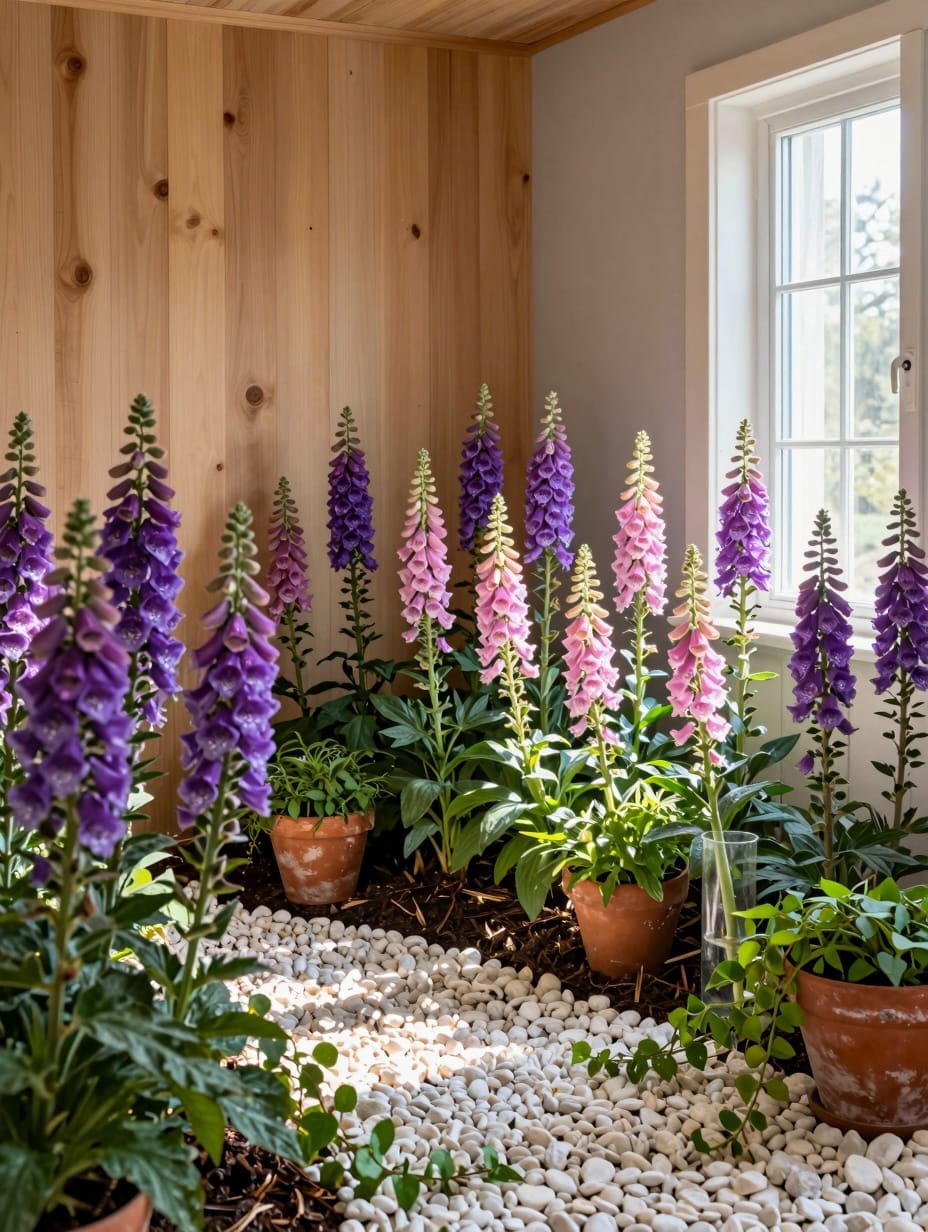
I planted this specific border last May, tucking tall violet Digitalis Foxgloves behind rosy Delphiniums to create a vertical wall of color. The white river pebbles crunched under my boots as I finished lining the winding path, which makes the whole space feel like a hidden sanctuary. Weathered terracotta pots spill over with chartreuse Creeping Jenny, catching the sharp morning light against the dark mulch.
Planting the tallest stems exactly 18 inches from the back fence ensures they don’t lean into the walkway when they reach full height. Just be warned: foxgloves are biennial, so you won’t see those iconic spires until their second year of growth.
How to Get This Look
- Space foxgloves 15 inches apart at the rear of the bed to create a dense flowering backdrop.
- Weathered Terracotta Planters, $25-$65, chosen for their heavy base that resists tipping in high winds.
- Pair creamy white pebbles with charcoal-stained wood mulch for a high-contrast ground cover.
- Scatter wildflower seeds for $10 instead of buying mature perennials to save on bulk planting.
2. Symmetrical Boxwood and White Rose Elegance
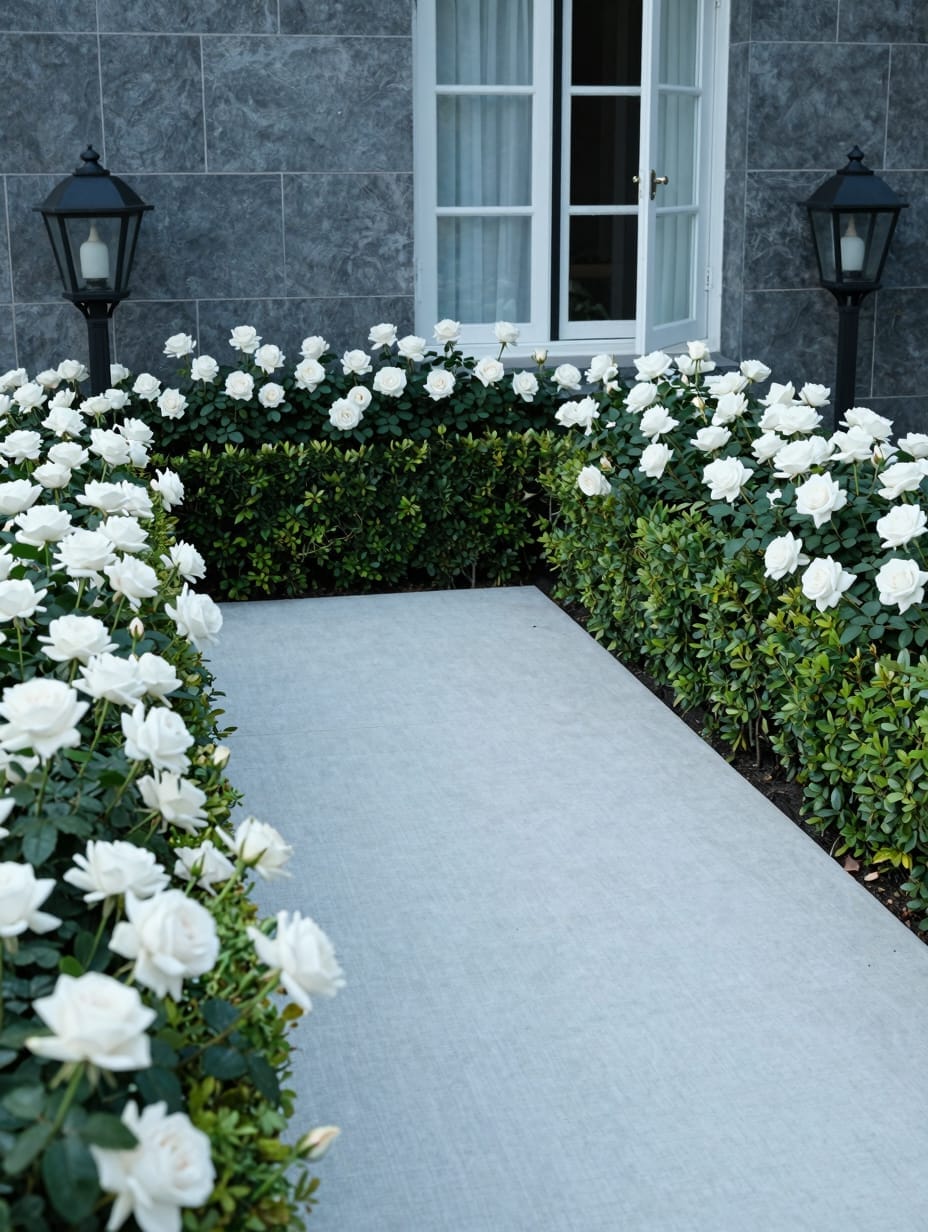
This design comes from a local landscape architect I follow, showcasing a sharp row of ‘Iceberg’ white roses framed by manicured hedges. The emerald green of the Boxwoods looks crisp against a dark grey stone exterior, giving the home a permanent, formal structure. Symmetrical black iron lanterns flank the stone walkway, glowing against the velvety white blossoms as the sun dips low.
Maintenance is the key here; I’ve watched the owner trim these shrubs every six weeks to keep those straight edges. It is a high-effort look that demands a dedicated pruning schedule to avoid a shaggy appearance.
How to Get This Look
- Install boxwoods in a straight line using a string level to ensure a perfectly flat top.
- Iceberg Shrub Roses, $35-$50, selected for their continuous blooming cycle and disease resistance.
- Contrast matte black lantern finishes with glossy green foliage for a sophisticated architectural feel.
- Use evergreen Privet shrubs for $15 to mimic the boxwood look on a tighter budget.
3. Wildflower Meadow Walkway
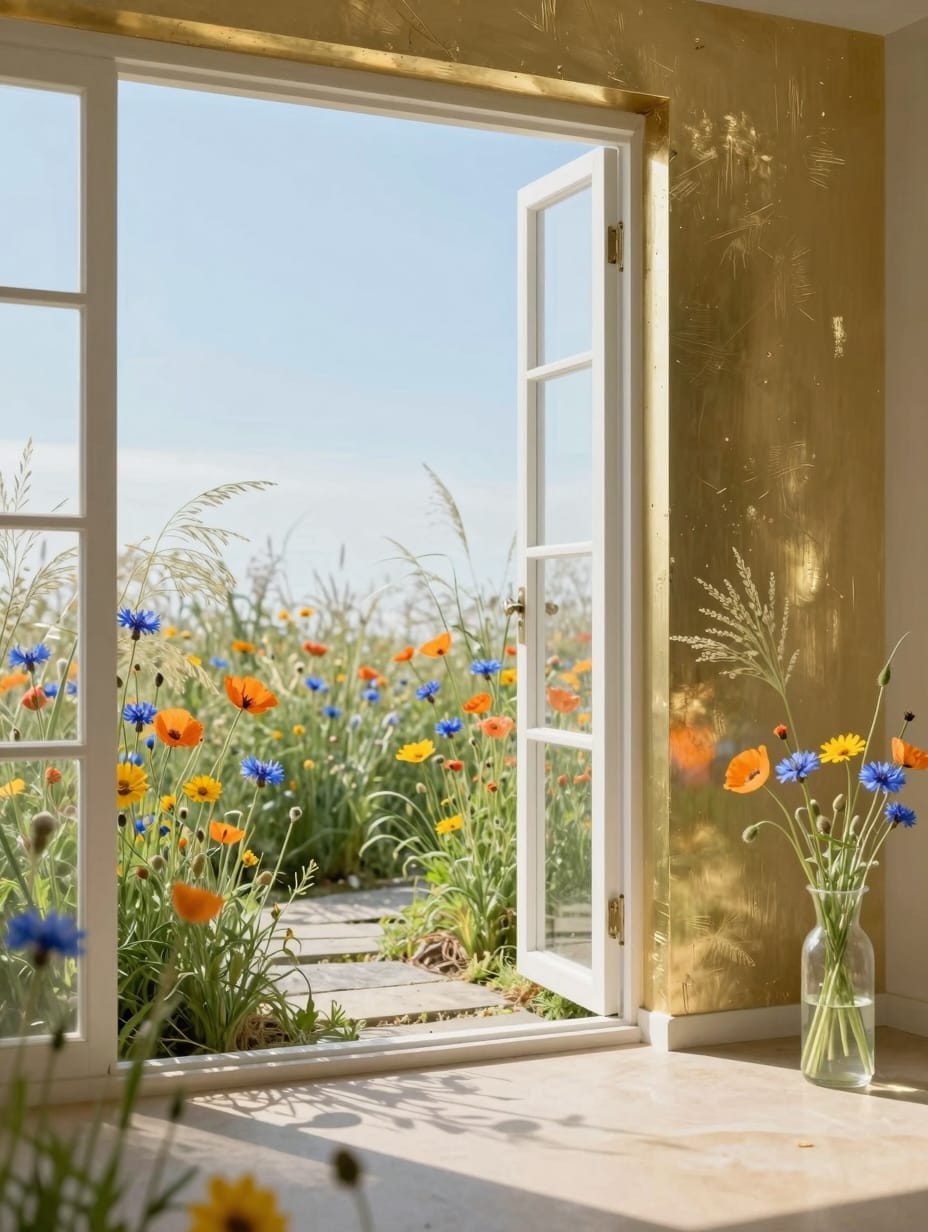
An explosion of orange Poppies and blue Cornflowers defines this breezy meadow look I helped a friend install last June. We laid flat flagstone pavers to create a natural path that seemingly disappears into the tall, swaying stalks of yellow Coreopsis. The textures are airy and light, punctuated by the fine blades of Blue Oat Grass that add movement to the yard.
The trick is mixing in the grasses to provide a skeleton for the thinner flower stems so they don’t flop over after a storm. It can look a bit chaotic in late summer when the first round of blooms begins to seed.
How to Get This Look
- Sow seeds in late autumn so they undergo the cold stratification needed for spring germination.
- Flagstone Pavers, $5-$12 per stone, selected for their irregular shapes and natural grey tones.
- Group blue grasses near orange blooms to utilize complementary colors for maximum visual pop.
- Buy a regional bulk wildflower mix for $20 to cover large areas cheaply.
4. The Sculptural Succulent Rock Garden
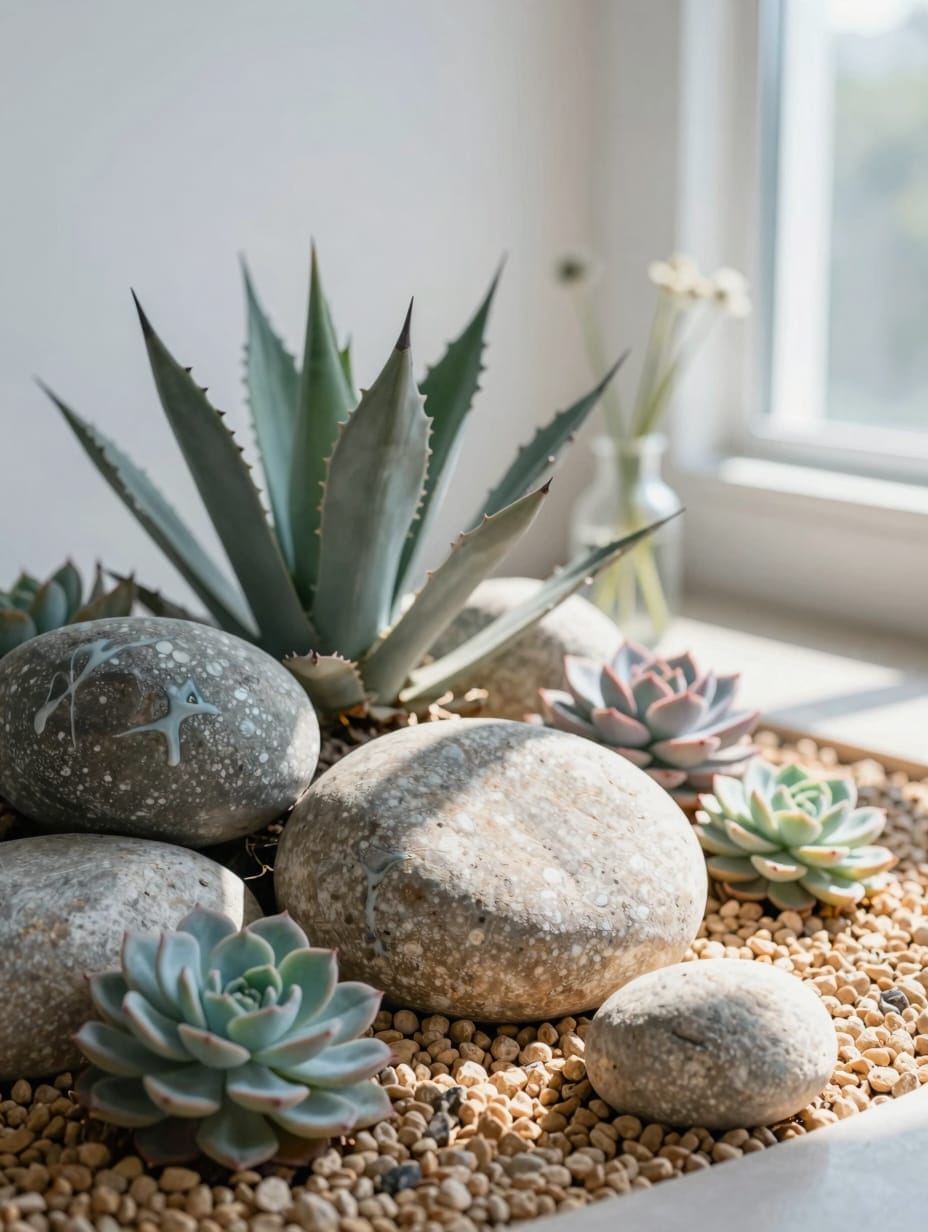
My neighbor’s modern yard features large river boulders anchored by architectural Blue Agave and rosettes of Echeveria. These sage and dusty rose succulents stand out against a bed of tan pea gravel that stays tidy even in heavy rain. The sharp, clean lines of the Agave create a striking silhouette under the warm afternoon sun.
I noticed they grouped these in clusters of three, which makes the small plants feel more like a deliberate art installation. Succulents can be finicky if your soil doesn’t drain fast enough, so adding extra grit is mandatory.
How to Get This Look
- Dig a hole twice the width of the succulent root ball and fill with 50% coarse sand.
- Blue Glow Agave, $45-$80, chosen for its slow growth and striking red-edged leaves.
- Mix smooth river rocks with sharp tan gravel to create a varied, natural texture.
- Propagate your own “Hens and Chicks” from a friend’s garden for $0 to fill gaps.
5. Monochromatic Lavender Drift
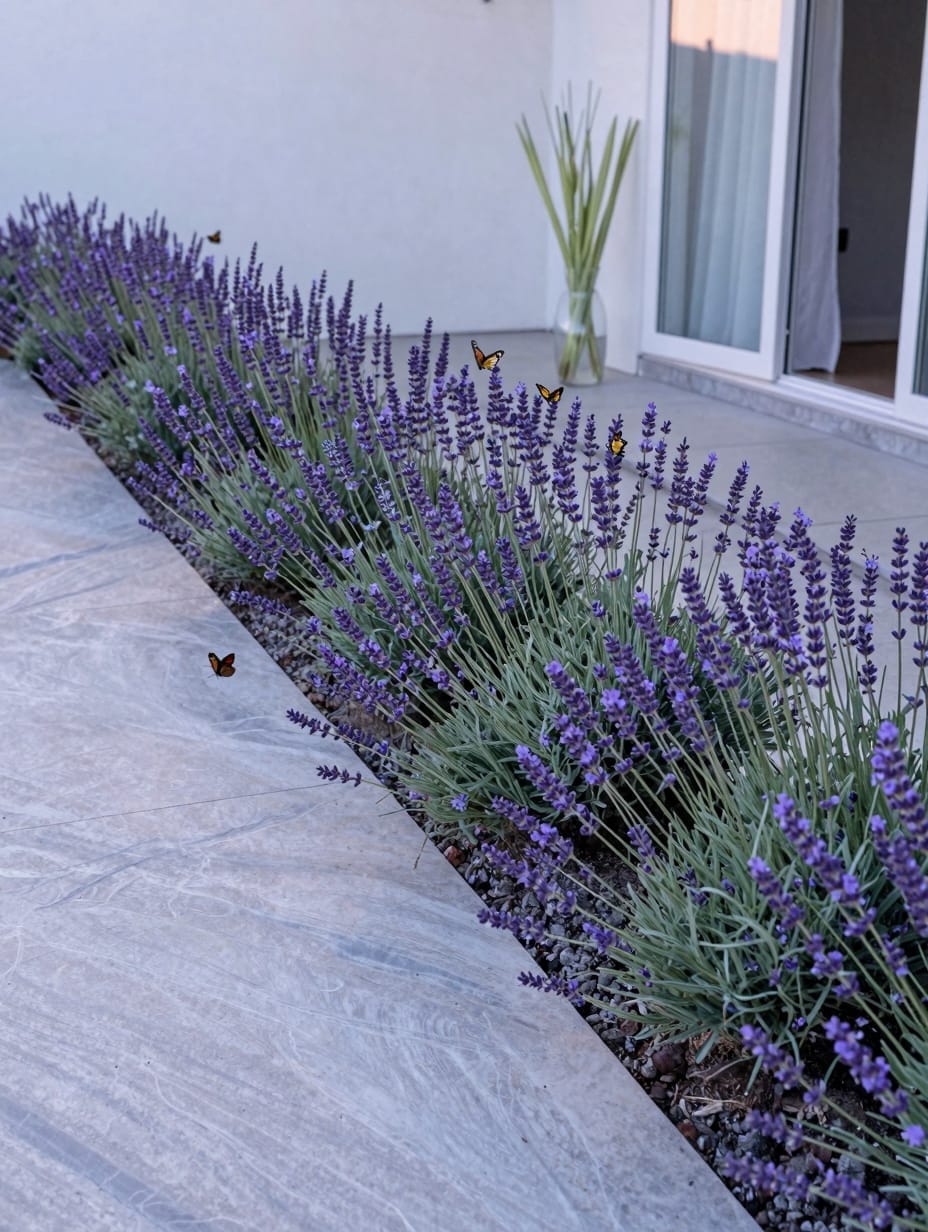
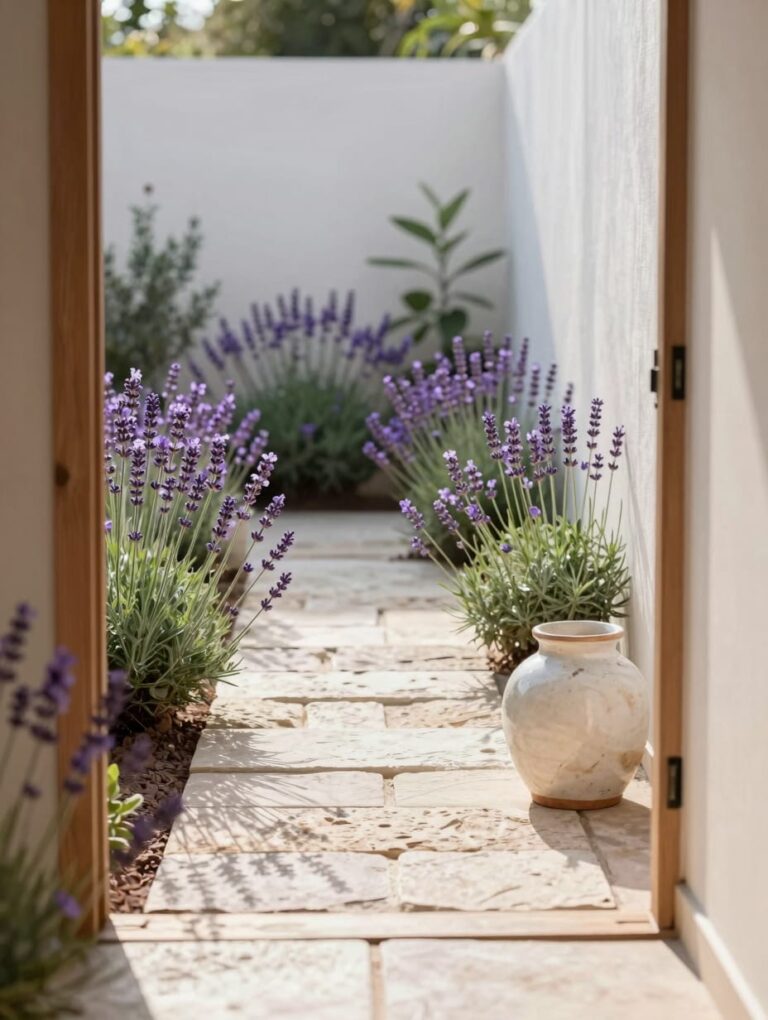
I’ll admit, I copied this look from a boutique hotel: a massive, fragrant drift of French Lavender lining the driveway. The silvery foliage provides a soft contrast to the vibrant violet spikes that draw in every butterfly in the zip code. Walking to the mailbox in the evening carries a heavy, calming scent that completely changes the mood of the yard.
I planted mine in a staggered zigzag pattern to create a seamless wave effect that filled in within one season. Lavender hates “wet feet,” so I had to raise my bed slightly to improve drainage.
How to Get This Look
- Space plants 12 inches apart to allow for air circulation while still achieving a full hedge.
- Hidcote English Lavender, $18-$30, selected for its deep purple hue and compact growth habit.
- Use dark hardwood mulch to make the silvery-green leaves look brighter and more defined.
- Purchase smaller 4-inch “starter” pots for $6 to save money when planting in large drifts.
6. The Tiered Retaining Wall Oasis
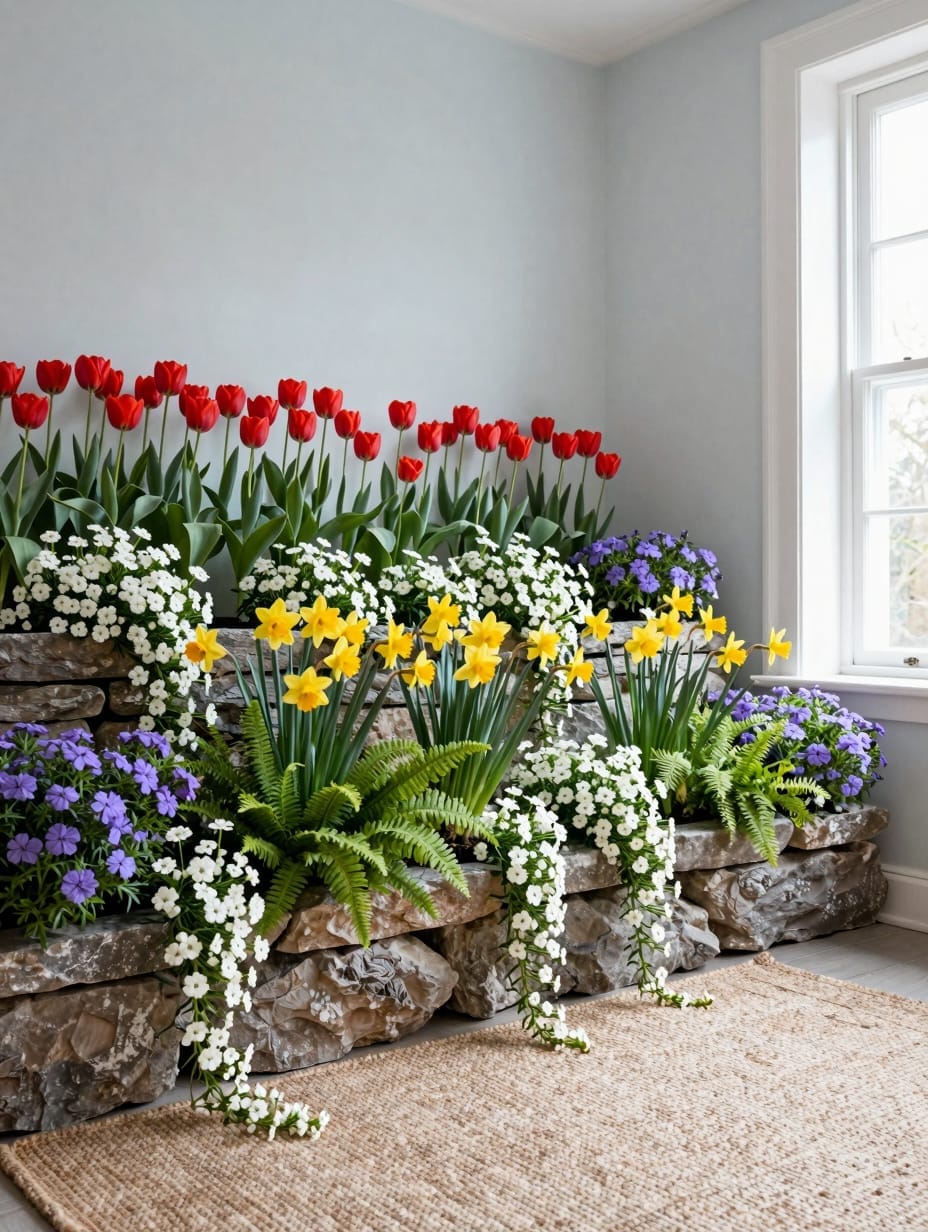
This three-level fieldstone wall project belongs to a friend who wanted to solve a sloping front lawn. Each tier holds a different color story: fiery red Tulips on top, sunny yellow Daffodils in the middle, and lush ferns at the base. Cascading purple Aubrieta spills over the stone edges like a vertical waterfall of spring color.
The “spiller” plants are essential because they soften the hard masonry lines and make the wall look like it’s been there for decades. Building stone walls is back-breaking work and usually requires a weekend of heavy lifting.
How to Get This Look
- Set the first layer of stones 2 inches below ground level to create a stable foundation.
- Purple Aubrieta, $12-$20, chosen for its ability to drape over stone without becoming invasive.
- Pair grey fieldstone with bright primary colors like red or yellow for a classic garden feel.
- Use concrete interlocking blocks for $3 each to mimic stone for a fraction of the price.
7. Hydrangea Heaven Porch Border
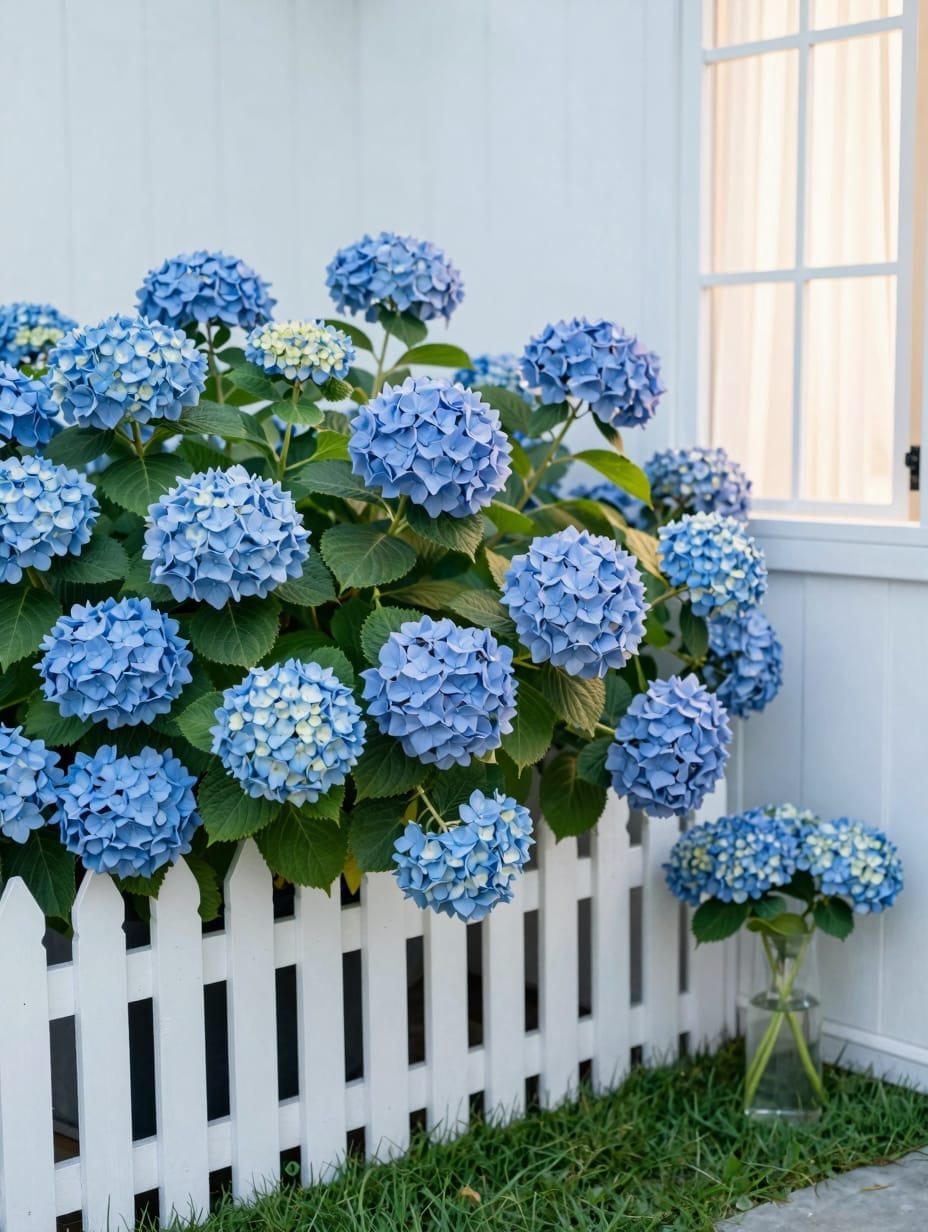
Huge, pillowy clusters of ‘Endless Summer’ blue hydrangeas hug the white picket fence in this cottage-style design. The waxy green leaves create a lush backdrop for the massive blooms that look striking against the crisp white wood. It’s a classic look that feels timeless and welcoming during the soft midday light.
I’ve found that a layer of pine needle mulch is the secret to keeping the soil acidic enough for those deep blue petals. Without the right pH, these beauties will stubbornly turn a muddy pink within a year.
How to Get This Look
- Position hydrangeas where they receive morning sun but are shaded from the harsh 2 PM heat.
- Endless Summer Hydrangeas, $40-$65, selected for their ability to bloom on both old and new wood.
- Keep the fence painted a bright semi-gloss white to reflect light back onto the flowers.
- Buy “bare root” hydrangeas in early spring for $15 to save over potted nursery plants.
8. Sun-Drenched Tropical Paradise
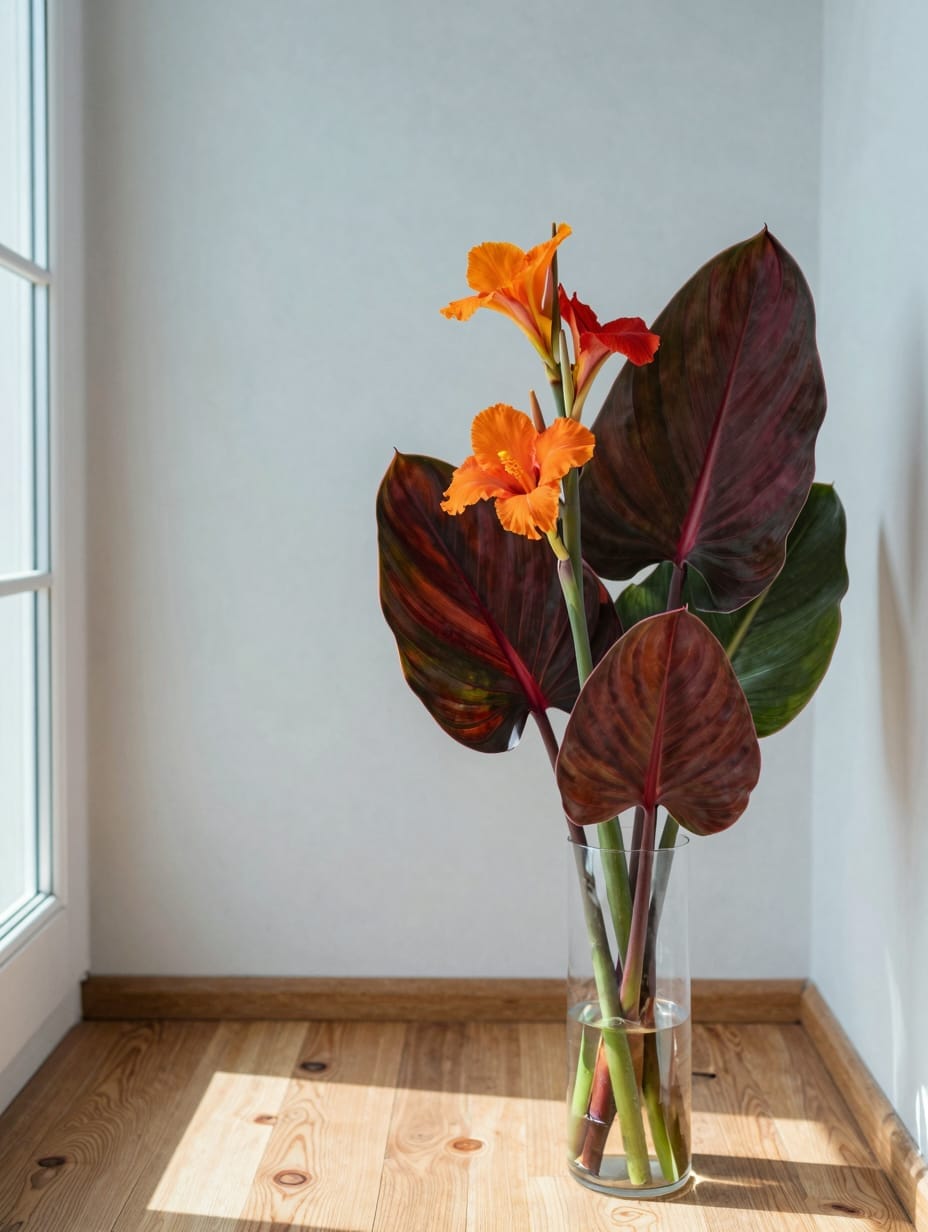
Deep burgundy Canna Lily leaves stand tall over bright orange Hibiscus in this high-energy tropical layout. I saw this in a coastal garden portfolio and was struck by how the Bird of Paradise added a dramatic flair. The palette of reds and oranges feels incredibly vibrant under the high-noon sun, accentuated by red volcanic rock.
Using plants with variegated foliage makes the bright blooms pop even more intensely against the background. Tropicals are heavy feeders, so I recommend a consistent fertilizing schedule to keep them looking lush.
How to Get This Look
- Plant Canna Lily bulbs 4 inches deep after the last frost for fast summer height.
- Tropical Hibiscus, $30-$55, selected for its large flared petals and glossy dark foliage.
- Use red lava rock to retain heat around the roots, which these tropical varieties crave.
- Grow Cannas from tubers for $8 rather than buying fully grown plants in the summer.
9. Minimalist Japanese Zen Bed
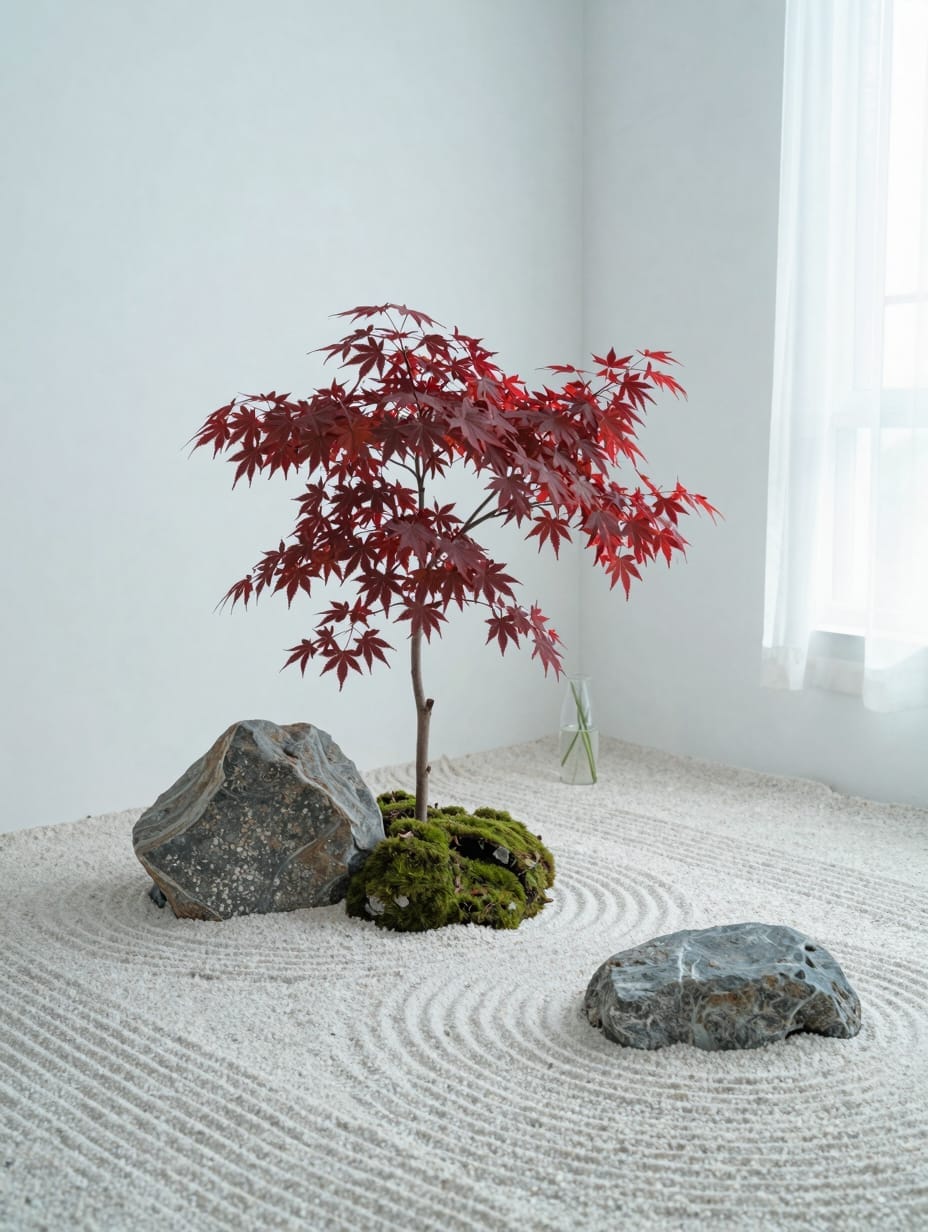
A single, weeping Japanese Maple with crimson leaves acts as the centerpiece for this serene, minimalist bed. Surrounding it is raked white sand and a few moss-covered boulders, creating a sophisticated contrast of textures. The delicate, lacy texture of the maple leaves provides a soft movement against the static grey stones.
Full disclosure: raking sand into those perfect ripples is harder than it looks and requires constant maintenance to clear debris. I used an odd number of stones placed off-center to achieve that balanced, natural aesthetic.
How to Get This Look
- Place the largest stone first as your “anchor” and arrange smaller stones in a triangle.
- Bloodgood Japanese Maple, $120-$250, selected for its deep red color and elegant weeping shape.
- Choose matte grey boulders to keep the color palette grounded and natural.
- Use local river rocks for $5 to anchor the edges instead of expensive imported stone.
10. The Pollinator-Friendly Perennial Patch
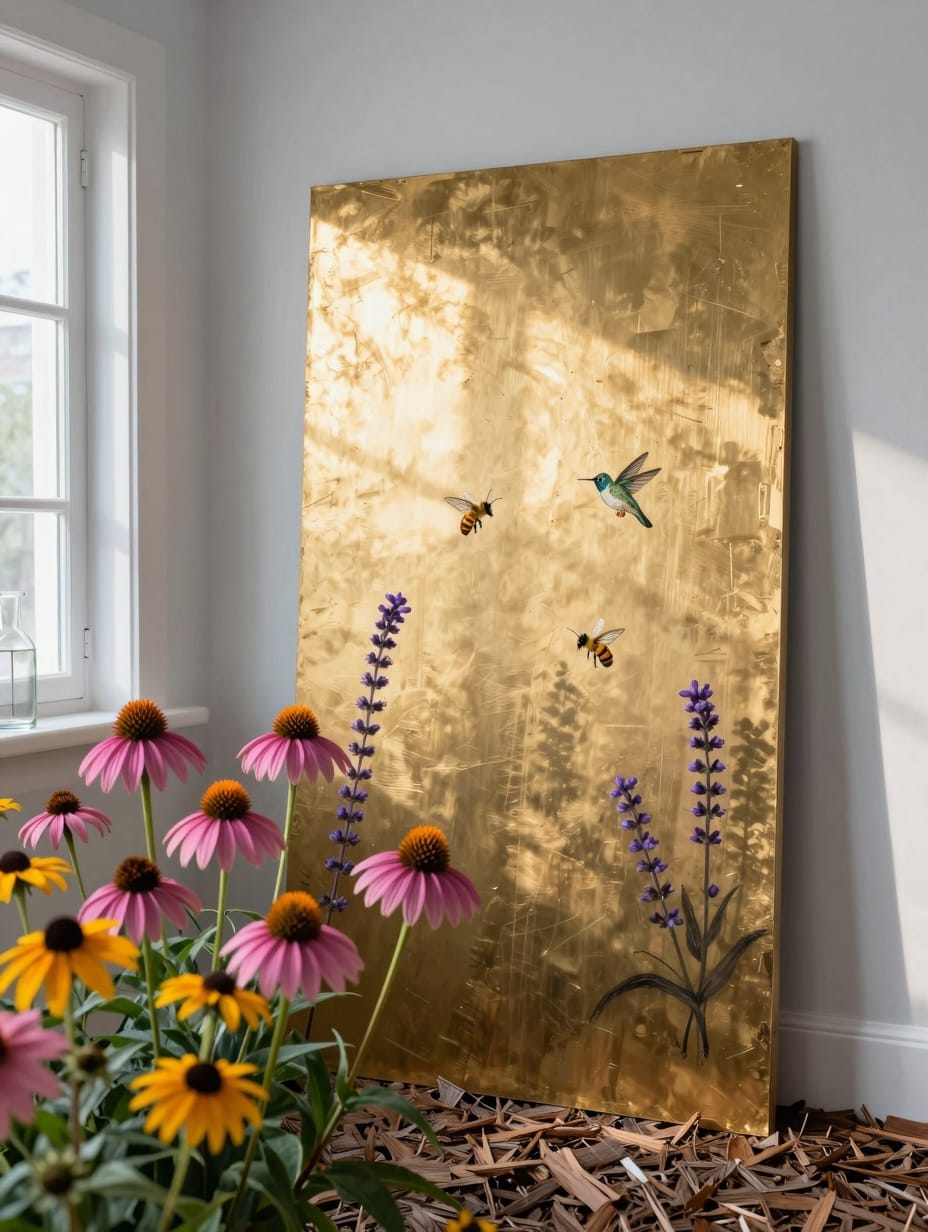
I’m proud of this patch: bright pink Echinacea and fuzzy purple Salvia that draw in bees and hummingbirds all day. The bed is a riot of texture, with yellow Black-eyed Susans adding a splash of sunshine against shredded cedar mulch. These hardy perennials thrive in the golden sunset glow, standing sturdy even in a breeze.
Leaving the dried seed heads standing through late fall provides a natural food source for local songbirds. The downside is that the garden can look a little “messy” to neighbors who prefer a manicured lawn.
How to Get This Look
- Plant in groups of five or more of the same species so pollinators can spot them easily.
- Pink Coneflowers, $15-$25, selected for their drought tolerance and long-lasting summer blooms.
- Use natural cedar mulch to repel pests while adding a warm, rustic scent to the air.
- Divide your own perennials every three years for $0 to double your garden size for free.
11. Coastal White and Blue Shiplap Garden
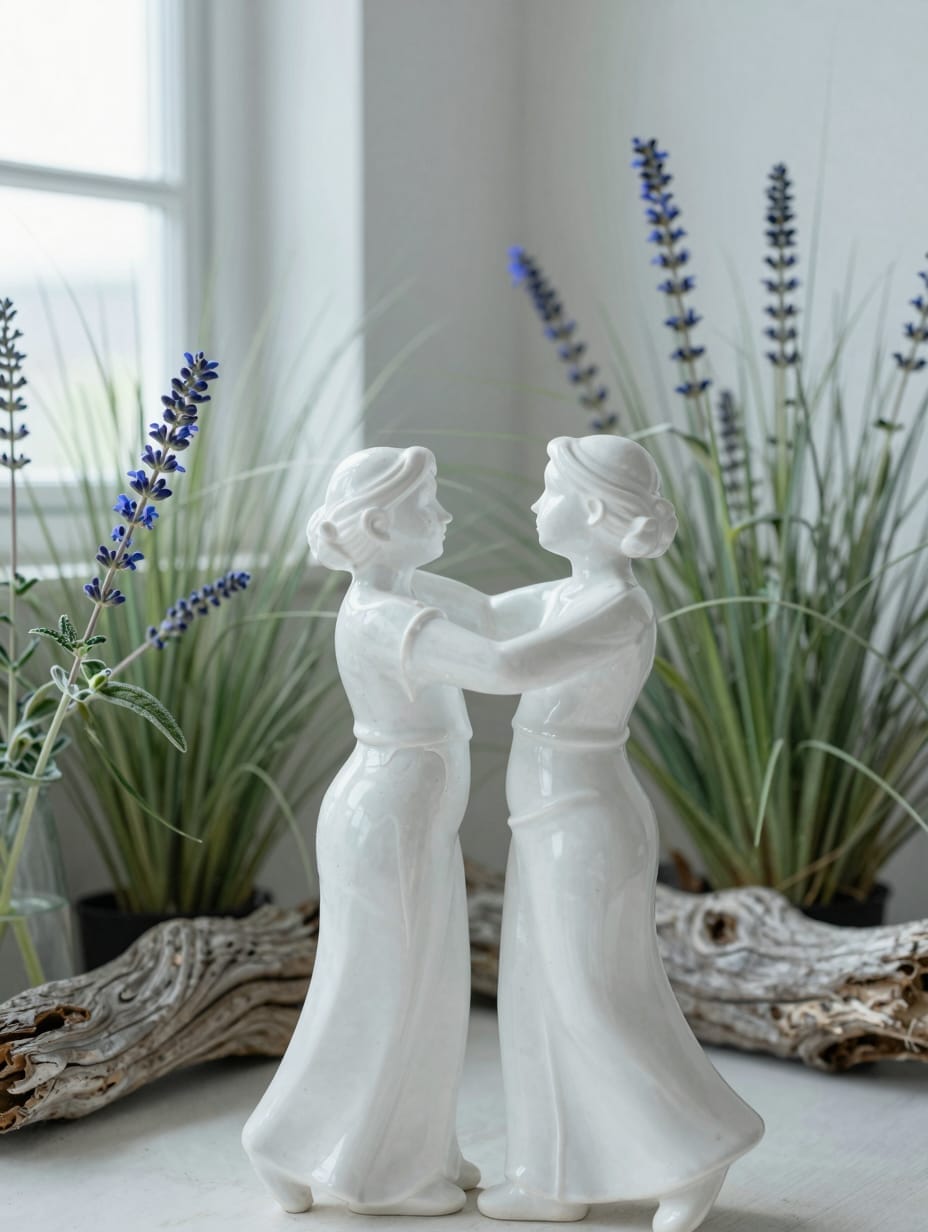
Airy white Gaura and blue Salvia dance against a backdrop of ornamental sea grass in this beach-inspired design. I tucked weathered driftwood pieces between the plants, adding a bleached texture that complements the cool-toned floral palette. The look is breezy and relaxed, making even a suburban home feel like it’s near the shore.
Adding natural elements like driftwood reinforces the coastal theme without needing a full nautical overhaul. This style requires very little water once established, though the Gaura can look spindly if not trimmed back.
How to Get This Look
- Space Blue Fescue grass 10 inches apart to create neat, rounded tufts along the border.
- Victoria Blue Salvia, $12-$22, selected for its upright spikes and heat-resistant color.
- Incorporate driftwood with a greyish patina to match the cool tones of the blue flowers.
- Scavenge for large seashells or local beach wood for $0 to add authentic coastal texture.
12. Victorian Rose Gable Garden
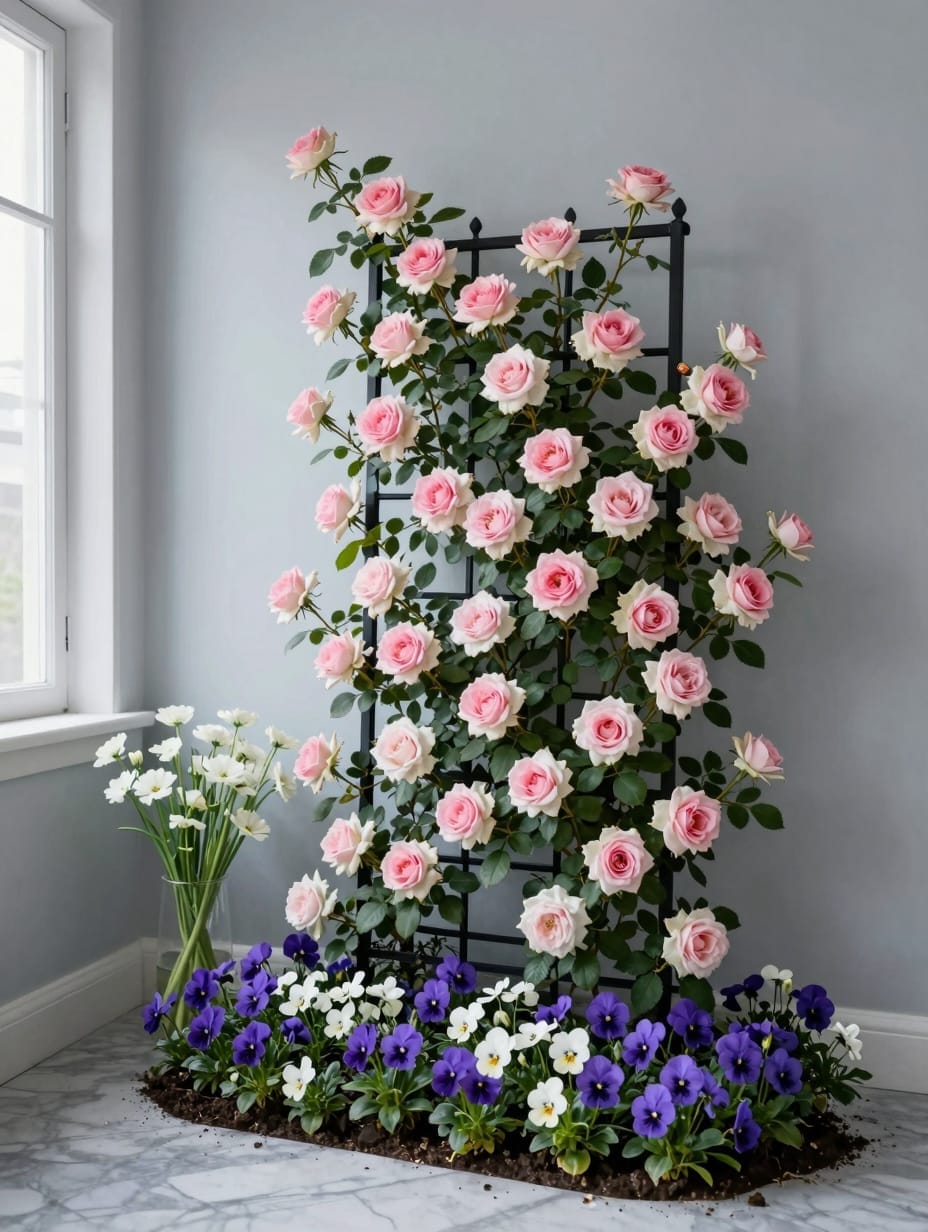
Climbing ‘Eden’ roses with pale pink centers scale a black metal trellis in this timeless Victorian-inspired setup. Below, a carpet of purple Pansies and white Alyssum fills every inch of the dark, rich soil. The fragrance is heavy and sweet, creating a sense of decadent luxury right at the front door.
The thing is, you have to train the canes early by tying them in a horizontal fan shape to encourage more blooms. If you let them grow straight up, you’ll only get flowers at the very top of the trellis.
How to Get This Look
- Secure the trellis 3 inches away from the wall to allow for airflow and prevent mold.
- Eden Climbing Rose, $45-$75, selected for its old-fashioned ruffled shape and repeat blooming.
- Pair black metal finishes with pastel pink roses for a high-contrast, classic romantic look.
- Buy “mixed pansy” flats in early spring for $18 to create a cheap, lush ground cover.
13. The Shady Hostas and Ferns Retreat
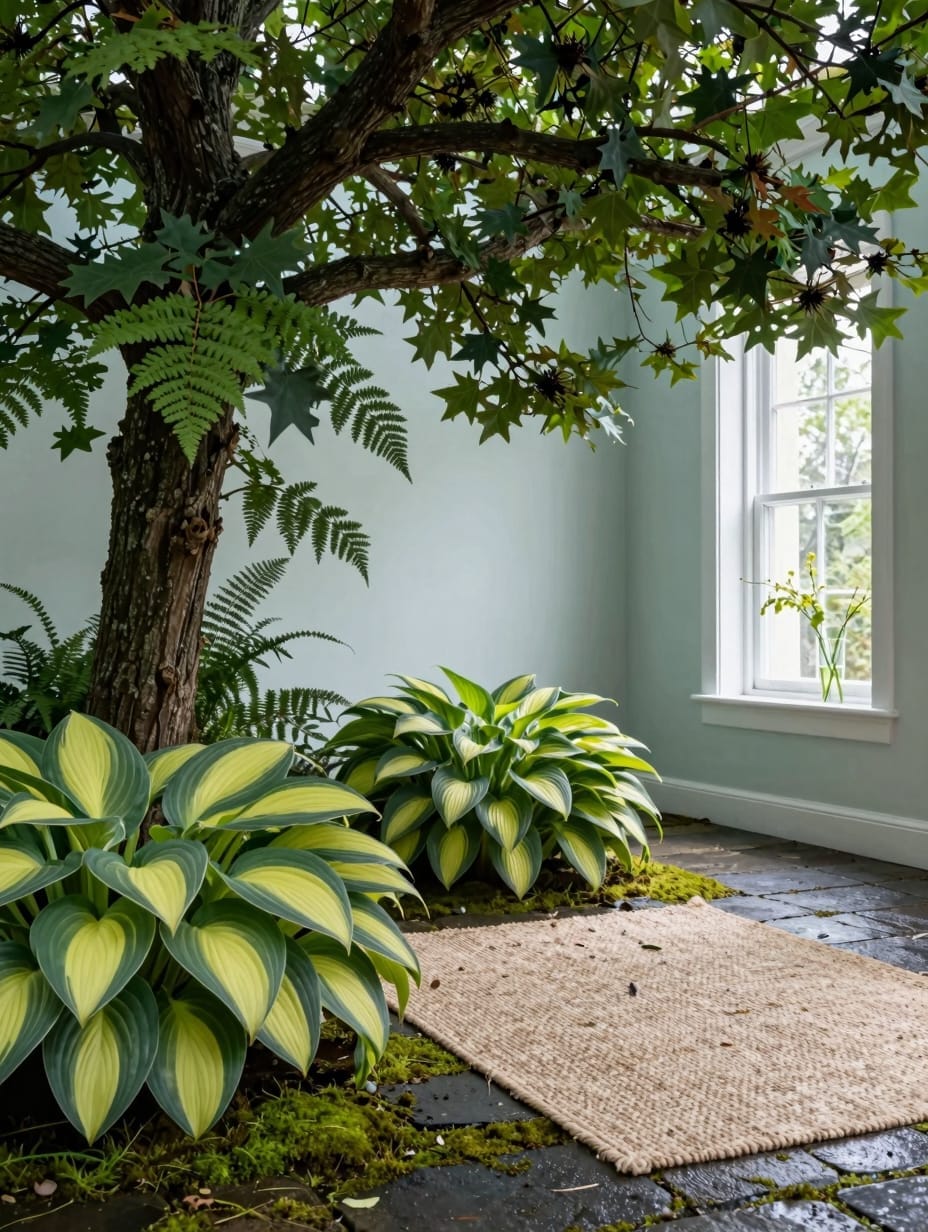
I transformed a dark corner under a large oak tree using variegated Hosta leaves and delicate Maidenhair ferns. The lime and forest green shades brighten up the shade, while deep green moss grows between damp slate paving stones. It’s a cool, inviting retreat that proves you don’t need direct sun for a beautiful front yard.
Choosing variegated Hostas with white or yellow edges is my best tip for brightening up north-facing yards. Hostas are basically “deer candy,” so expect some nibbled leaves if you live near a wooded area.
How to Get This Look
- Plant ferns in the deepest shade and hostas where they get a tiny bit of dappled light.
- Guacamole Hostas, $20-$35, selected for their massive size and fragrant summer flowers.
- Use dark grey slate stones to provide a moody, sophisticated base for the green foliage.
- Transplant wild moss from shaded areas of your yard for $0 to fill gaps between stones.
14. Bold Geometric Modernist Bed
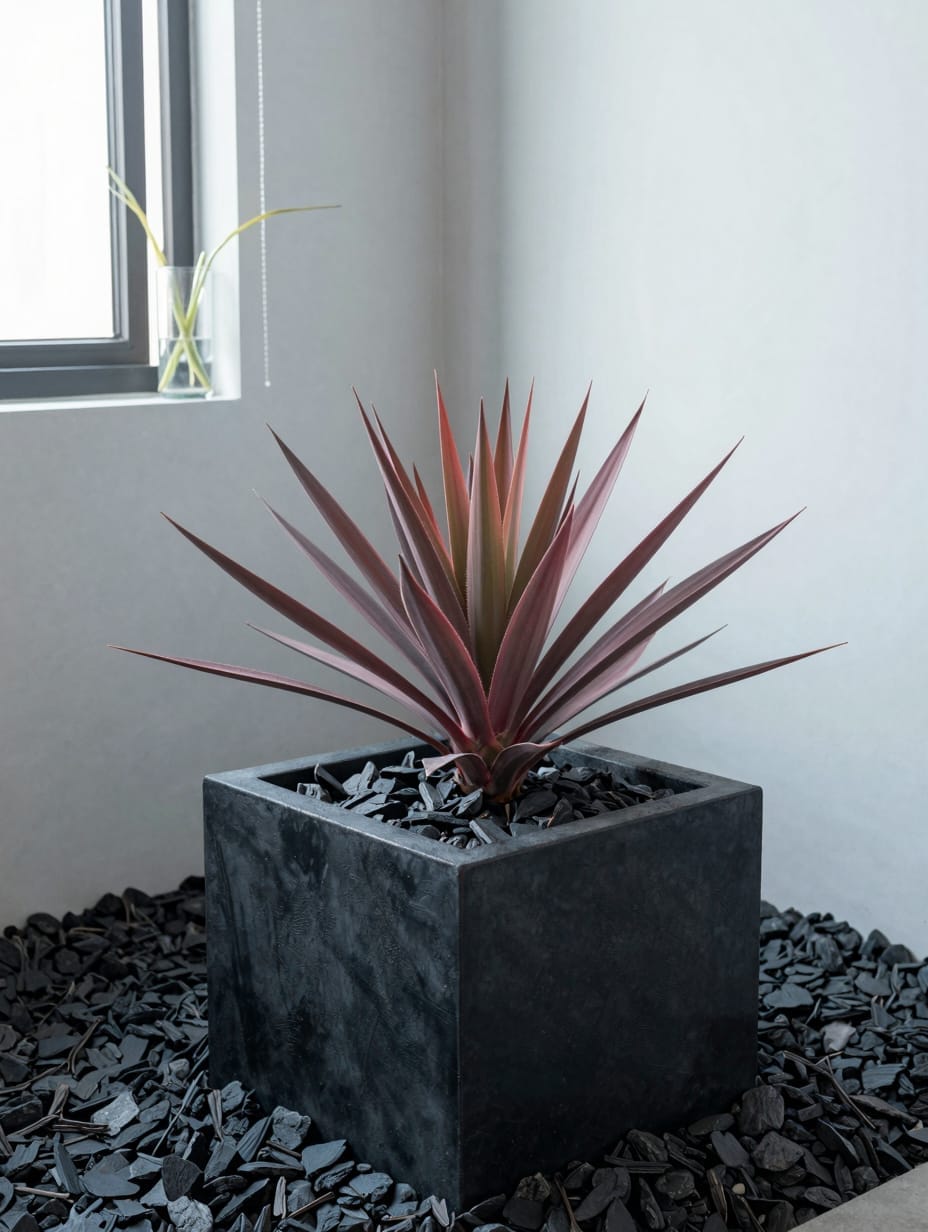
This industrial design features perfectly square concrete planters housing architectural Red Yucca. The ground cover is a uniform layer of dark charcoal slate chips that keeps the lines clean and high-contrast. The sharp, spiked leaves of the Yucca cut through the straight lines of the modern hardscaping with precision.
Honestly, a heavy-duty weed barrier under the slate chips is non-negotiable here to keep the stones from mixing with the soil. It’s a very low-maintenance look, but the initial cost of large concrete planters can be high.
How to Get This Look
- Align planters using a laser level to maintain the strict geometric spacing of the design.
- Red Yucca, $35-$60, selected for its sculptural shape and ability to thrive in poor soil.
- Choose charcoal-colored slate to create a dramatic, moody backdrop for the red plants.
- Cast your own concrete planters using wooden forms for $15 in materials to save money.
15. The Cheery Sunflower Corner
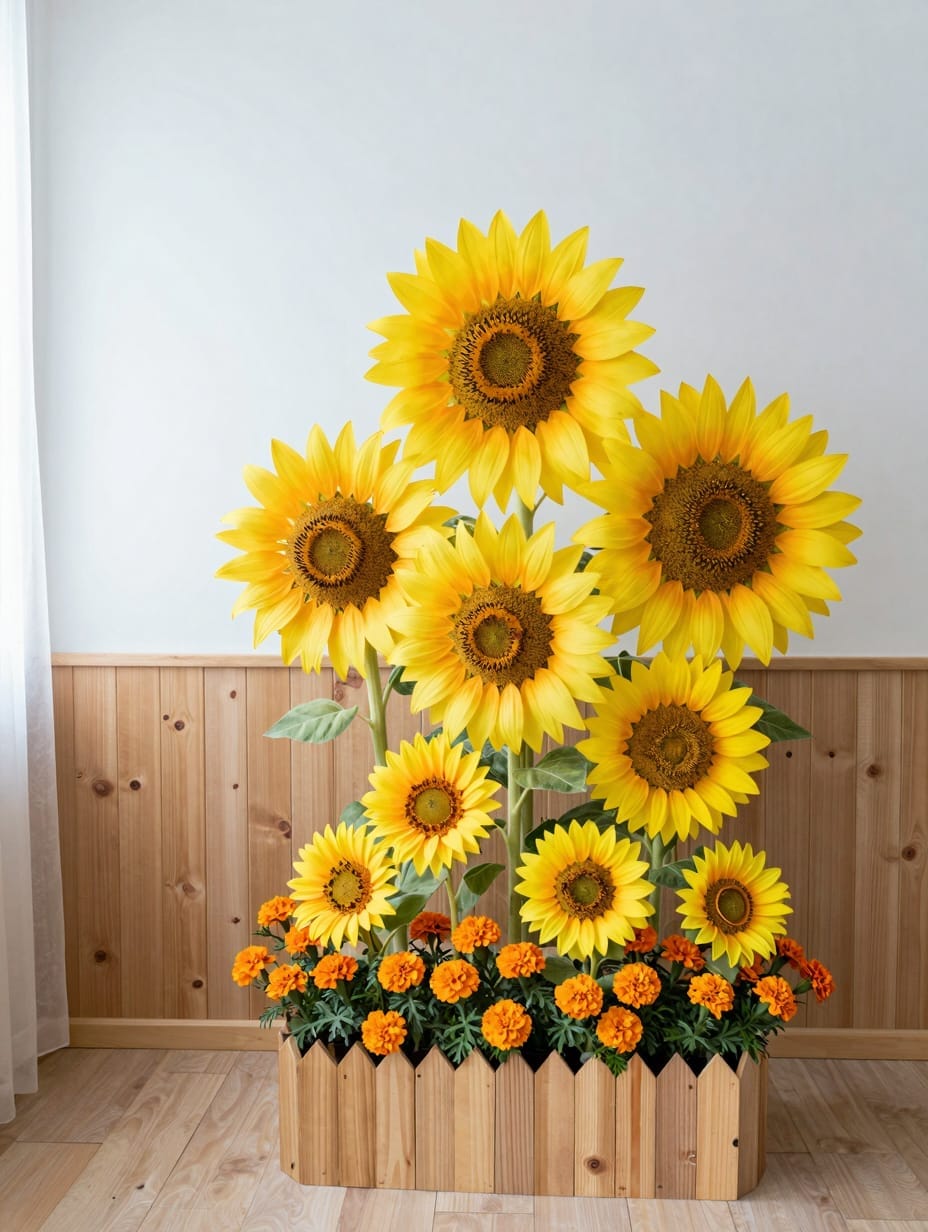
I grew giant ‘Mammoth’ sunflowers against my wooden side fence, and they stood like sentinels all through August. Beneath their massive heads, I planted ‘Teddy Bear’ sunflowers and orange Marigolds to create a multi-layered sunburst. The scene is bright, happy, and brings a classic summer energy that neighbors always comment on.
I suggest staggering your plantings by two weeks so you have a continuous cycle of blooms into late summer. Sunflowers are heavy drinkers and will wilt visibly if you skip even one day of watering in the heat.
How to Get This Look
- Stake the Mammoth varieties early with bamboo poles to prevent them from snapping in the wind.
- Mammoth Sunflower Seeds, $4-$7, selected for their incredible 10-foot height potential.
- Mix in orange Marigolds to hide the scruffy lower stems of the taller sunflowers.
- Save seeds from this year’s harvest for $0 to plant an even bigger patch next spring.
16. Whimsical Allium and Peony Mix
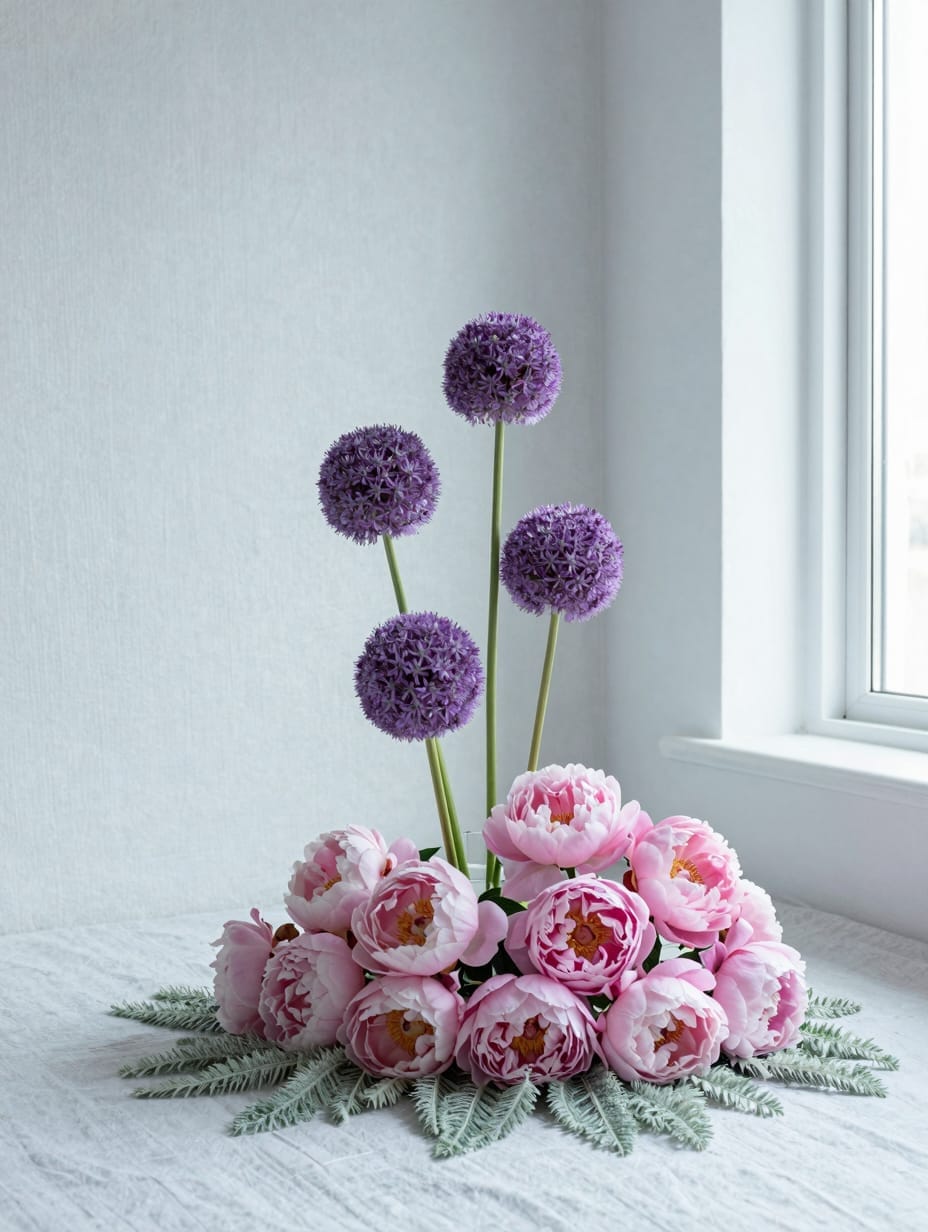
Round, purple Allium globes look like floating balloons above the heavy, ruffled pink Peonies in this playful mix. The spherical shapes against the lush, cabbage-like Peonies create a visual interest that feels like something out of a storybook. Silvery lamb’s ear at the border provides a fuzzy texture that everyone wants to touch.
You must support those heavy peony heads with wire cages early in the spring or they will droop to the mud after the first rain. The bloom window is short, so enjoy the spectacle while it lasts.
How to Get This Look
- Plant Allium bulbs at a depth of 6 inches in the fall for strong spring stems.
- Sarah Bernhardt Peonies, $30-$50, selected for their classic fragrance and large pink blooms.
- Use the silvery-grey of Lamb’s Ear to bridge the gap between the pink and purple flowers.
- Buy “dried” Allium heads for $12 to keep the shape in your garden even after they fade.
17. The Fragrant Herb and Edible Border
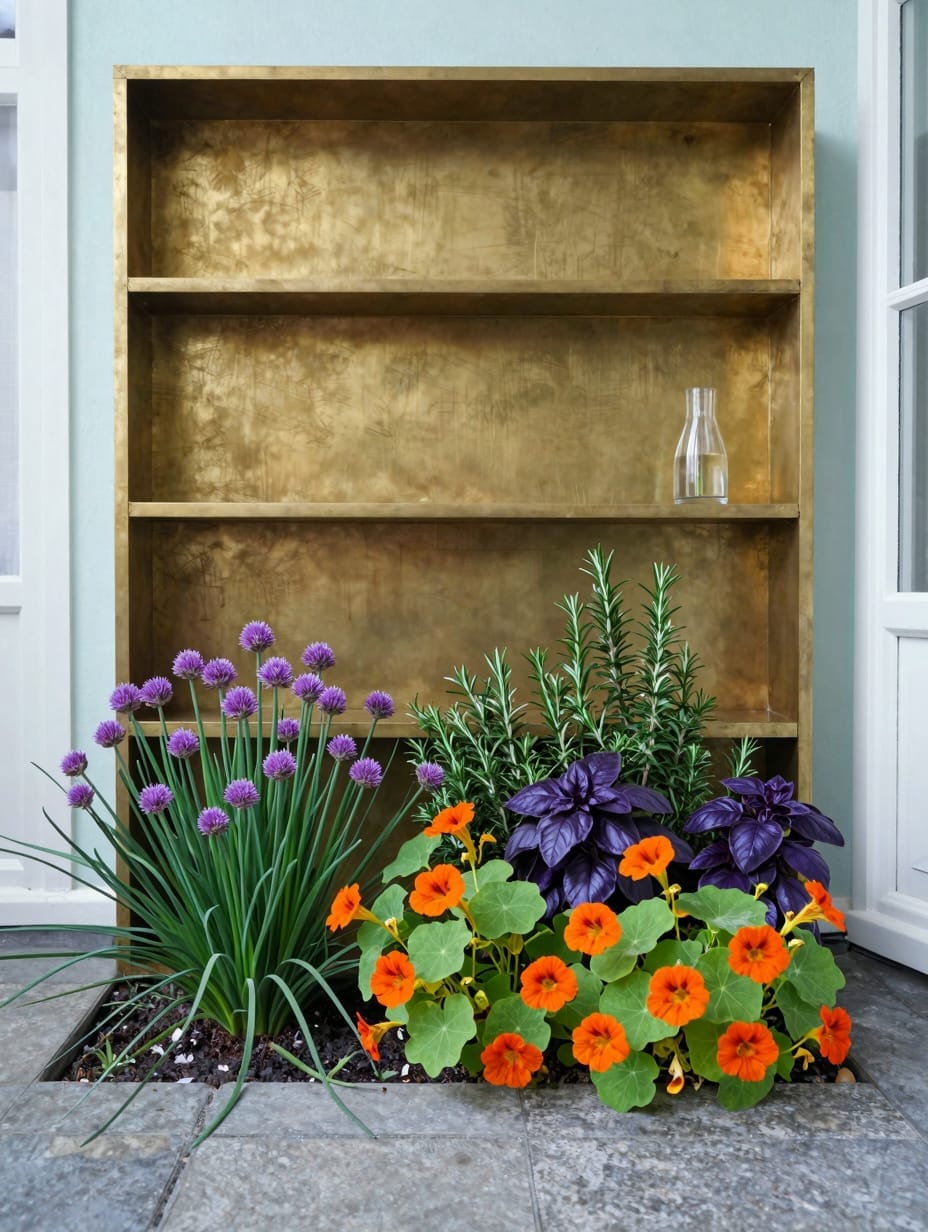
Lush mounds of purple-flowering Chives and aromatic Rosemary bushes make this border functional and beautiful. I interspersed bright edible Nasturtiums in shades of sunset orange to add a pop of color among the savory herbs. The bed releases a wonderful scent whenever someone brushes against the Rosemary while walking to the door.
Planting herbs near the edge of the path ensures they are within reach for a quick snip for dinner. Mint is a great addition, but only if you keep it in a pot buried in the ground to stop it from taking over.
How to Get This Look
- Trim Rosemary into a neat mound twice a year to keep it from becoming woody and leggy.
- Rosemary Topiary, $25-$45, selected for its structure and year-round evergreen presence.
- Pair ruffled purple Basil with smooth green herbs for a sophisticated edible palette.
- Start herbs from $3 seed packets in small starter trays before transplanting to the bed.
18. Desert Sunset Gravel Garden
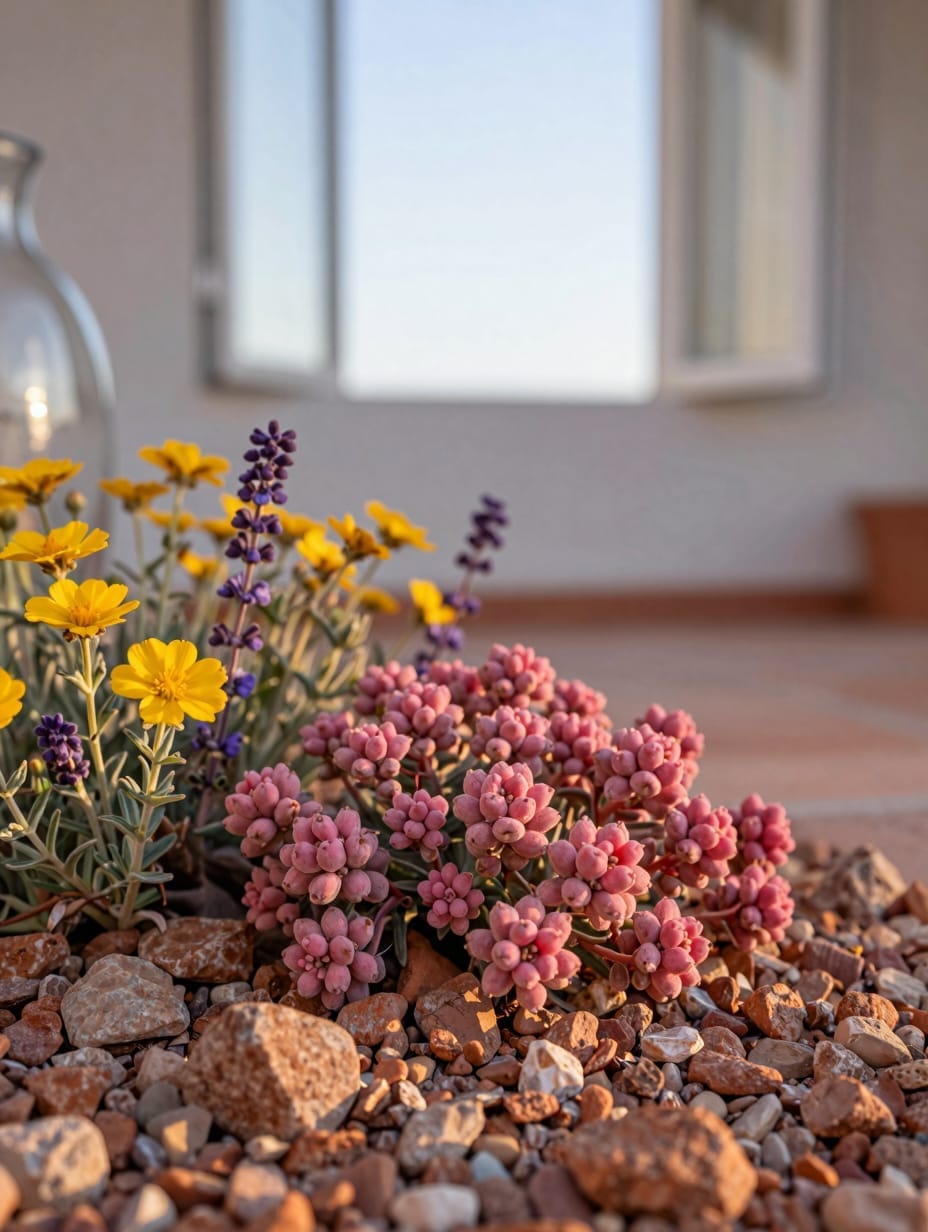
This design uses vibrant pink Ice Plant spreading over warm terracotta gravel to mimic a desert landscape. Clumps of yellow Blanket Flower and purple Sage provide vertical interest against the low-growing groundcover. The rugged textures reflect the evening light beautifully, mirroring the warm tones of a setting sun.
Ice Plants are amazing for choking out weeds while providing a neon-bright carpet of color with almost zero water. However, they can be sensitive to frost, so they might not survive a harsh northern winter.
How to Get This Look
- Spread 2 inches of crushed terracotta stone over a weed barrier for a warm, earthy base.
- Blanket Flower (Gaillardia), $15-$25, selected for its heat tolerance and bi-color petals.
- Contrast the neon pink Ice Plant with dusty purple Sage for a desert-chic color story.
- Use local decomposed granite for $10 per bag to achieve the gravel look on a budget.
19. The Classic Tulip and Muscari Carpet
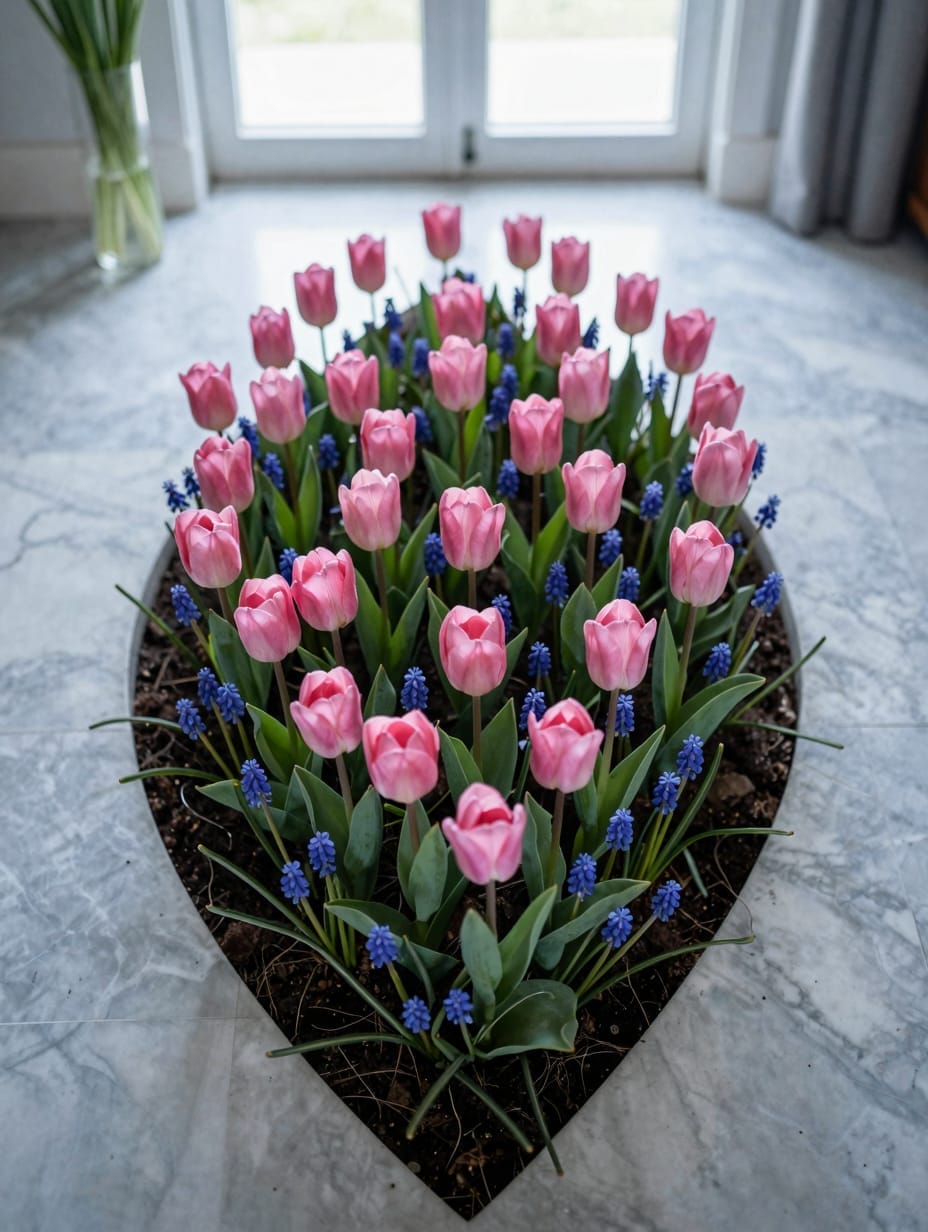
I planted a dense carpet of bubblegum pink Tulips emerging from a sea of tiny, deep blue Grape Hyacinths. The electric color contrast is the quintessence of spring and looks professionally manicured with a crisp ‘V’ trench edge. It’s a high-impact display that makes the whole neighborhood stop and stare for those few weeks in April.
I always plant bulbs in clusters of ten or more rather than single rows to create these high-impact color bouquets. Once the flowers fade, you have to resist the urge to cut the leaves back until they turn yellow.
How to Get This Look
- Use a manual edger to cut a 3-inch deep trench around the bed for a pro finish.
- Pink Impression Tulips, $20-$35 per 25 bulbs, selected for their sturdy stems and massive size.
- Layer blue Muscari in the top 3 inches of soil above the deeper Tulip bulbs.
- Buy “end of season” bulbs in late November for $10 to save 50% on your spring display.
Loved these ideas? Save this post to Pinterest so you can come back to it later.
Simple Ways to Bring These Ideas to Life in Your Home
- Define your edges with a sharp spade to create an instant professional silhouette.
- Group plants in odd numbers to mimic the organic flow found in nature.
- Layer heights by placing “thrillers” in back, “fillers” in middle, and “spillers” up front.
- Choose a restricted color palette of three hues to keep the design feeling intentional.
- Add one architectural element like a boulder or trellis to provide structure during winter.
Frequently Asked Questions
How do I choose the right front yard flower bed ideas for my sun level?
Observe your yard at 10 AM, 1 PM, and 4 PM to track light patterns. Full-sun plants like lavender need 6+ hours, while hostas and ferns thrive in less than 4 hours. Matching plants to your actual light prevents expensive replacements and ensures lush growth.
What is the best mulch for a front yard flower bed?
Shredded hardwood mulch is excellent for staying in place on slopes and retaining moisture. Cedar mulch naturally repels some insects and lasts longer, though it costs more. For a modern look, consider dark charcoal slate chips or pea gravel over a heavy-duty weed barrier.
How often should I water my new flower bed?
Newly planted perennials need daily watering for the first two weeks to establish roots. Afterward, aim for one inch of water per week, ideally through deep soakings rather than light sprinkles. Deep watering encourages roots to grow downward, making plants more resilient during summer heat waves.
How can I keep my flower bed looking good in winter?
Incorporate “evergreens” like boxwoods or yews and leave ornamental grasses standing for texture. Red-twig dogwood or architectural stones provide visual interest when flowers are dormant. Planning for four-season structure ensures your front yard doesn’t look like a dirt patch for six months of the year.
Common Myths About Front Yard Flower Bed
Myth: Perennials are “plant and forget” additions to a yard.
While they return yearly, perennials require dividing every 3-4 years and regular deadheading to stay healthy. Neglected perennials can become woody, overgrown, or stop blooming entirely. For example, my hostas became overcrowded and small until I split them into three separate healthy plants last spring.
Myth: More fertilizer always leads to more flowers.
Over-fertilizing often produces lush green leaves but very few actual blooms. Too much nitrogen can even burn delicate root systems or attract pests like aphids. I’ve found that a single application of balanced, slow-release fertilizer in early spring is usually sufficient for most garden varieties.
Myth: You have to dig up all your bulbs every single year.
Most spring bulbs like tulips and daffodils are designed to stay in the ground year-round. Only “tender” summer bulbs like Dahlias or Cannas need lifting in cold climates where the ground freezes solid. My daffodils have reliably returned for five years without me ever touching them once.
Front Yard Flower Bed: Thoughts
Building a garden is a slow, rewarding process that transforms your curb appeal one bloom at a time. Whether you choose a formal rose border or a wild meadow, these front yard flower bed ideas provide the foundation for a home you love. Save this post to Pinterest 📌 and start building the apartment you actually want to come home to.