15 Space-Saving Bookshelf Ideas For A Beautifully Organized And Cleverly Compact Reading Space
My small apartment walls often feel like they’re closing in, especially when I look at my growing stack of novels. Finding clever bookshelf ideas for a cozy reading space, one that truly feels lived-in and organized, became a personal quest. I wanted to reclaim my floor space without sacrificing my treasured collection. This isn’t just about storage; it’s about making peace with limited square footage and still embracing the comfort of a good book.
Why These Bookshelf Ideas Are Worth Trying
In a compact home, every square inch counts, making smart vertical storage essential for a tidy aesthetic and peaceful mind. These bookshelf ideas help you maximize your space, creating serene reading nooks without feeling cramped or cluttered, ensuring your literary world fits perfectly.
Table of Contents
1. Floating Fantasies: Airy Shelves for a Weightless Literary Loft
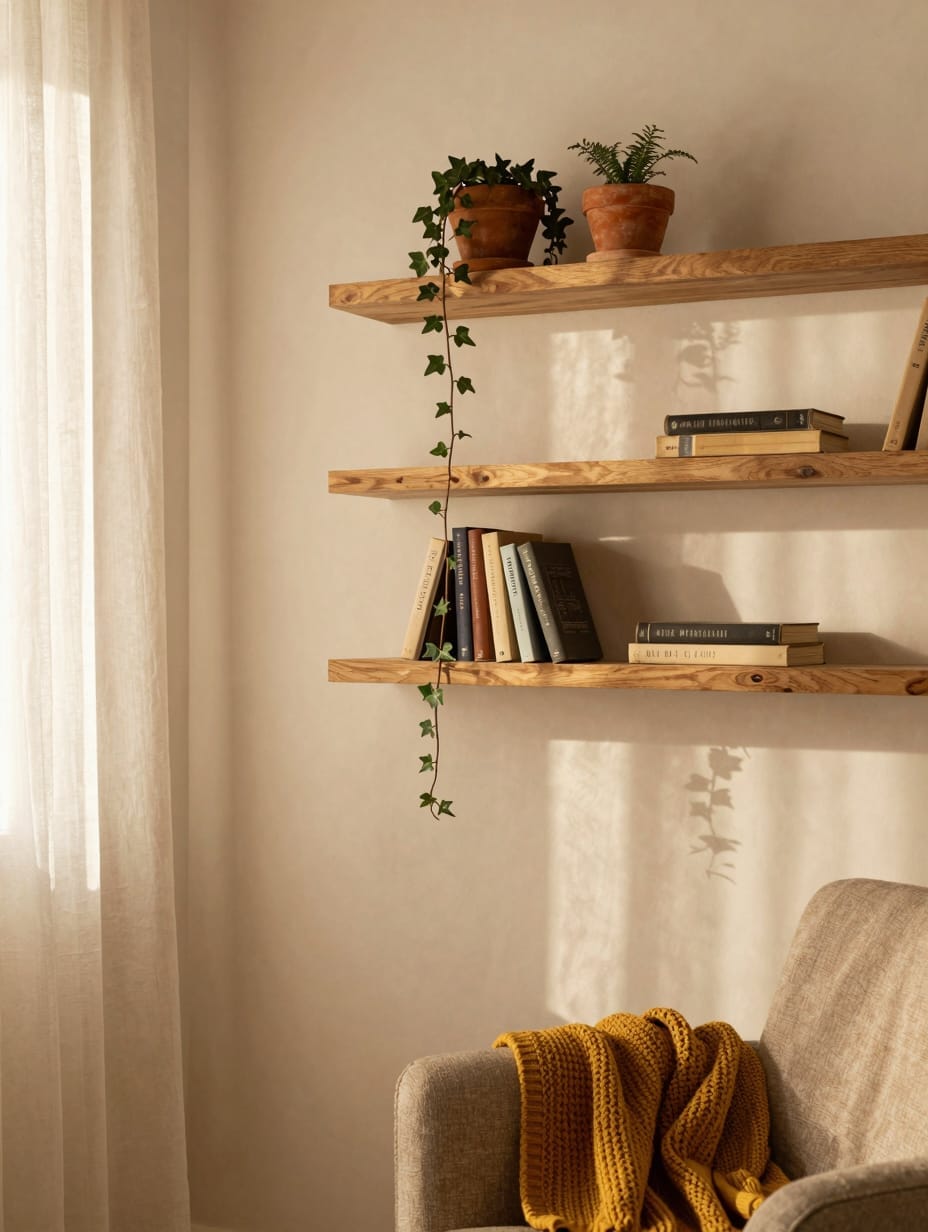
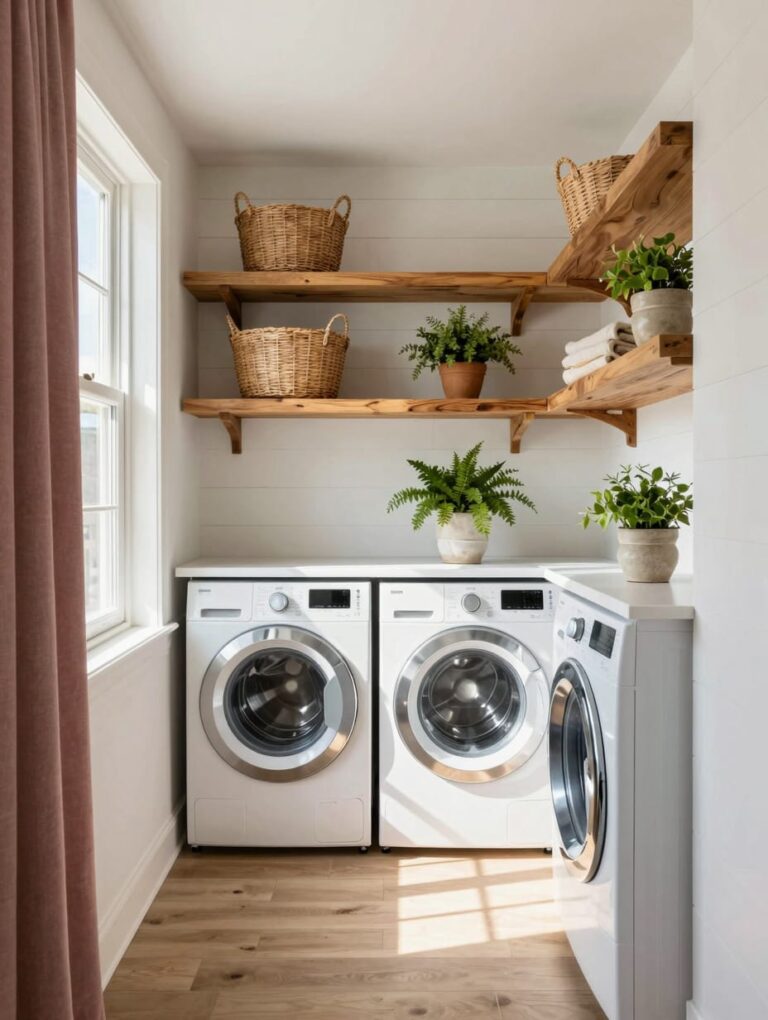
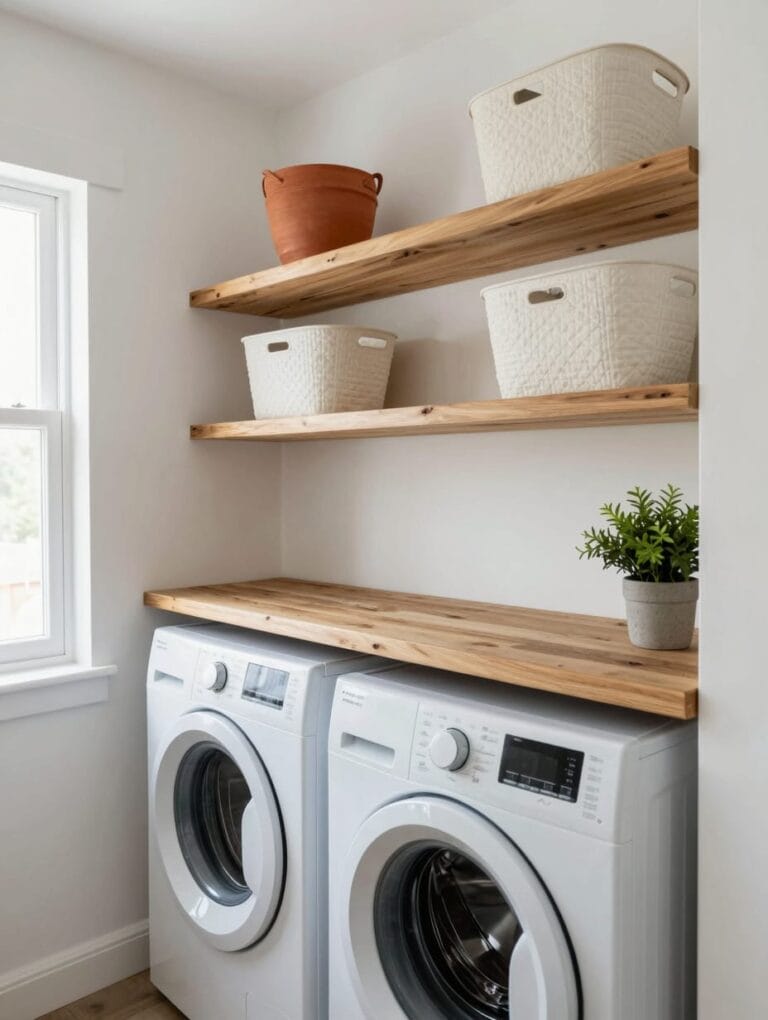
I installed a series of natural oak floating shelves in my narrow hallway, choosing a lighter wood to keep the space feeling open. The diffused afternoon light always catches the delicate terracotta planters and trailing ivy I placed there, making the rustic texture of my vintage hardcovers feel even more inviting. The chunky mustard throw I tossed over a nearby armchair just begs for a cozy read.
These 5-inch deep shelves, which I found on Etsy, disappear into my true white painted wall, giving an illusion of depth. The only drawback is dust, which seems to love settling on the top of these more than anything else.
How to Get This Look
- Install shelves 12 inches apart vertically, ensuring clearance for most books.
- Oak floating shelves, $40-80 each, choose solid wood for durability.
- Contrast with a dark wall color like navy for striking visual depth.
- DIY painted plywood planks, $10-20 per shelf, mounted with hidden brackets.
2. Snug Nook Narratives: Maximizing Every Cozy Corner
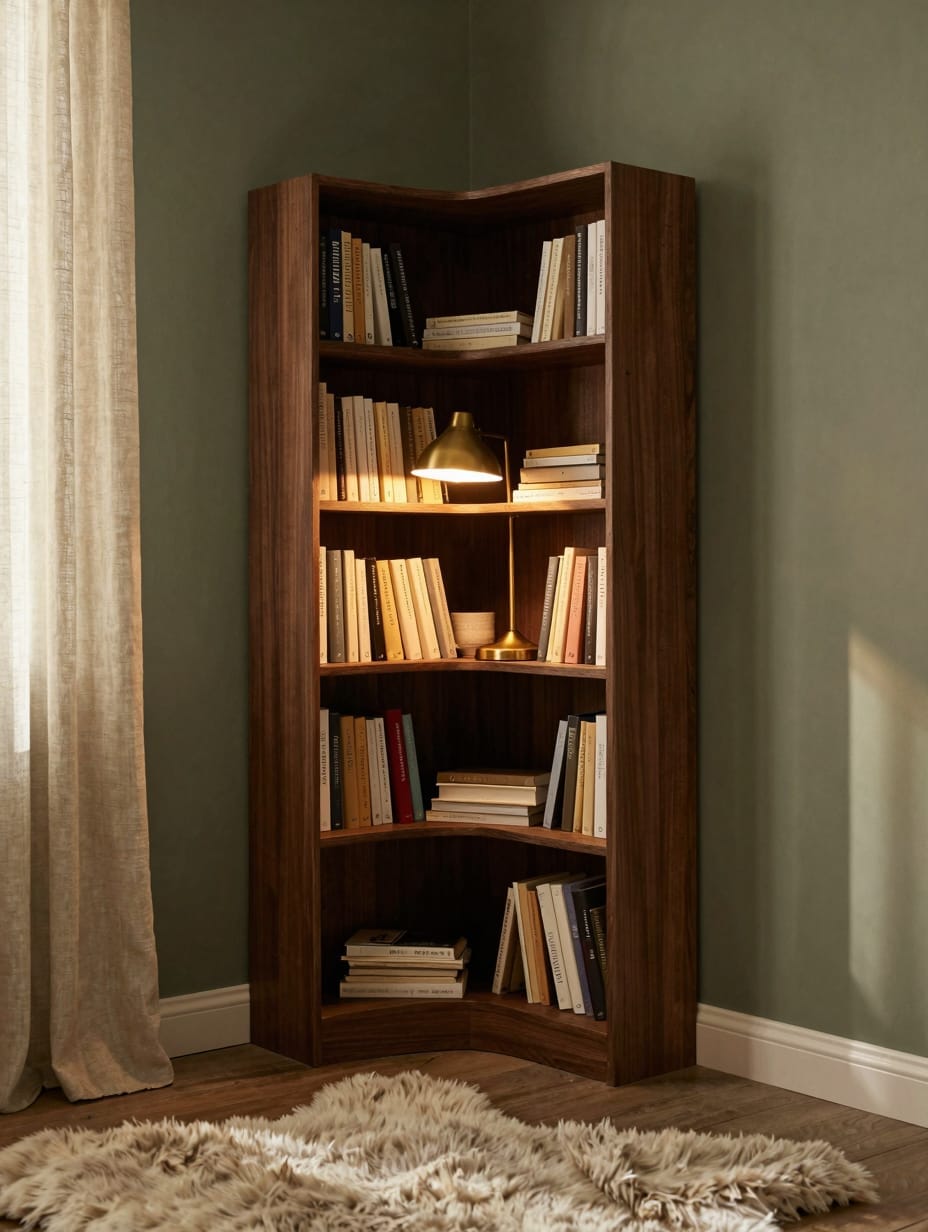
My friend Clara recently transformed a neglected corner of her living room into a dedicated reading nook, and it’s simply brilliant. She found a dark walnut corner bookshelf that reached almost to the ceiling, fitting perfectly against her deep sage green wall. It’s packed with well-loved paperbacks.
A brass reading lamp casts a warm glow, highlighting the book spines and her ceramic mug. The faux sheepskin rug peeking from the floor just adds to the inviting texture. It’s truly a masterclass in utilizing vertical space.
How to Get This Look
- Measure corner from wall to wall, selecting a shelf with minimal footprint.
- Dark wood ladder shelf, $100-250, look for narrow depth for small spaces.
- Add a vibrant throw pillow in a jewel tone to anchor the nook.
- Used wooden crates, $15-30 each, stacked vertically for a rustic feel.
3. Sunlit Stories: A Window Seat Retreat with Hidden Literary Treasures
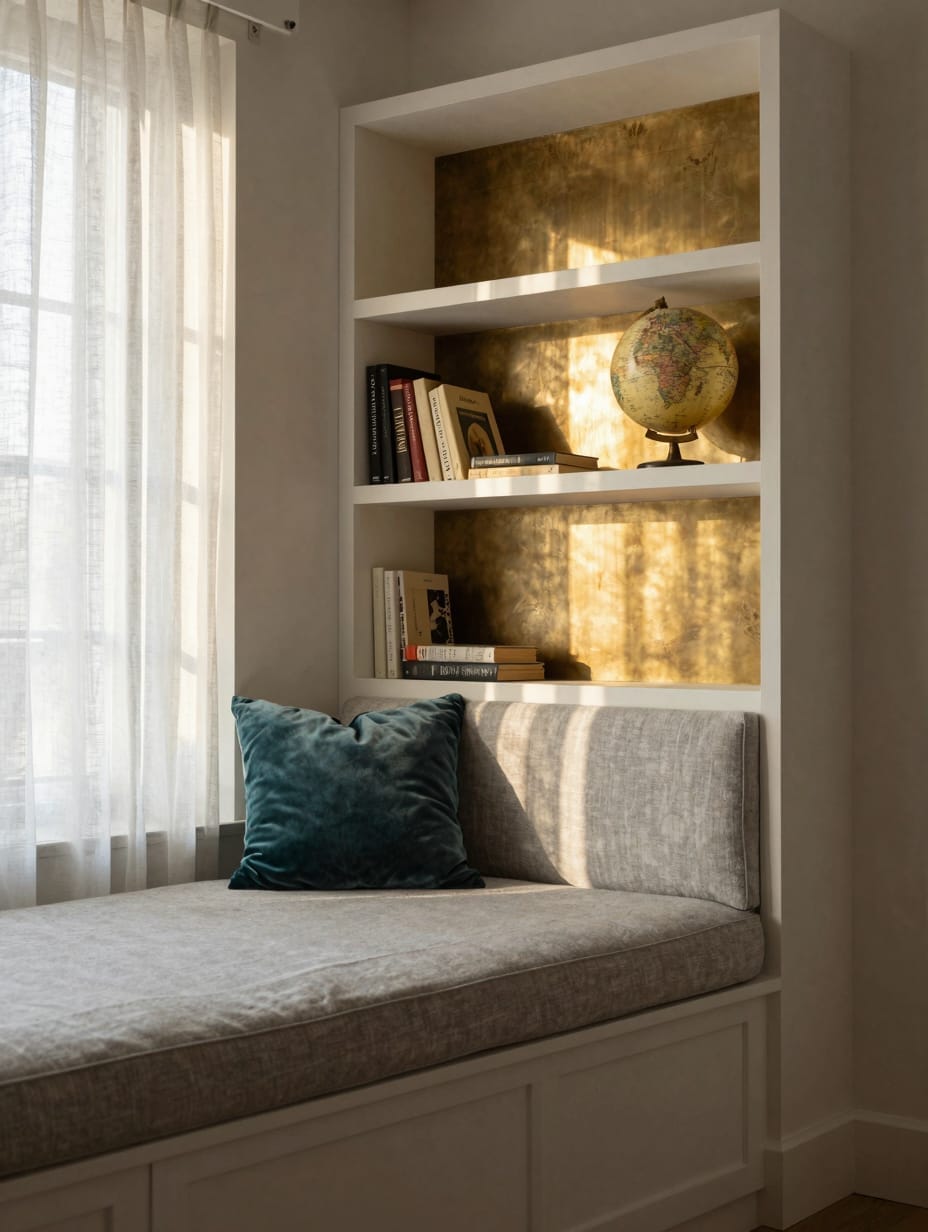
I recently saw a feature in a design magazine showcasing a custom-built window seat upholstered in a soft, pale grey linen. The brilliance was the integrated bookshelves beneath the cushion, painted a crisp white. Sunlight streamed through sheer white curtains, illuminating a collection of art books and a vintage globe.
Plush velvet cushions in rich jewel tones added a luxurious touch. It proved that even a sunny window can become a functional reading zone. I particularly liked how the books were tucked away, keeping the space looking tidy.
How to Get This Look
- Build bench 18 inches deep by the window for comfortable seating.
- Custom window seat with storage, $300-800, ensure sturdy construction.
- Pair with sheer linen curtains for soft, diffused natural light.
- Stack sturdy wooden storage cubes, $20-50 each, under a long cushion.
4. Ascending Archives: Tapered Towers for Lofty Literary Dreams
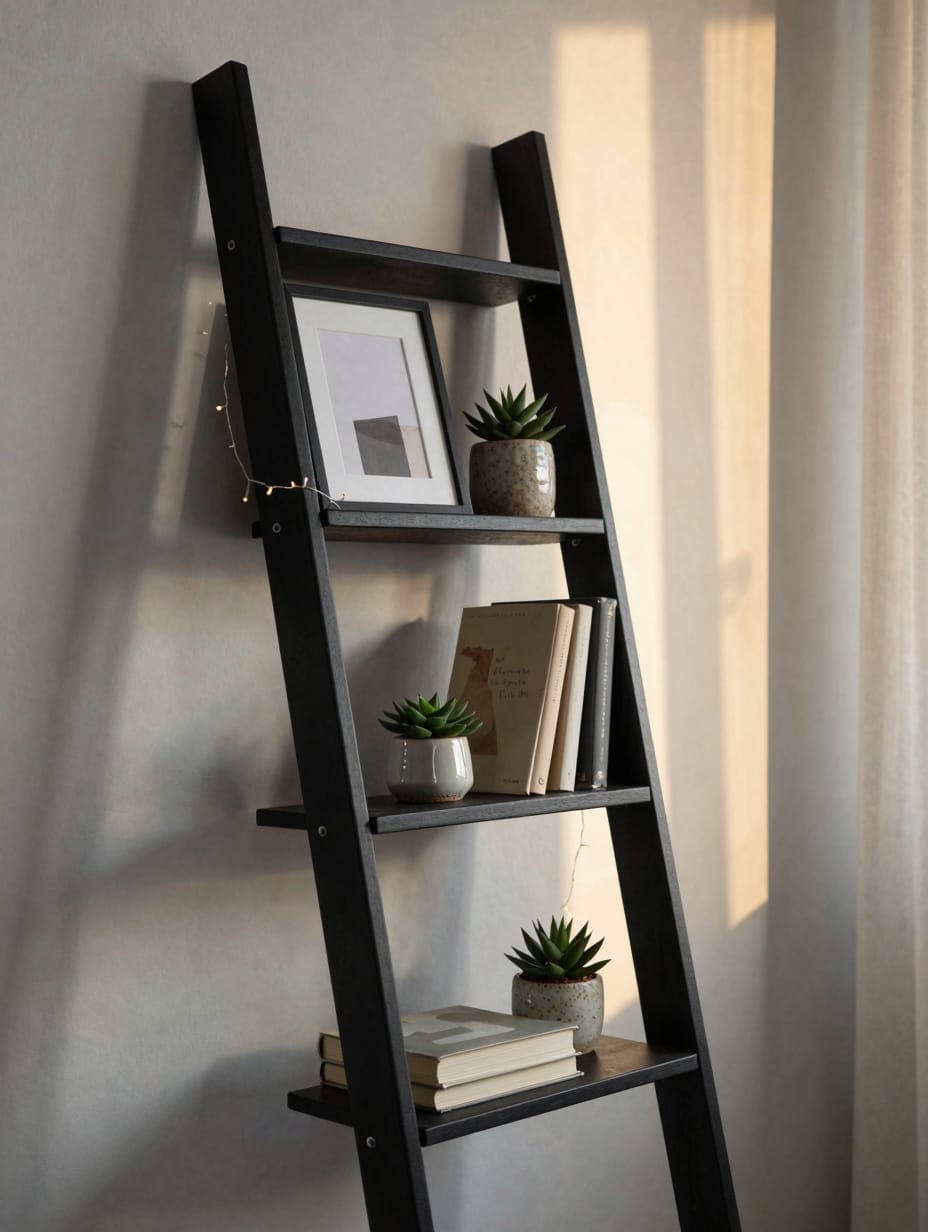
My own ladder shelf, 12 inches wide, leans elegantly against a light grey wall in my studio, creating a modern yet cozy vibe. Its open shelves hold a mix of novels, small potted succulents, and framed minimalist artwork. The delicate fairy lights I strung along the top add a soft, inviting sparkle.
The thing is, getting those fairy lights to drape just right took me longer than I’d like to admit to assemble. But it was worth the minor frustration; the shelf now feels like a permanent fixture. It’s perfect for adding vertical interest without overwhelming the room.
How to Get This Look
- Position shelf 4 inches from an outlet for easy light integration.
- Black metal ladder bookshelf, $80-180, prioritize stability and narrow design.
- Integrate warm-toned metal accents like a brass bookend for contrast.
- Reclaimed pallet wood planks, $5-15 each, mounted to wall for a rustic lean.
5. Flexible Fiction: Adaptable Cubes for an Evolving Collection
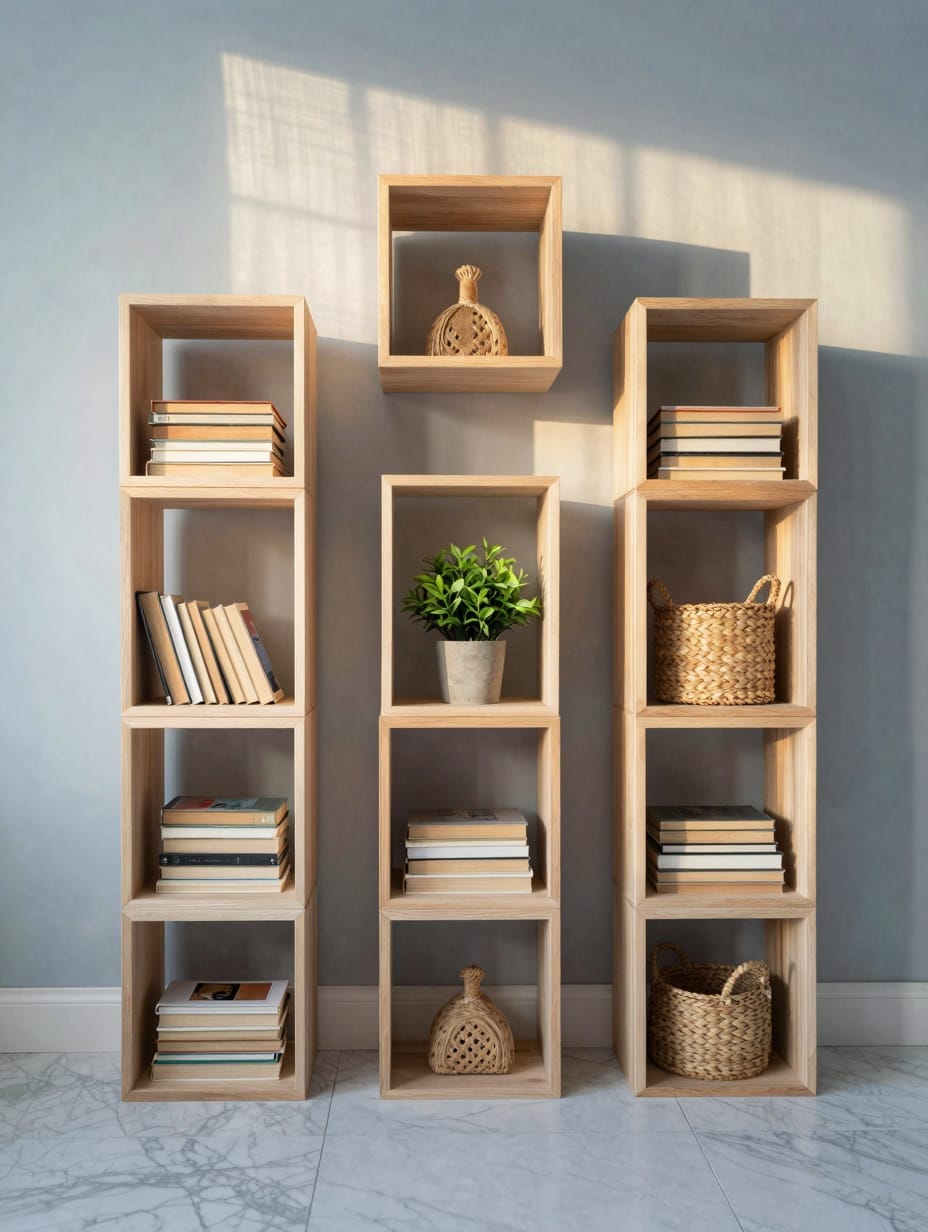
Walking through a furniture showroom last month, I spotted this playful arrangement of customizable modular cube shelves. Crafted from light birch wood, they were configured in an asymmetrical pattern against a pastel blue wall. Some cubes were filled with perfectly stacked books, while others showcased quirky collectibles, woven baskets, and a small, vibrant green plant.
The beauty of these cubes is their adaptability. You can reconfigure them as your collection grows, or even use some for storing blankets. They offer a dynamic and versatile way to display your literary treasures without committing to a static design.
How to Get This Look
- Configure cubes no higher than 40 inches for easy access and stability.
- Modular cube storage, $50-150 per set, choose interlocking design for versatility.
- Mix open cubes with door inserts for varied storage and display options.
- Milk crates, $5-10 each, painted for uniformity, stacked in varied configurations.
6. Seamless Sagas: Integrated Shelving for a Wall of Wisdom
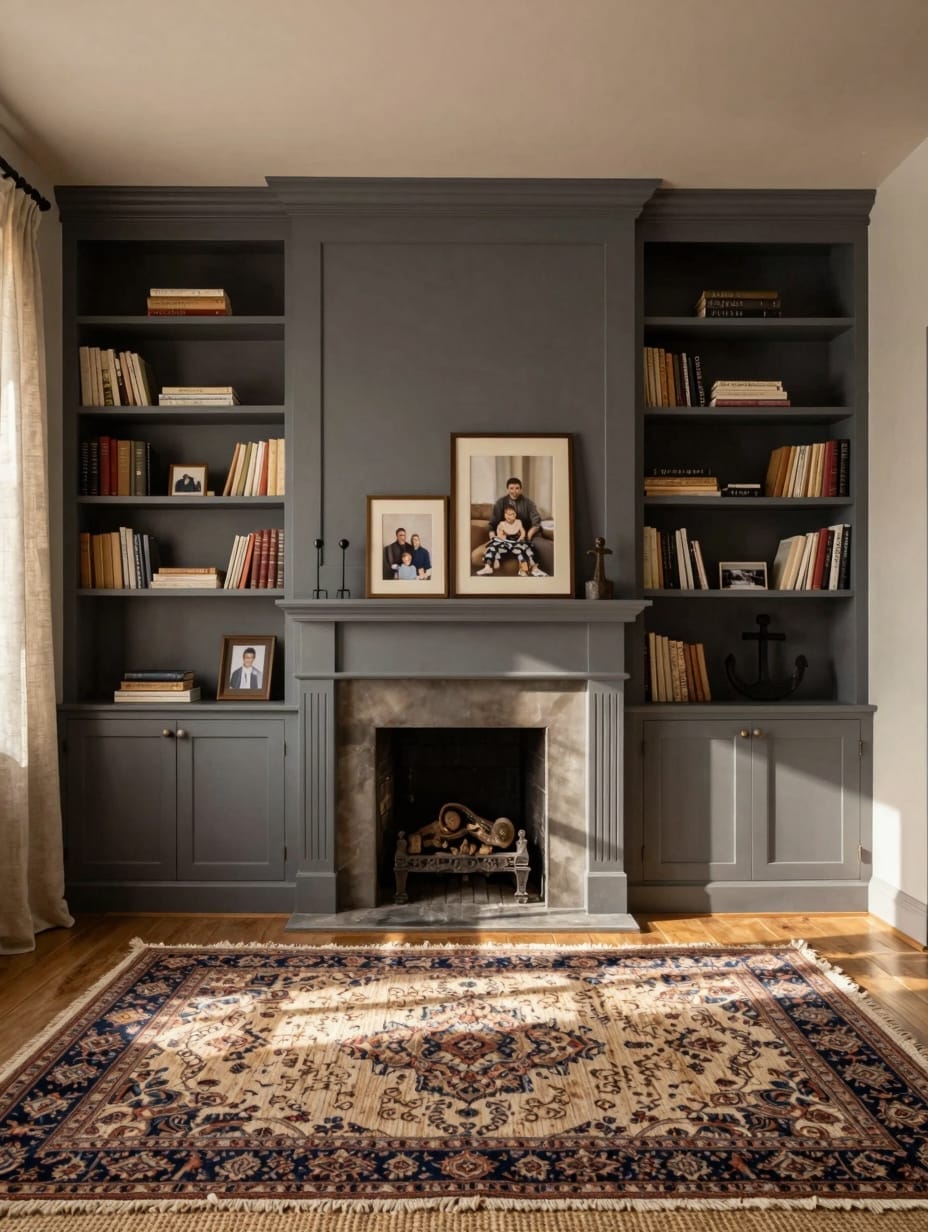
When I helped a client redesign her living room, we installed floor-to-ceiling built-in bookshelves, painted a sophisticated charcoal grey. They flanked a cozy fireplace, filling the room with warmth. The shelves were brimming with diverse books, artfully arranged, alongside framed family photos and weighty decorative anchors.
An antique Persian rug grounded the space, adding rich texture and color. The investment in built-ins is substantial, but the payoff in tailored storage is immense, making a room feel completely custom. They truly made the space feel lived-in and organized.
How to Get This Look
- Plan shelves 14 inches deep to accommodate various book sizes.
- Built-in custom shelving, $1000-3000+, work with a local carpenter for precision.
- Choose a contrasting paint color for the interior back of the shelves.
- DIY plywood shelves, $30-70 per shelf, secured to wall studs and trimmed.
7. Artful Volumes: Hexagonal Displays for a Creative Literary Wall
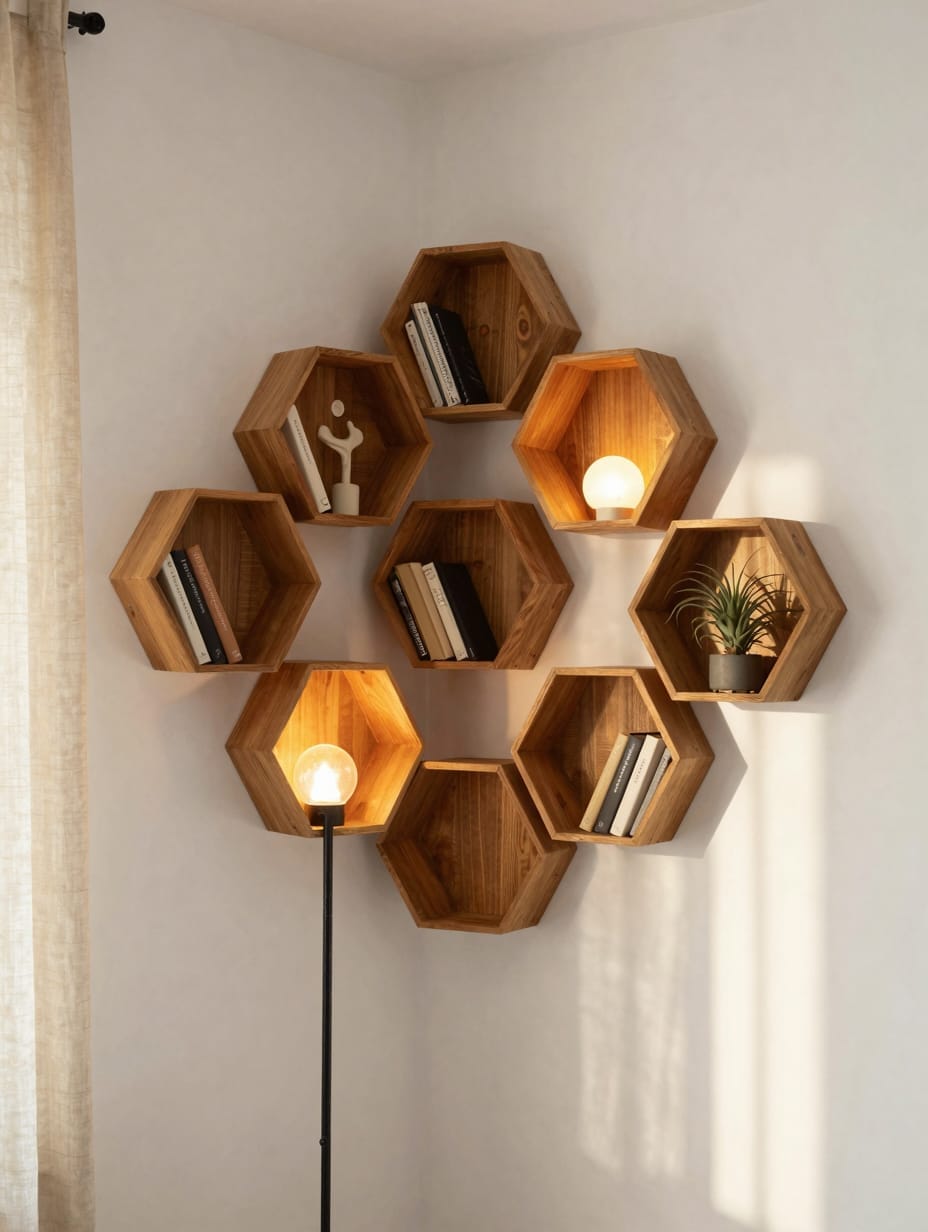
I installed these hexagonal shelves myself in my studio, using a template I sketched out, hoping to add an artistic touch to a blank wall. A cluster of interconnected, warm honey-toned wood hexagons now forms a dynamic pattern against my crisp white wall. Each hexagon cradles a few beloved paperbacks, a miniature sculpture, or a delicate air plant, illuminated by the soft glow of a nearby floor lamp.
They don’t hold many books, honestly, but they make a statement. The arrangement feels like a modern art installation that doubles as functional storage. I find myself rearranging them often, which is part of the fun.
How to Get This Look
- Mount hexagons in groups of three or five for a visually pleasing cluster.
- Wooden hexagonal shelves, $25-60 each, look for secure mounting hardware.
- Fill with books and one small plant or sculpture for curated display.
- Old wooden crates, $10-25 each, cut into hexagonal shapes for DIY charm.
8. Dividing Delights: Open Shelving for Zoned Serenity
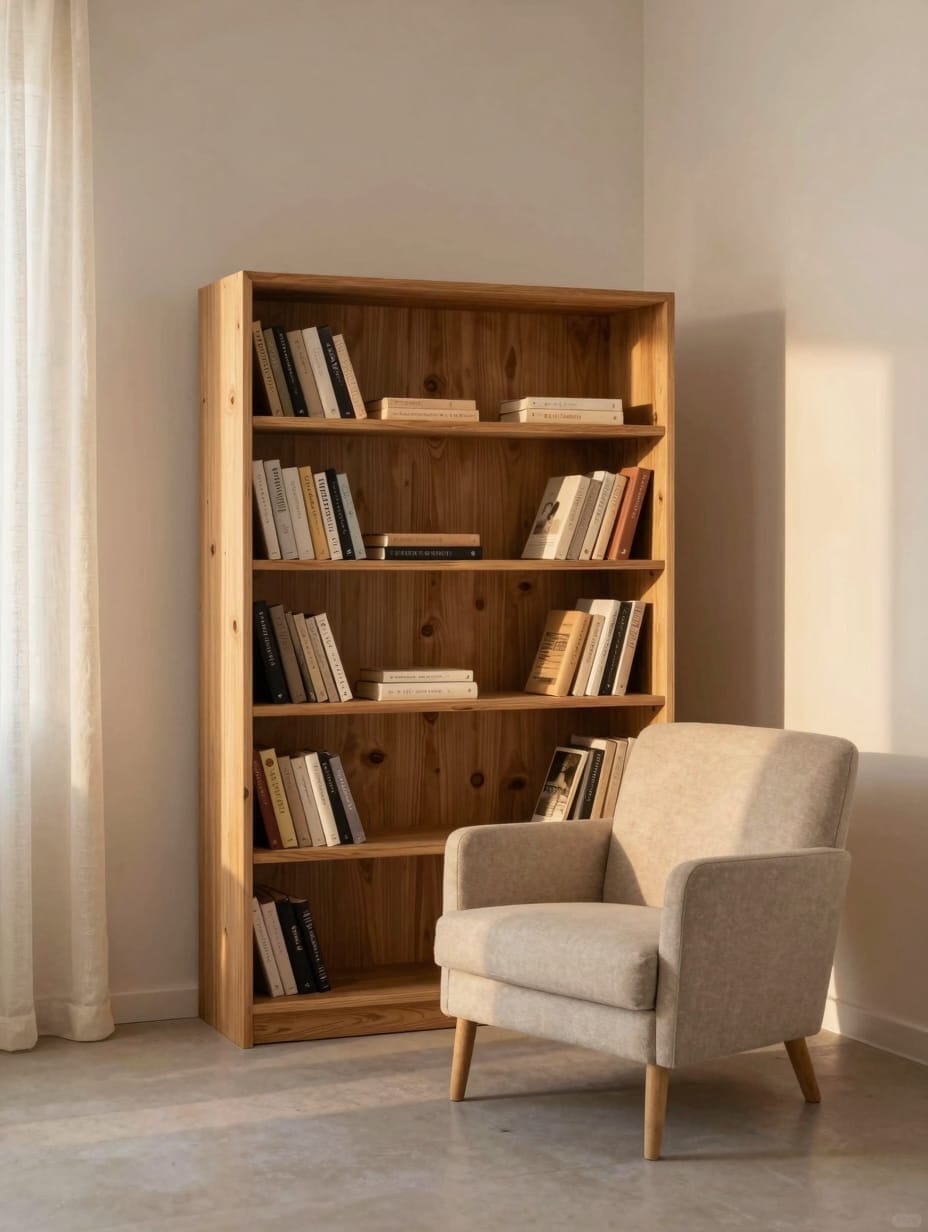
A friend uses an open-backed bookshelf in a sturdy, light-colored wood to subtly divide her open-plan living space. It separates a cozy reading nook from the main living area, yet allows light to pass through. Books are neatly arranged on both sides, with some shelves left sparse to maintain an airy feel.
A plush armchair on one side completes the reading sanctuary, creating a distinct zone without closing off the space. This is a brilliant strategy for creating smaller, more intimate areas within a larger room. It’s a way to define purpose without building walls.
How to Get This Look
- Place divider at least 3 feet from a wall to create comfortable passage.
- Open-backed room divider, $150-400, ensure solid base for stability.
- Style one side for reading essentials and the other for broader display.
- DIY plank-and-cinder-block shelves, $50-100 total, for an industrial look.
9. Dreamy Dictionaries: A Bedside Library for Slumbering Stories
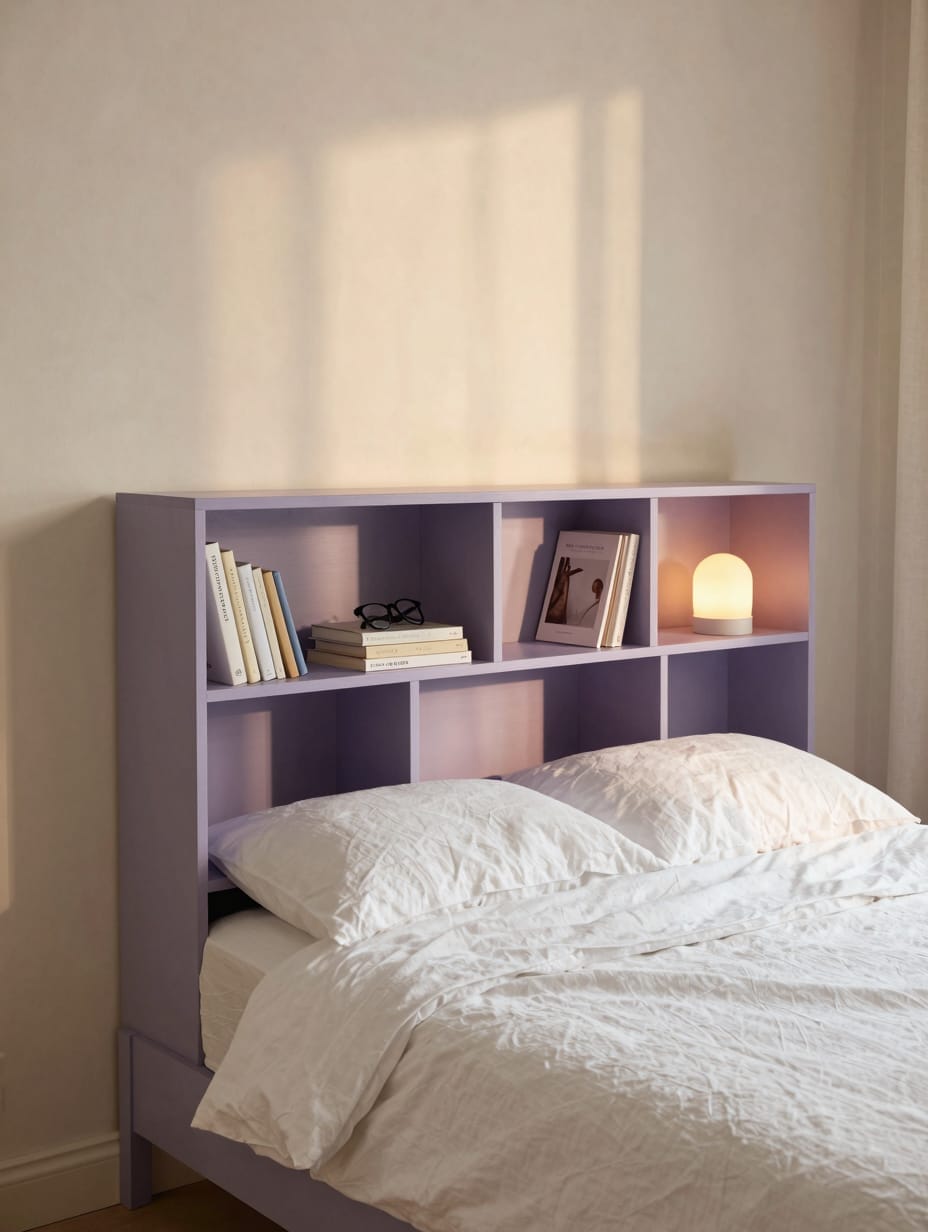
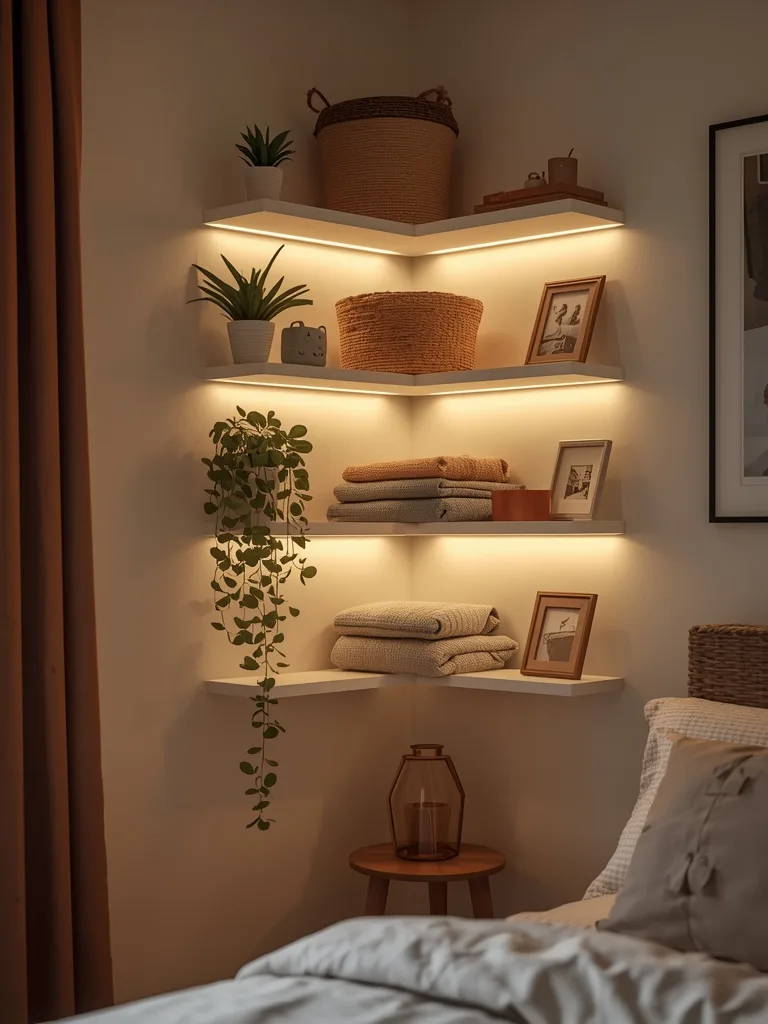
I saw this clever idea in a showroom, specifically designed for a compact bedroom: a custom headboard integrated with shallow bookshelves. Crafted from painted MDF in a muted lavender hue, it anchored a serene bedroom. Small, well-loved novels, reading glasses, and a soft-glowing LED night light occupied the compartments, perfectly within arm’s reach.
The crisp white linen bedding added to the tranquil ambiance. This design solves the age-old problem of bedside clutter, offering a seamless and thoughtful solution for storing nightly reads. It keeps everything tidy and accessible.
How to Get This Look
- Measure headboard width precisely, ensuring it aligns with your mattress.
- Headboard with built-in storage, $200-500, check depth for book accommodation.
- Add soft, dimmable lighting within the shelves for nighttime reading.
- Floating nightstands with drawers, $30-70 each, mounted at mattress height.
10. Niche Narratives: Embracing Architectural Indentations
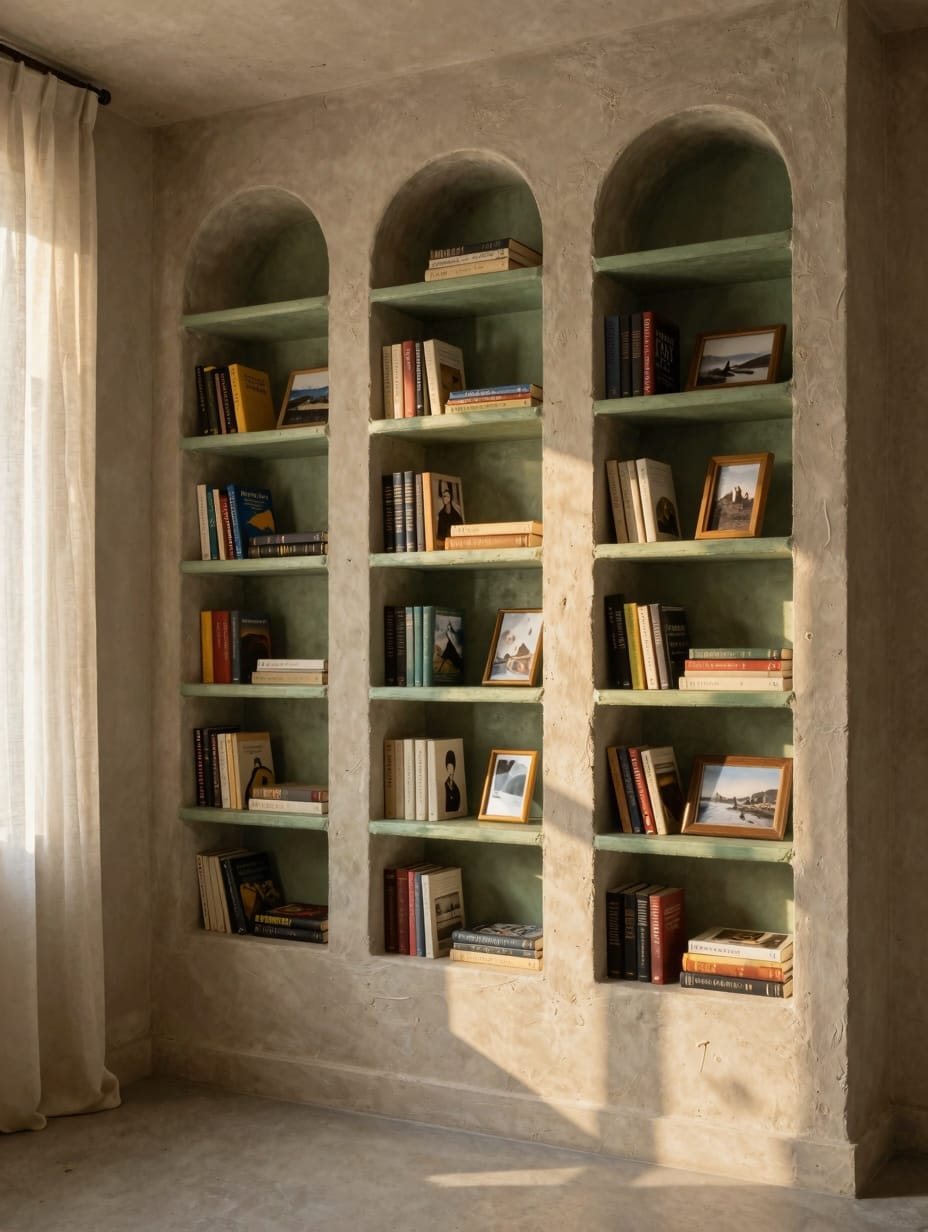
I actually painted the inside of my own small hallway niche a deep forest green, and it made the space feel so much more intentional. Deep alcoves within a plaster wall were transformed into charming bookshelves. Each shelf is thoughtfully arranged with a mix of historical fiction, travel guides, and small framed photographs, all basking in the gentle light from a nearby window.
The rough texture of the plaster adds a rustic, inviting charm. Full disclosure: getting the paint color just right in that dim corner took two tries, but it was worth the effort for the personalized touch. It feels like a secret literary hideaway.
How to Get This Look
- Measure niche depth and height, planning for fixed or adjustable shelves.
- Custom alcove shelves, $50-200, consult a local carpenter for fit.
- Paint the niche interior a contrasting color for added visual interest.
- Simple wooden planks, $10-30 each, cut to fit and secured with cleats.
11. Floating Illusions: Books That Appear to Suspend in Mid-Air
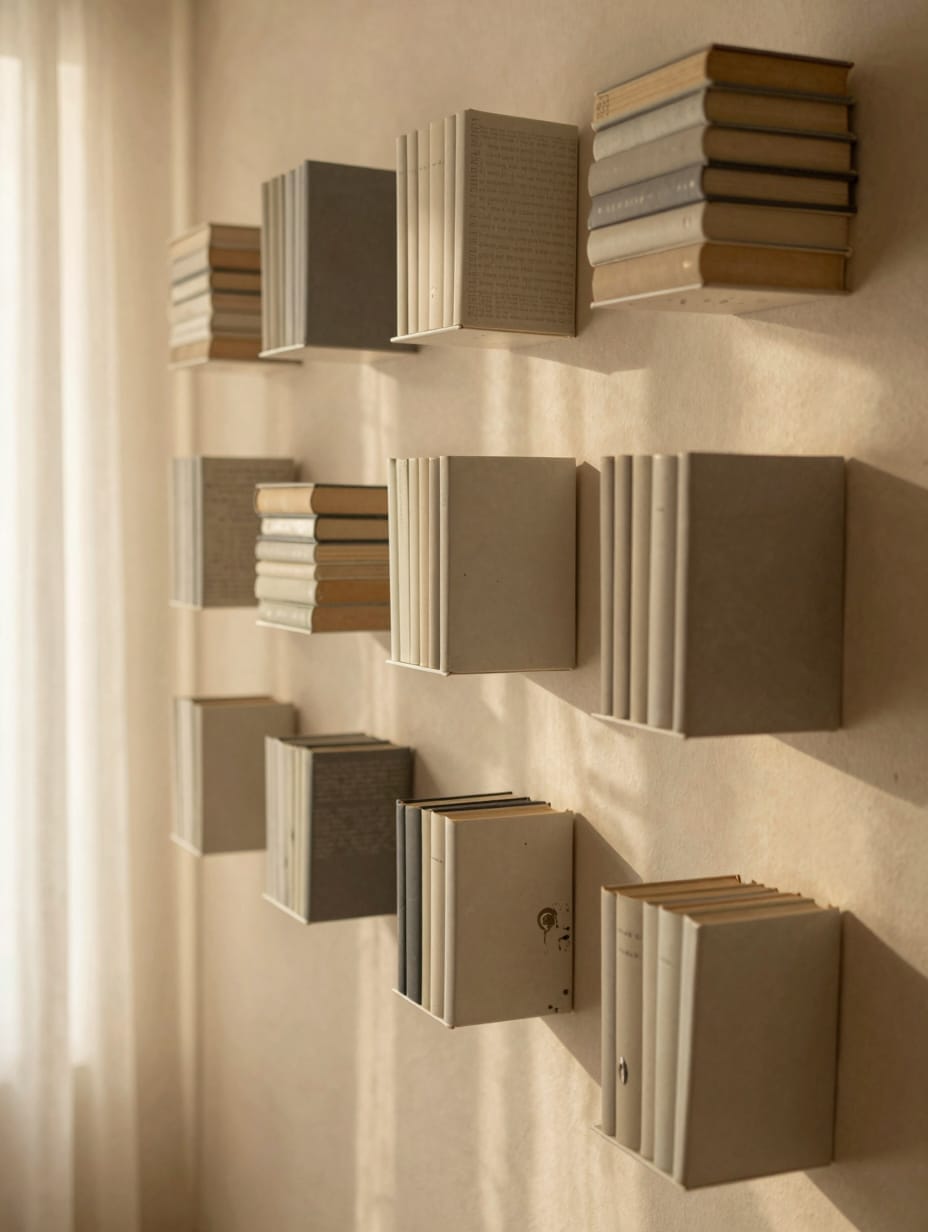
My friend Mark has these in his home office, and they’re truly a conversation starter. A series of “invisible” wall-mounted bookshelves create a magical floating effect, making books appear to defy gravity against a warm beige wall. Hardcover books are stacked neatly on each hidden bracket, forming vertical columns of literary beauty.
The subtle play of shadow and light enhances the ethereal quality. It’s a minimalist approach that creates maximum impact, especially with a vibrant book collection. He finds they work best with books of similar height.
How to Get This Look
- Install brackets 10 inches apart vertically, ensuring even spacing.
- Invisible floating bookshelves, $15-30 each, choose sturdy metal for support.
- Use a uniform book size for cleaner lines and a cohesive look.
- L-shaped wall brackets, $5-10 each, painted to match wall for camouflage.
12. Mobile Mini-Library: A Rolling Repository for Literary Wandering
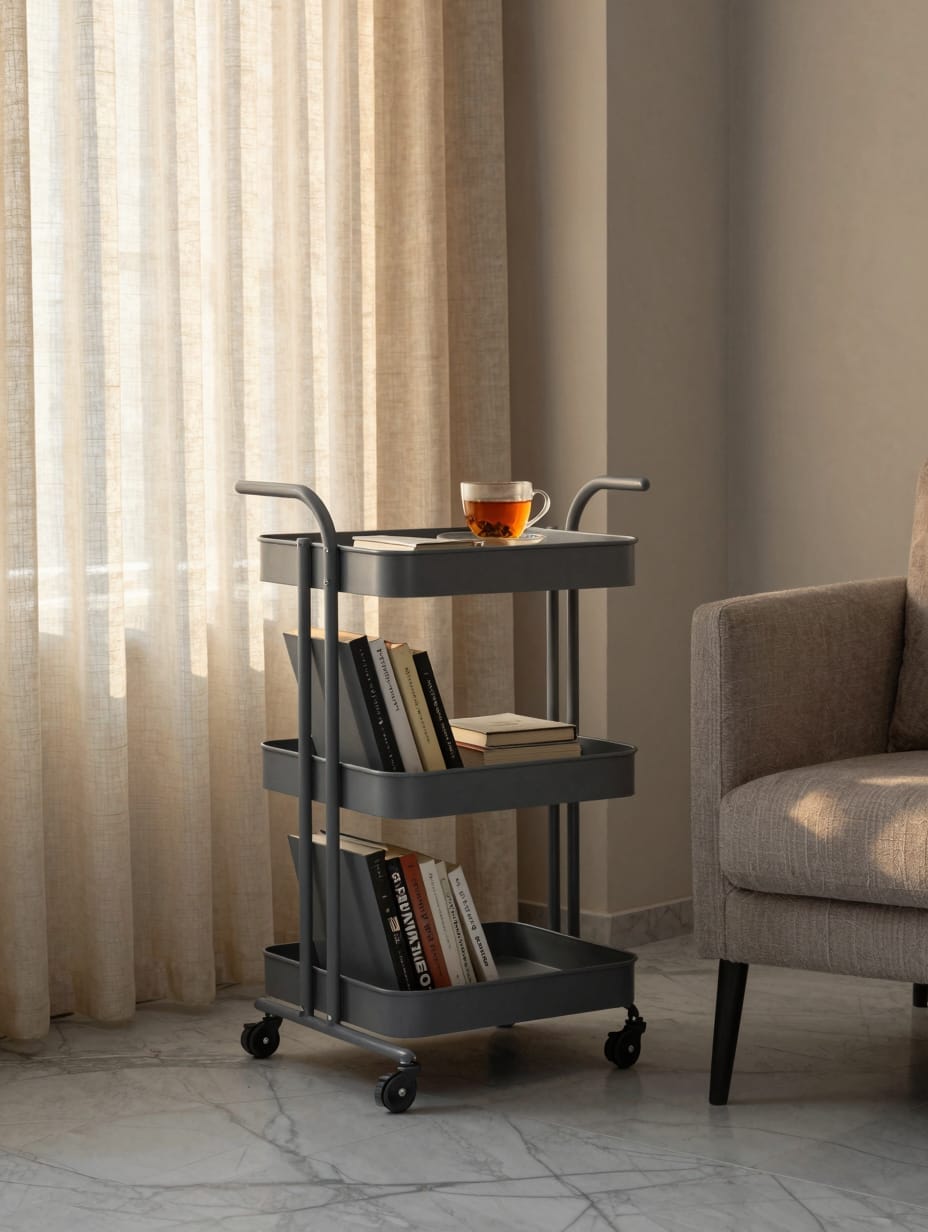
I bought a narrow metal cart for my bedside, which turned out to be the perfect compact bookshelf for my current reads. Its three tiers are filled with a selection of novels, a warm cup of herbal tea, and a small journal. The cart, which cost me about $45 from a discount store, is in a sophisticated charcoal grey.
Its mobility allows me to reposition it for optimal lighting, whether by a window or a floor lamp. This is a genuinely flexible solution for a small space, adapting to where I choose to read. It’s surprisingly sturdy for its size.
How to Get This Look
- Select cart with wheels 2 inches in diameter for easy maneuverability.
- Slim metal rolling cart, $40-100, prioritize smooth-gliding wheels.
- Keep top shelf clear for current reads, a lamp, and a beverage.
- Used magazine rack on casters, $15-30, upcycled with paint for a fresh look.
13. Dual-Purpose Dimensions: A Literary Sidekick for Cozy Lounging
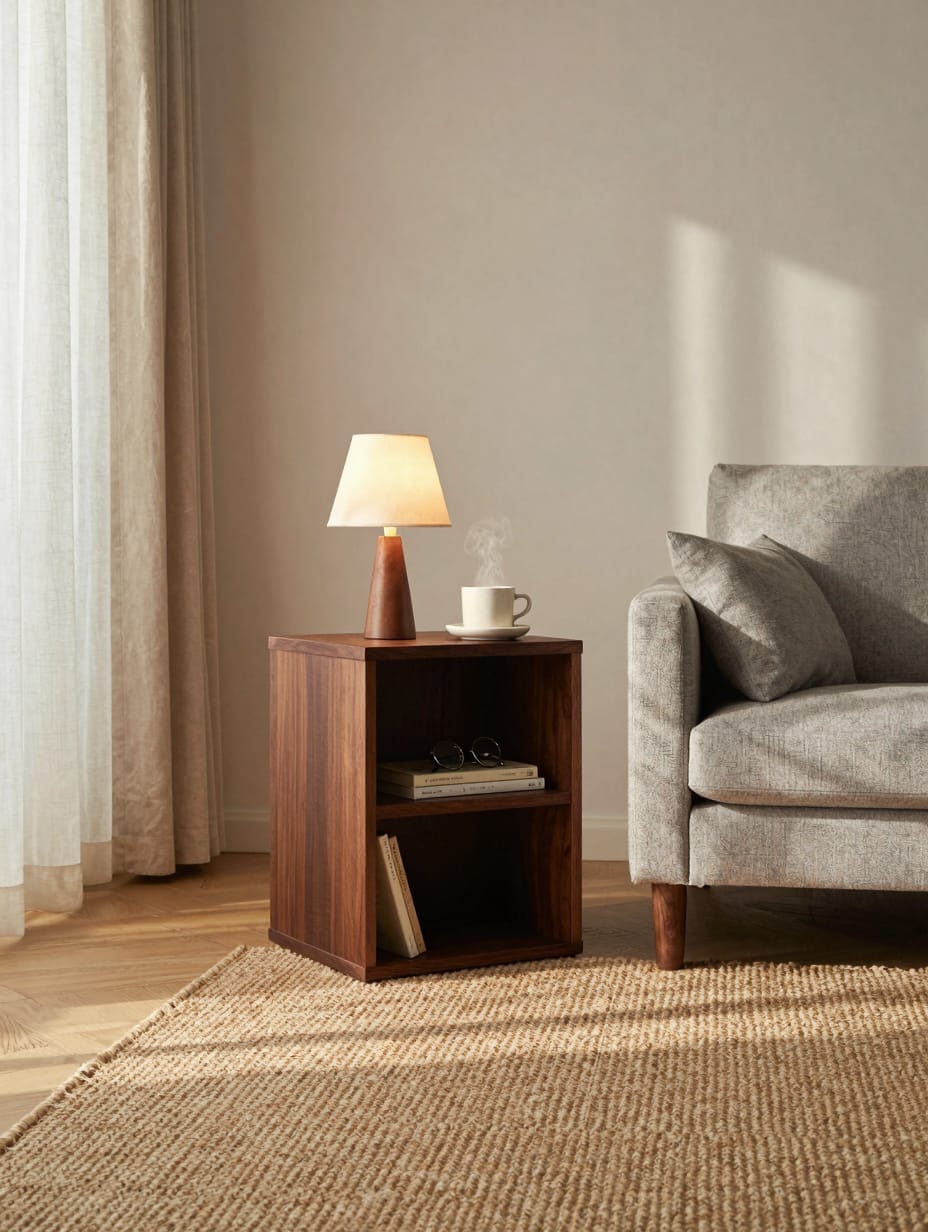
I recently suggested this to a client with a small living room, and it completely transformed her lounging area. A compact, cube-shaped bookshelf in a rich espresso finish now functions perfectly as a side table next to her comfortable sofa upholstered in heathered grey. Its open compartments hold a few favorite novels, a pair of reading glasses, and a charming ceramic coaster supporting a steaming mug.
A soft, warm glow emanates from a nearby table lamp. This piece seamlessly blends storage with functionality, proving that furniture can work harder in a compact setting. It looks much more expensive than it was, too.
How to Get This Look
- Place table 16 inches from sofa arm for comfortable reach.
- Cube storage side table, $60-150, look for a stable base and appropriate height.
- Use decorative bins for hidden storage of smaller items or remotes.
- Sturdy wooden crate, $10-25, placed on its side for instant storage/surface.
14. Displaying Chapters: Gallery-Style Storage for Curated Reads
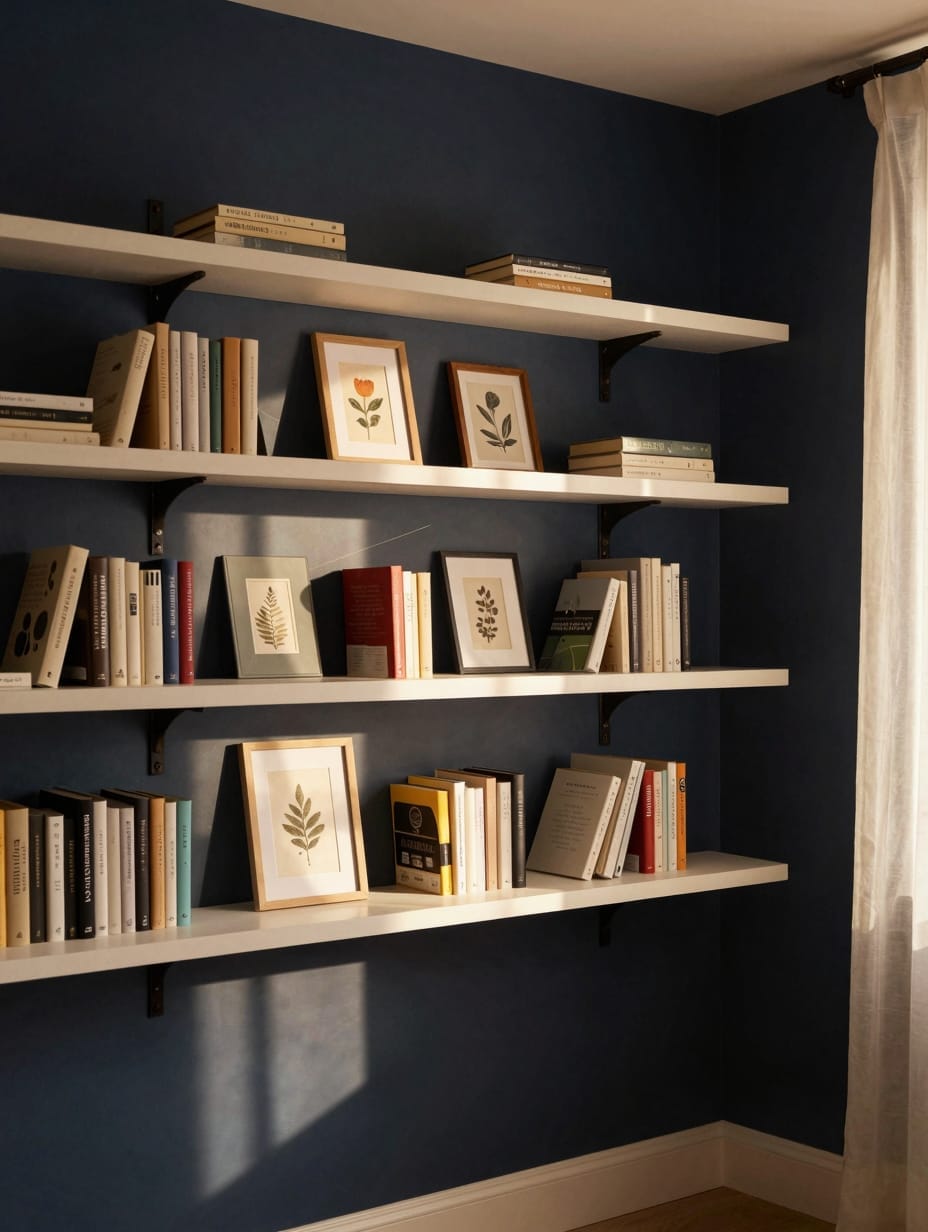
I saw this idea at a local home decor showroom, showcasing cookbooks in a particularly artful way. A trio of long, shallow picture ledge shelves, painted a crisp white, were arranged beautifully on a deep navy wall. They showcased a rotating collection of current reads, small framed art prints, and delicate botanical illustrations. Books were displayed face-out like art, inviting interaction.
A soft, warm overhead light highlighted the arrangement. This method treats your books as decorative objects, offering a fresh way to engage with your collection. It’s a constantly evolving display that reflects your current interests.
How to Get This Look
- Mount ledges 10 inches apart vertically, ensuring clearance for book height.
- Picture ledge shelves, $20-50 each, ensure adequate depth (4-6 inches).
- Rotate books by cover design or color for a continually fresh display.
- DIY wooden planks with lip, $10-20 each, secured with L-brackets and painted.
15. Stairway Stories: Transforming Forgotten Spaces into Literary Retreats
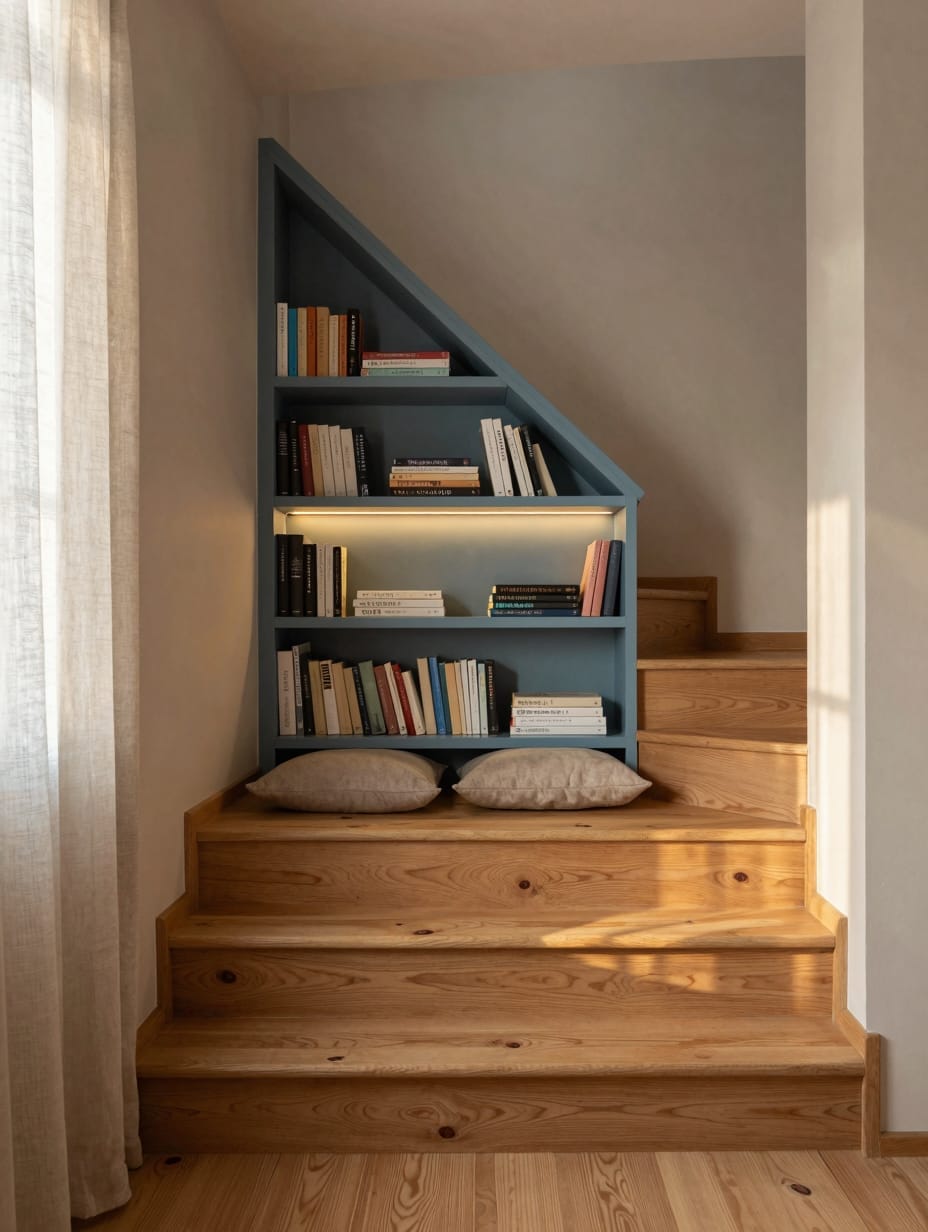
This was a feature in a designer’s portfolio I admired last year, making use of a notoriously tricky spot: the space beneath a wooden staircase. It was ingeniously transformed into a charming bookshelf nook. Custom-fitted shelves, painted a calming muted blue, cradled a diverse collection of books and a few comfortable floor cushions in complementary earthy tones.
A soft, directional LED light illuminated the titles, creating an inviting hideaway. This is a fantastic example of embracing architectural quirks to create personalized reading havens. It reclaims otherwise wasted space, making it both functional and aesthetically pleasing.
How to Get This Look
- Measure under-stair incline precisely, accounting for headroom and depth.
- Custom under-stairs shelving, $500-1500+, work with a skilled carpenter.
- Add soft, warm lighting within shelves for a cozy, inviting glow.
- Stacking sturdy baskets, $20-40 each, fit to size for flexible storage.
Loved these ideas? Save this post to Pinterest so you can come back to it later.
Simple Ways to Bring These Ideas to Life in Your Home
To make these bookshelf ideas truly sing in your home, consider these thoughtful approaches.
- Go Vertical: Always look up. Walls offer untapped storage potential that keeps your floors clear.
- Mix Materials: Combine wood, metal, and fabric to add visual interest and texture.
- Curate Collections: Don’t just stack books; intersperse them with small decor items like plants or art.
- Add Lighting: A small task lamp or LED strip can highlight your collection and create ambiance.
- Embrace Dual-Purpose: Choose furniture that works harder, providing both storage and functionality.
Frequently Asked Questions
How do I choose the right bookshelf for a small room?
Start by measuring your available wall space, focusing on height and depth. Narrow, tall bookshelves or wall-mounted options are ideal for small rooms, as they draw the eye upward without eating into floor space. Consider vertical ladder shelves or even invisible wall brackets to maximize your storage creatively.
What’s the best way to organize books on a small shelf?
Organize books by color for a visually cohesive look, or by genre for easy access. Avoid overfilling shelves; leave some breathing room and intersperse books with small decorative objects. Use bookends to keep stacks tidy and consider placing some books horizontally to break up the vertical lines.
Can bookshelves make a small room feel smaller?
Not necessarily. When chosen wisely, bookshelf ideas can actually enhance a small room. Opt for open-backed units or floating shelves that don’t block light, making the space feel airy. Tall, narrow units draw the eye up, emphasizing ceiling height. Built-ins that blend with the wall can also feel seamless and expansive.
How can I make my bookshelf look styled, not just cluttered?
Employ the ‘rule of three’ for decorative items, grouping objects in odd numbers. Vary heights and textures, pairing books with small plants, candles, or ceramic pieces. Leave some empty space on shelves to prevent a crowded appearance. Consider a consistent color palette for your decorative accents to maintain harmony.
Common Myths About Bookshelf
Myth: Bookshelves must be deep to hold many books.
Evidence: Many compact bookshelf ideas prove otherwise. Shallow shelves, often 6-8 inches deep, are perfectly sufficient for most paperbacks and even standard hardcovers. Utilizing vertical height with these narrower shelves allows you to store a significant collection without protruding far into a room, keeping your space feeling open.
Myth: All your books need to be visible on open shelves.
Evidence: While open shelves are lovely, mixing them with closed storage or decorative bins is highly effective. You can store less attractive books, magazines, or even office supplies out of sight, maintaining a tidy appearance. This allows your curated collection to shine, reducing visual clutter in your personal reading space.
Myth: Only large rooms can have a proper reading nook.
Evidence: This is simply untrue. A cozy reading space can be carved out of even the smallest corners. A narrow ladder shelf next to a comfortable armchair, a window seat with integrated storage, or even a simple rolling cart with your current reads can create a dedicated literary escape, regardless of room size.
Bookshelf: Final Thoughts
Embracing smart bookshelf ideas is about more than just organizing; it’s about curating a comfortable, personal haven. Even the most compact spaces can become beautifully functional and brimming with character. I hope these bookshelf ideas inspire you to transform your own little corner into a cherished reading retreat. Save this post to Pinterest 📌 and start building the apartment you actually want to come home to.