19 Shed Landscaping Ideas For A Beautifully Integrated And Charming Outdoor Sanctuary
My backyard shed used to look like a lonely plastic box floating in a sea of patchy grass. Exploring these shed landscaping ideas helped me realize that even a humble storage unit can anchor a garden rather than clutter it. I’ve gathered a mix of floral borders, gravel paths, and vertical greenery to help you turn that utility zone into a cohesive, inviting sanctuary this spring.
Why These Shed Landscaping Ideas Are Worth Trying
Landscaping bridges the gap between a structure and the natural world, preventing your shed from looking like a giant afterthought. Thoughtful plantings and pathways create a sense of permanence and intentionality that elevates your entire outdoor footprint without requiring a massive renovation.
Table of Contents
1. Cottagecore Wildflower Border
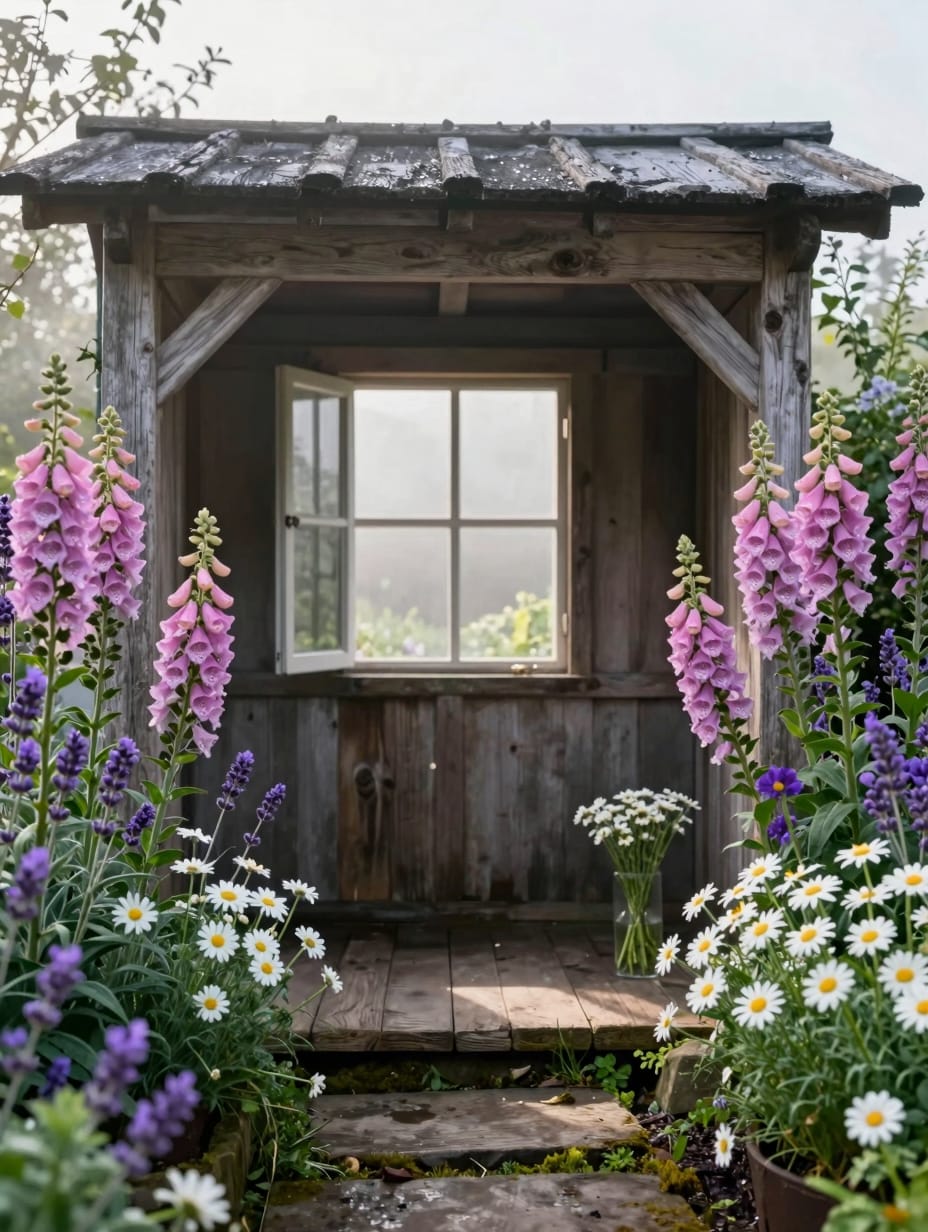
Tall spikes of foxgloves and white daisies lean against weathered cedar siding, blurring the sharp corners of the structure. I saw this look at a local garden tour where the morning dew made the lavender-scented air feel thick and nostalgic. A soft moss-filled path of stepping stones leads the eye right to the shed door.
Layering taller blooms in the back ensures the shed remains visible but softened by the foliage. It does require regular deadheading to keep the meadow look from turning into a messy tangle of brown stalks.
How to Get This Look
- Sow seeds in a 3-foot wide strip along the sunniest shed wall.
- Wildflower seed mix, $15-$25, choose a pollinator-heavy regional blend.
- Place cast iron birdbaths near the daisies to attract local finches.
- Scatter dried flower heads back into the soil for free seedlings next year, $0.
2. Modern Minimalist Gravel Surround
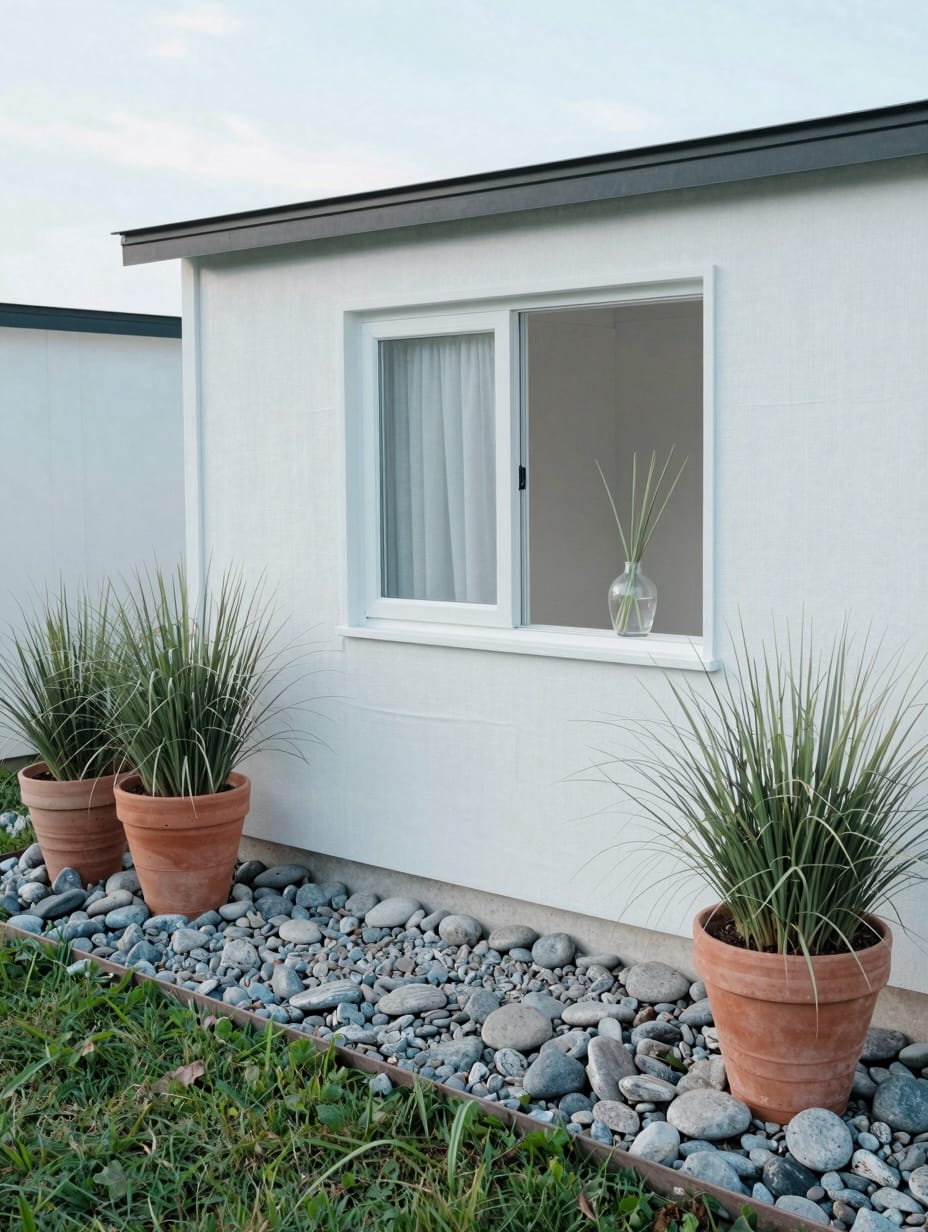
Sharp-edged steel borders keep smooth gray river rocks from migrating into the grass around a charcoal-trimmed shed. Three oversized terracotta pots sit at staggered heights, holding architectural grasses that provide movement in the wind. This monochromatic palette feels grounded and organized compared to a wild flowerbed.
Keeping the stone layer at least 4 inches deep prevents weeds from peeking through the gaps. However, the light gray stones show leaf debris quickly, requiring a leaf blower for weekly maintenance.
How to Get This Look
- Install 4-inch deep steel edging to separate the rock from the lawn.
- River rock mulch, $40-$60 per cubic yard, prioritize smooth basalt or granite.
- Use matte black metal planters for a sleek, industrial contrast.
- Substitute expensive stone with drainage gravel from a hardware store for $5 per bag.
3. The Climbing Rose Trellis
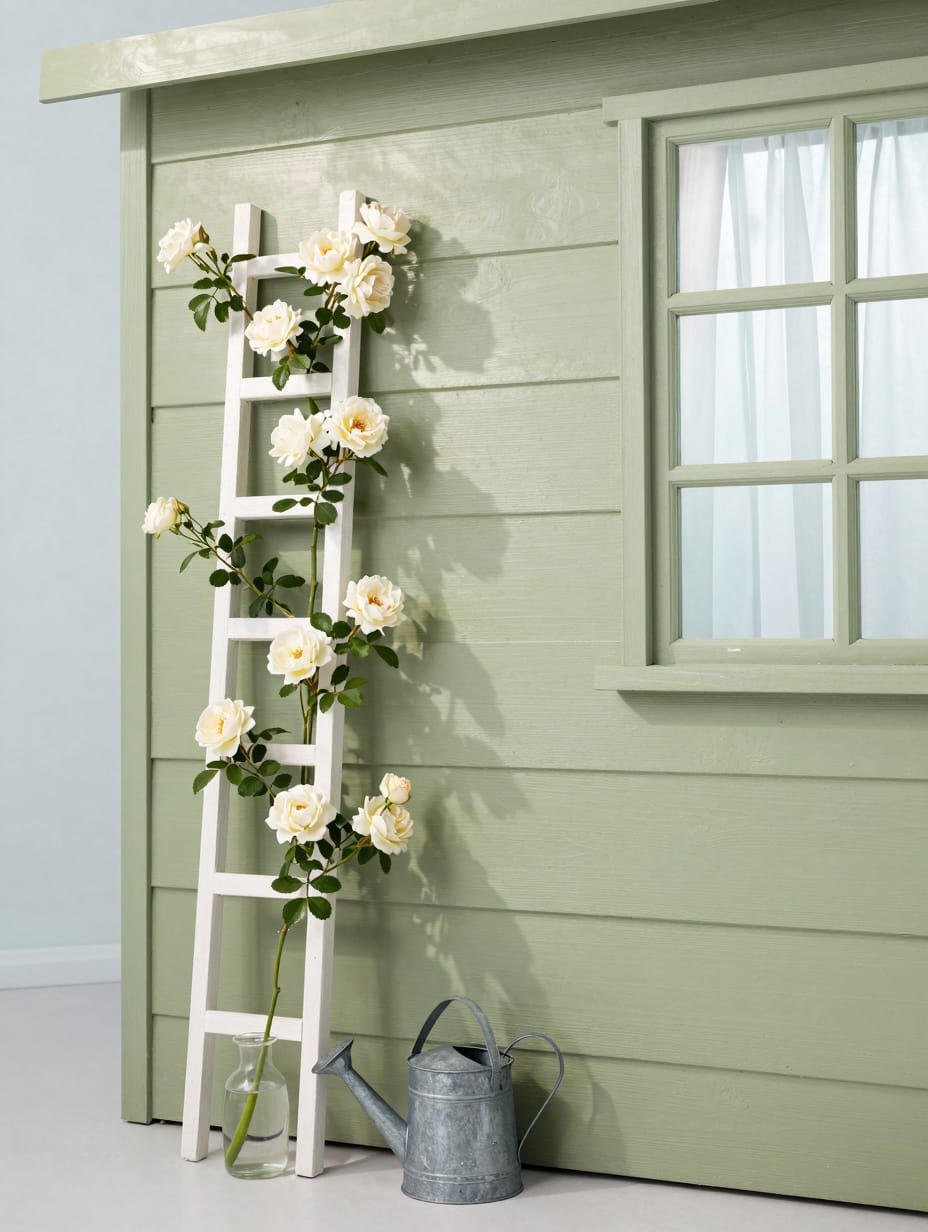
I attached a white wooden lattice to my own sage-green shed last April to support cream-colored climbing roses. The canes are secured with jute twine, allowing the petals to cast soft patterns against the wood as they grow. It hides the plain siding while adding a vertical dimension that smells like a dream in June.
Training the roses early is vital; I let them go once and they blocked the door within two weeks. Watch out for aphids, as they tend to congregate where the trellis touches the wood.
How to Get This Look
- Mount the trellis 2 inches away from the shed to allow for airflow.
- David Austin climbing roses, $35-$50, select a disease-resistant variety like ‘Claire Austin’.
- Seal the wood lattice with a clear waterproof finish to prevent rot.
- Use recycled wire mesh instead of wood for a $10 DIY alternative.
4. Stone Pathway and Solar Glow
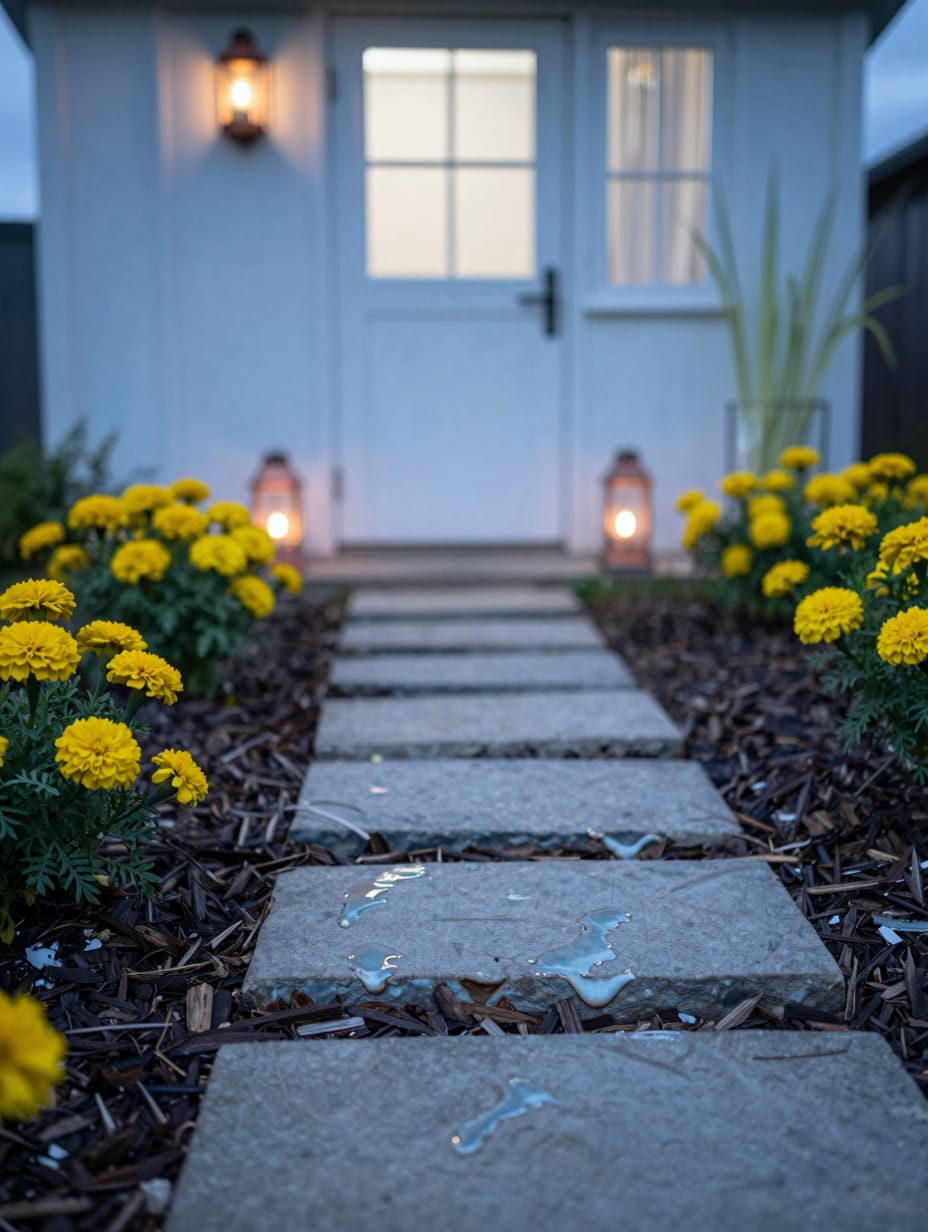
A friend of mine laid irregular flagstones in a winding path to her shed to make the walk feel less clinical. Warm copper solar lanterns line the route, casting a steady amber light over dark ebony mulch and bright yellow marigolds. The contrast between the dark soil and the light stones defines the space beautifully at twilight.
Creeping thyme planted in the gaps releases a herbal scent every time you step on it. Beware of uneven stones; if they aren’t buried deep enough, they become a tripping hazard after a heavy rain.
How to Get This Look
- Dig out 3 inches of soil before setting stones to ensure they sit flush.
- Copper solar path lights, $25-$45 for a set of four, look for glass lenses.
- Pair dark hardwood mulch with neon-green hostas for high-contrast visual interest.
- Use salvaged bricks from local classifieds for a path that costs $0.
5. Window Box Floral Cascade
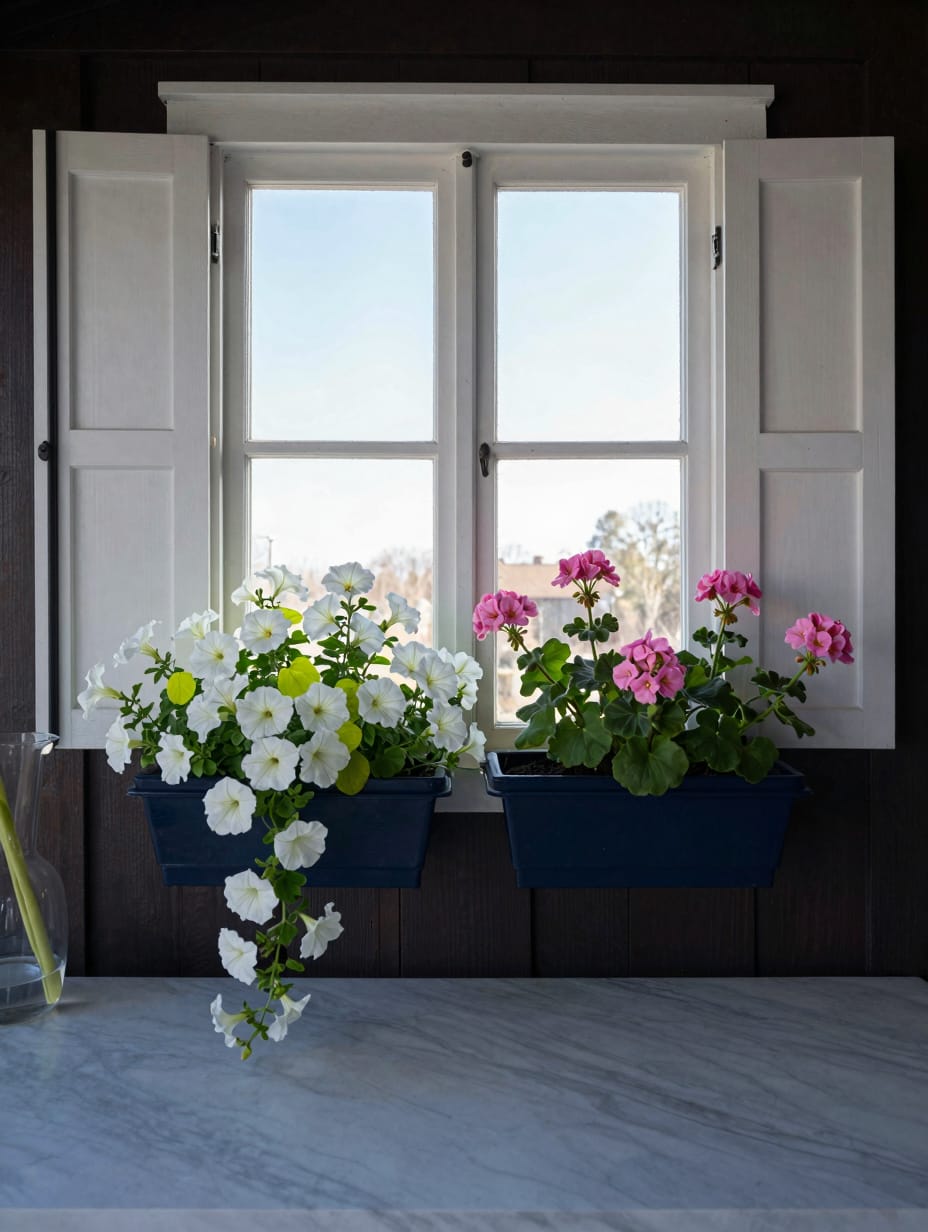
Deep navy window boxes overflowing with lime-green sweet potato vines and pink geraniums can make a basic shed look like a tiny cottage. The trailing petunias soften the sharp lines of the windows, reflecting the spring sky. It’s a quick way to add color without digging up the ground around the foundation.
Self-watering inserts are a lifesaver here because window boxes on a hot shed wall dry out in hours. The weight of the soil can be intense, so make sure your brackets are heavy-duty.
How to Get This Look
- Mount boxes at least 6 inches below the window sill for clearance.
- Self-watering window boxes, $30-$55, choose high-density polyethylene for durability.
- Select “spiller” plants like dichondra to drape 12 inches over the edge.
- Paint old plastic containers the same color as the shed for a $0 fix.
6. Cozy Potting Bench Nook
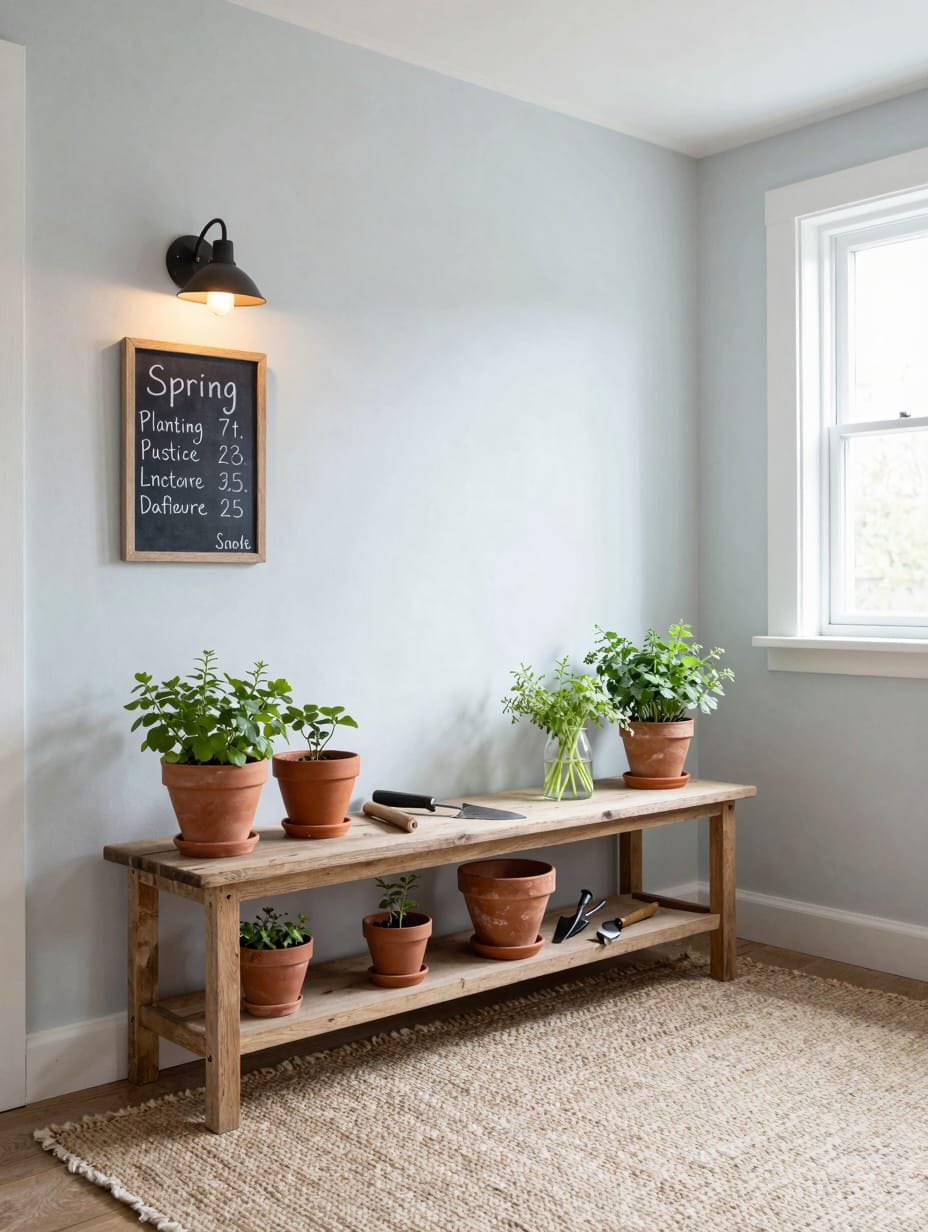
I tucked a rustic timber potting bench against the side of my shed to keep my terracotta pots organized and accessible. It’s covered in antique hand tools and small herb starts, lit by a vintage-style outdoor sconce. This setup turns a blank wall into a functional zone that feels lived-in and productive.
Having a dedicated space for messy transplanting keeps the rest of the garden looking tidy. Just be aware that spiders love the dark nooks under the bench shelves.
How to Get This Look
- Place the bench in a spot with at least 4 feet of clearance for standing.
- Rustic potting bench, $120-$200, look for kiln-dried fir or cedar.
- Hang a small chalkboard sign to track your spring planting dates.
- Build a bench from two pallets and a scrap board for under $20.
7. Boxwood Hedge Perimeter
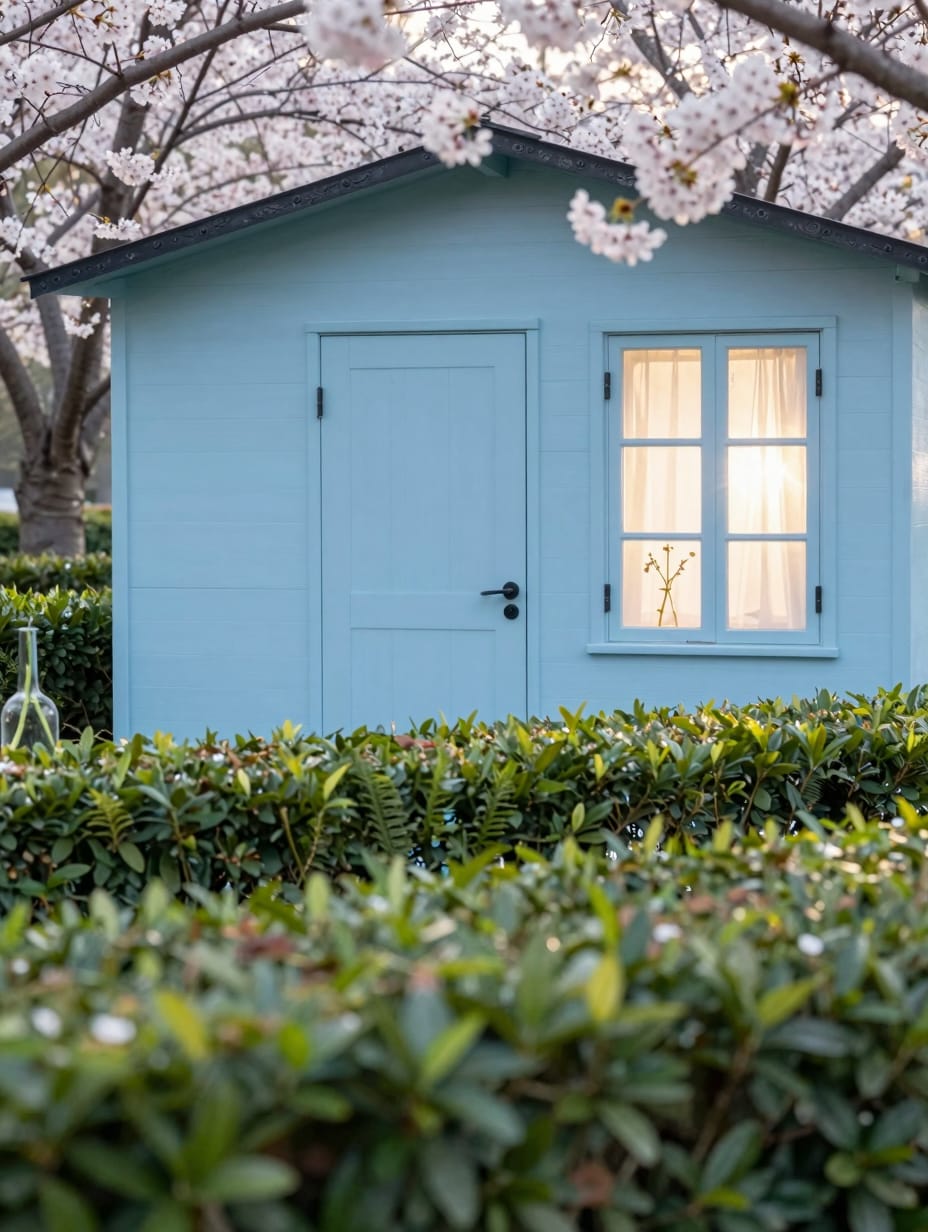
Neatly manicured boxwood hedges create a formal, structured border around a sky-blue shed I saw in a designer’s portfolio. The dense green leaves provide a permanent shape that looks good even when the surrounding perennials go dormant. It creates a clean “moat” of green that separates the structure from the wilder lawn.
The structure is satisfying, but boxwoods grow slowly and require precise pruning to stay sharp. One bad winter can cause “bronzing,” leaving sections of the hedge looking orange and burnt.
How to Get This Look
- Space plants 18 inches apart to allow for a seamless hedge as they grow.
- English Boxwood shrubs, $20-$40 per plant, check for “Buxus” variety labels.
- Use sharp topiary shears to maintain a flat, leveled top surface.
- Propagate your own boxwood cuttings in late summer for nearly $0.
8. Whimsical Fairy Garden Corner
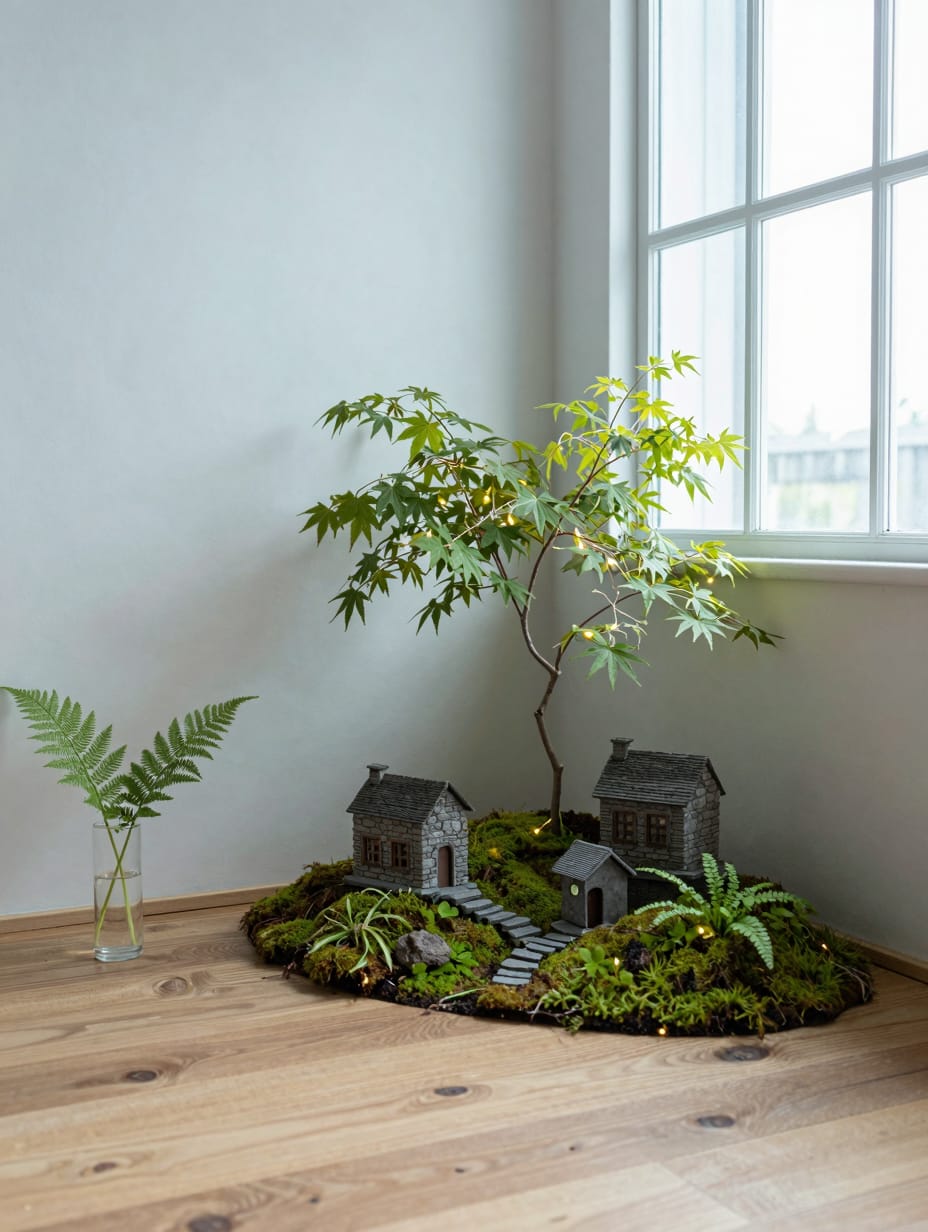
A miniature world at the base of the shed uses sheet moss and tiny stone houses to create a playful focal point. Delicate ferns and a small Japanese maple provide the “canopy” for this tiny landscape, lit by twinkling battery-operated fairy lights. It’s an adorable way to use a shady, cramped corner where larger plants won’t fit.
Honestly, the tiny figurines tend to get buried under falling leaves and mulch, so it needs a frequent dusting. It’s a high-maintenance look for such a small footprint.
How to Get This Look
- Clear a 2×2 foot area and level the soil with a small trowel.
- Miniature stone figurines, $10-$30, ensure they are made of weatherproof resin.
- Weave fairy lights through low branches for a soft evening glow.
- Use smooth pebbles and acorns from the yard to build tiny walls for $0.
9. French Country Lavender Field
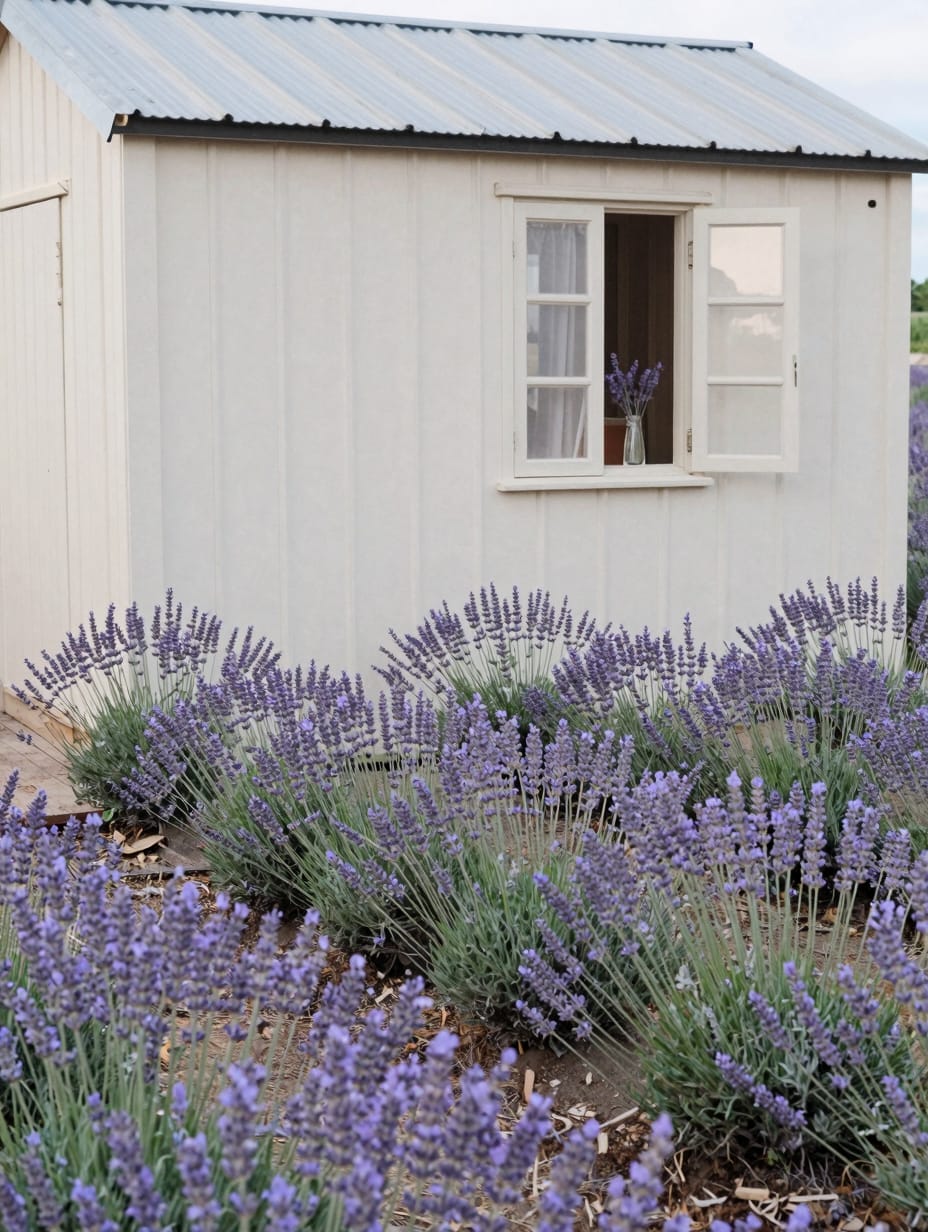
Rows of fragrant purple lavender stretching away from a cream-colored shed evoke a rustic Mediterranean vibe. The air is always hazy with bees, and the grey-green foliage stays soft against the weathered metal roof. This setup works best in full sun where the heat radiates off the shed walls.
Lavender hates “wet feet,” so I learned the hard way that you must mix sand into the soil. If the drainage isn’t perfect, the plants will turn black and die by mid-summer.
How to Get This Look
- Plant in 12-inch deep mounds to ensure water drains away from the stems.
- French Lavender plants, $12-$18 each, look for ‘Phenomenal’ for humidity resistance.
- Top the soil with pea gravel to reflect heat back up to the plant.
- Buy smaller “plug” plants in bulk to save over $50 on a large area.
10. Verdant Vertical Succulent Wall
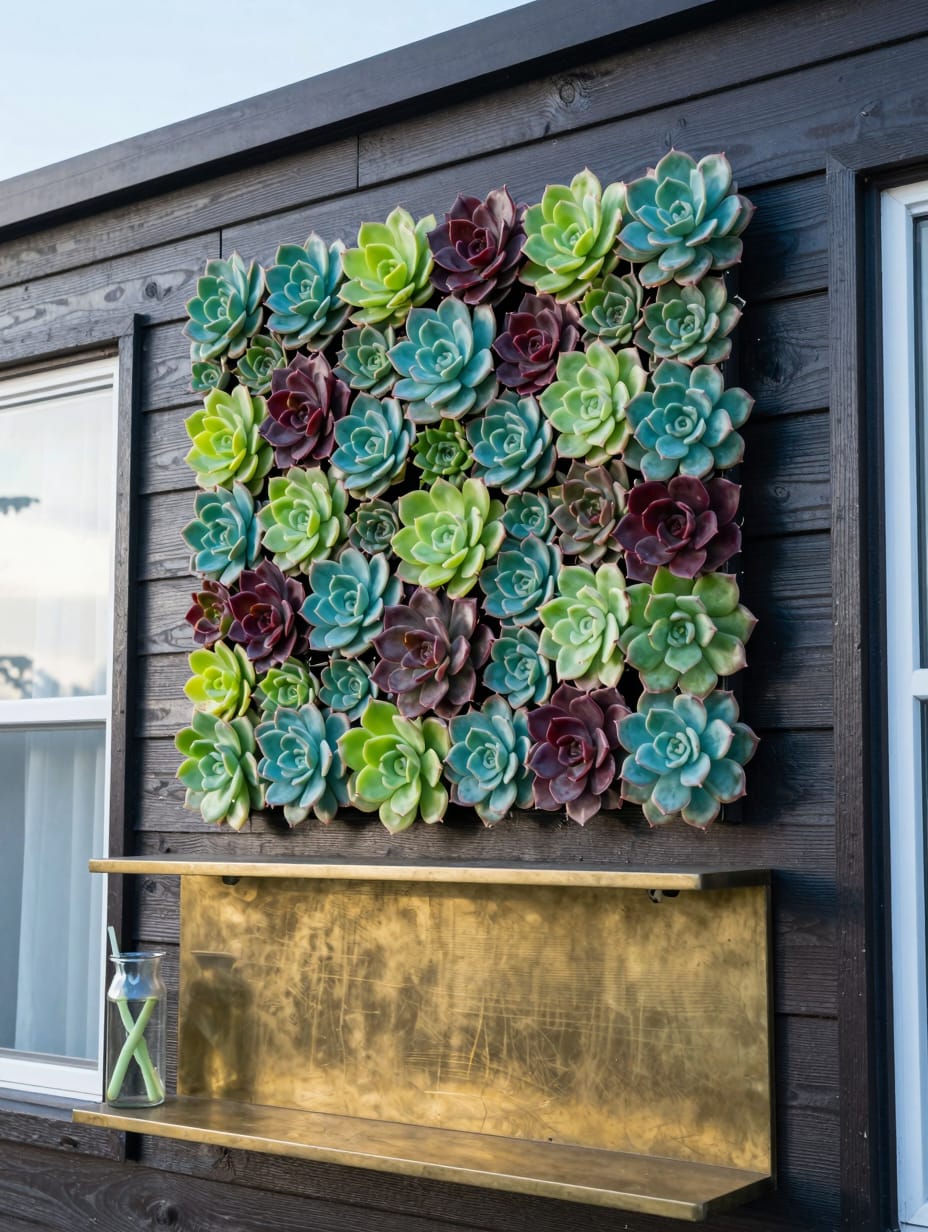
A living tapestry of teal and burgundy succulents mounted on the exterior wall turns the shed into a piece of art. The geometric patterns of the rosettes look striking against dark stained horizontal wood planks. It’s a smart solution for small backyard shed makeover ideas when ground space is limited.
I’ll admit, watering these is a chore; the water tends to run off the top before reaching the bottom plants. You need a long-neck watering can to hit every individual pocket.
How to Get This Look
- Secure the vertical planter to studs in the shed wall with 2-inch screws.
- Vertical wall planter, $40-$85, choose a felt-pocket or plastic-cell system.
- Mix lime green sedum with dark echeveria for a vibrant, textured pattern.
- Use hens-and-chicks from a friend’s garden to fill the wall for $0.
11. Relaxing Adirondack Lounge
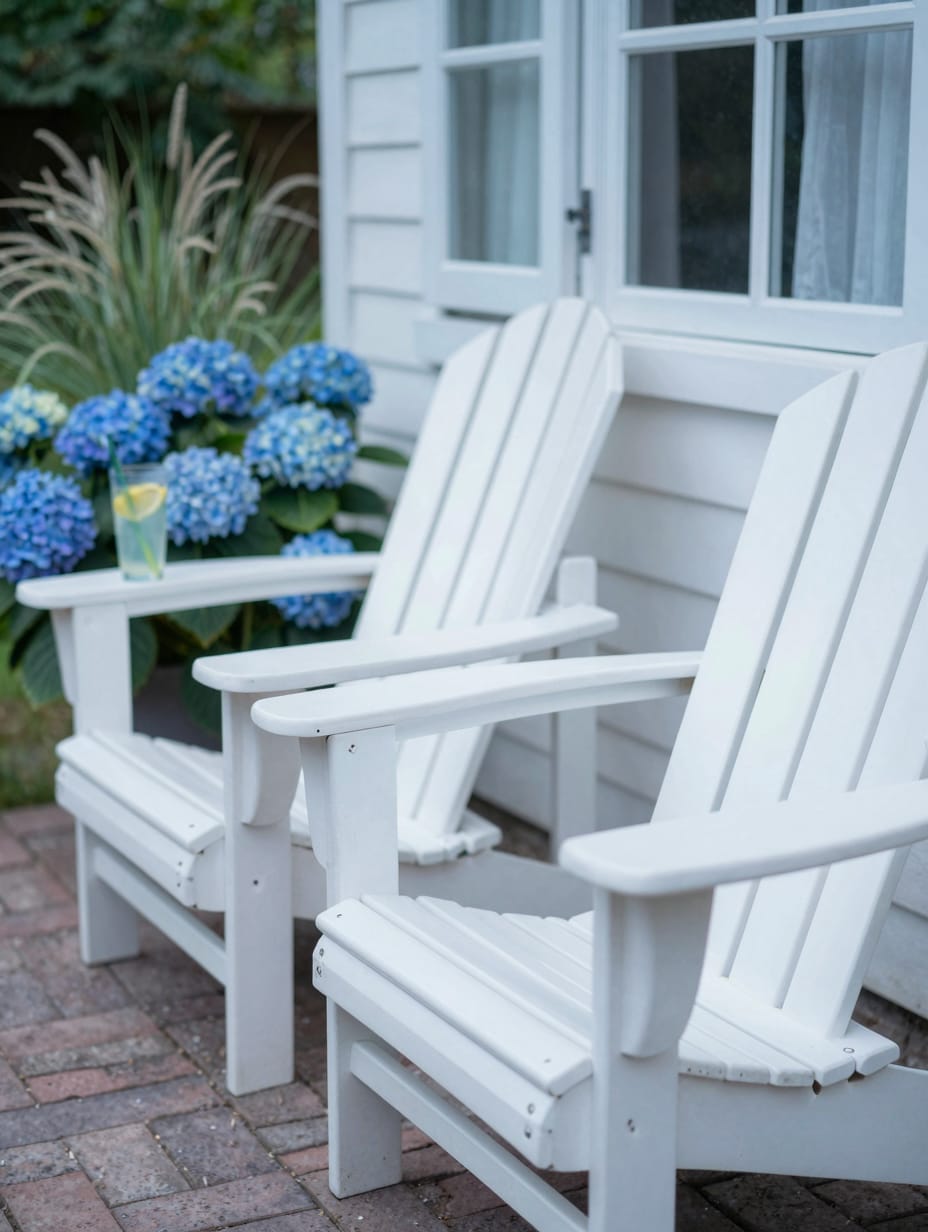
Two classic white Adirondack chairs on a circular brick patio make the shed feel like a destination rather than a chore. Tall blue hydrangeas and soft ornamental grasses surround the seating, creating a private nook for lemonade breaks. It’s a great way to utilize the “front porch” area of a larger garden shed.
I found that if the patio isn’t perfectly level, the chairs wobble every time you sit down. I ended up having to pull up half the bricks to re-sand the base last year.
How to Get This Look
- Layout a 6-foot diameter circle with string before digging for the patio.
- Wood Adirondack chairs, $100-$250, choose acacia or cedar for weather resistance.
- Plant ‘Endless Summer’ hydrangeas for blooms that last from spring through fall.
- Look for free “fill dirt” and used bricks on local marketplaces for a $20 patio.
12. Zen Bamboo Privacy Screen
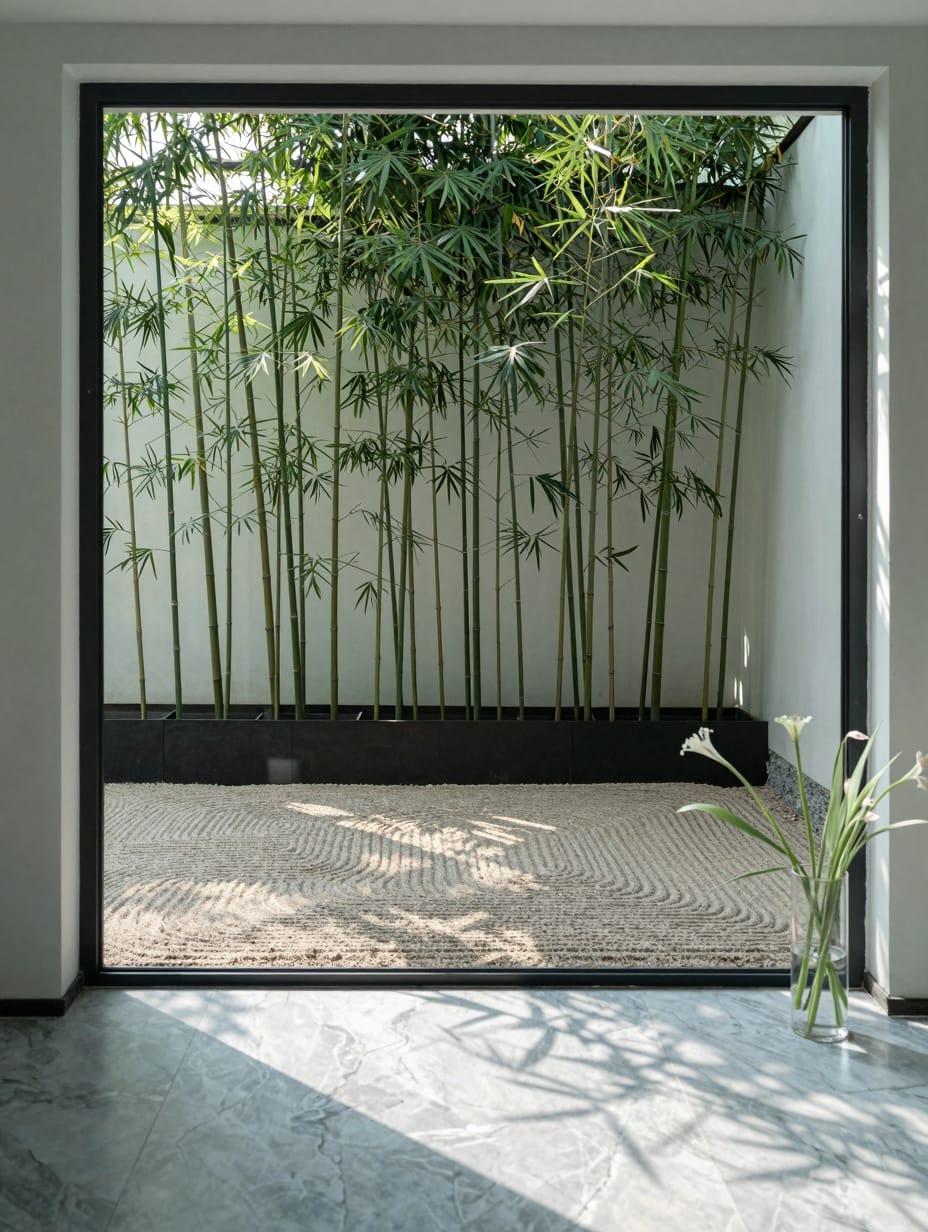
Tall bamboo stalks in sleek black troughs create a lush green backdrop that hides any unsightly equipment behind the shed. The morning light casts long shadows over a simple raked sand garden, making the area feel peaceful. It’s an effective way to add height and privacy without building a solid fence.
Make sure you buy “clumping” bamboo; the “running” variety will take over your yard and your neighbor’s too. Even in troughs, bamboo is thirsty and needs daily watering in the summer.
How to Get This Look
- Place 36-inch long troughs directly against the back or side of the shed.
- Clumping bamboo, $50-$90 per 5-gallon pot, look for ‘Fargesia’ varieties.
- Use a bamboo rake to create swirl patterns in a small sand bed for texture.
- Paint old plastic storage bins black for a modern planter look at $5 each.
13. Rustic Log Pile Aesthetic
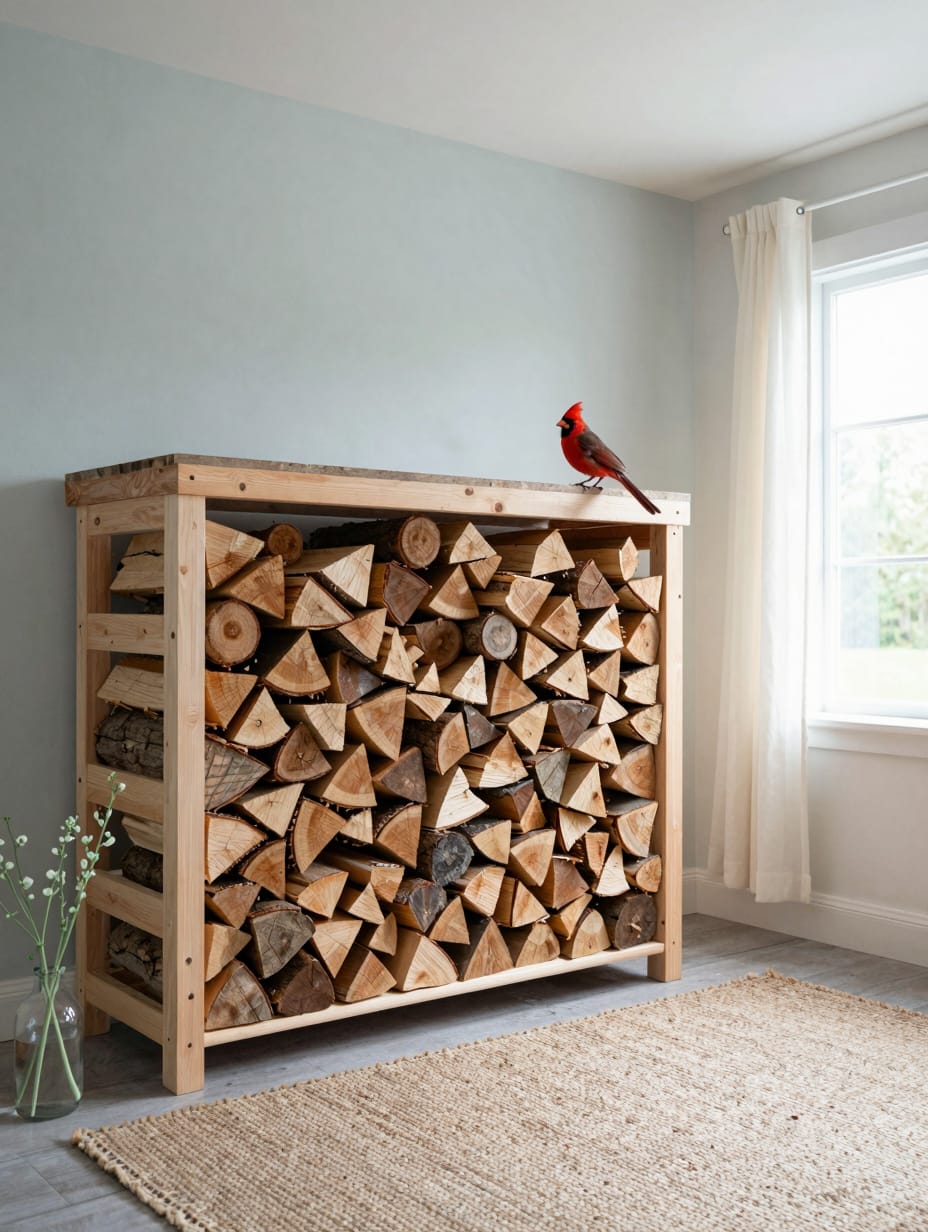
Neatly stacked firewood in a timber lean-to against the shed adds an earthy, organic texture to the landscape. The various sizes of cut wood look intentional and cozy, especially when accented by a bright red birdhouse nearby. It’s a practical storage solution that doubles as a visual “anchor” for the building.
The biggest tradeoff is the potential for pests; termites and spiders love a damp log pile. Always keep the wood at least 2 inches away from the actual shed siding.
How to Get This Look
- Build a simple frame with a slanted roof to keep the top logs dry.
- Timber wood rack, $60-$120, choose a heavy-duty steel or pressure-treated frame.
- Stack wood with the bark facing up on the top layer to shed rain.
- Find free downed trees after a storm and chop your own logs for $0.
14. Herb Garden Staircase
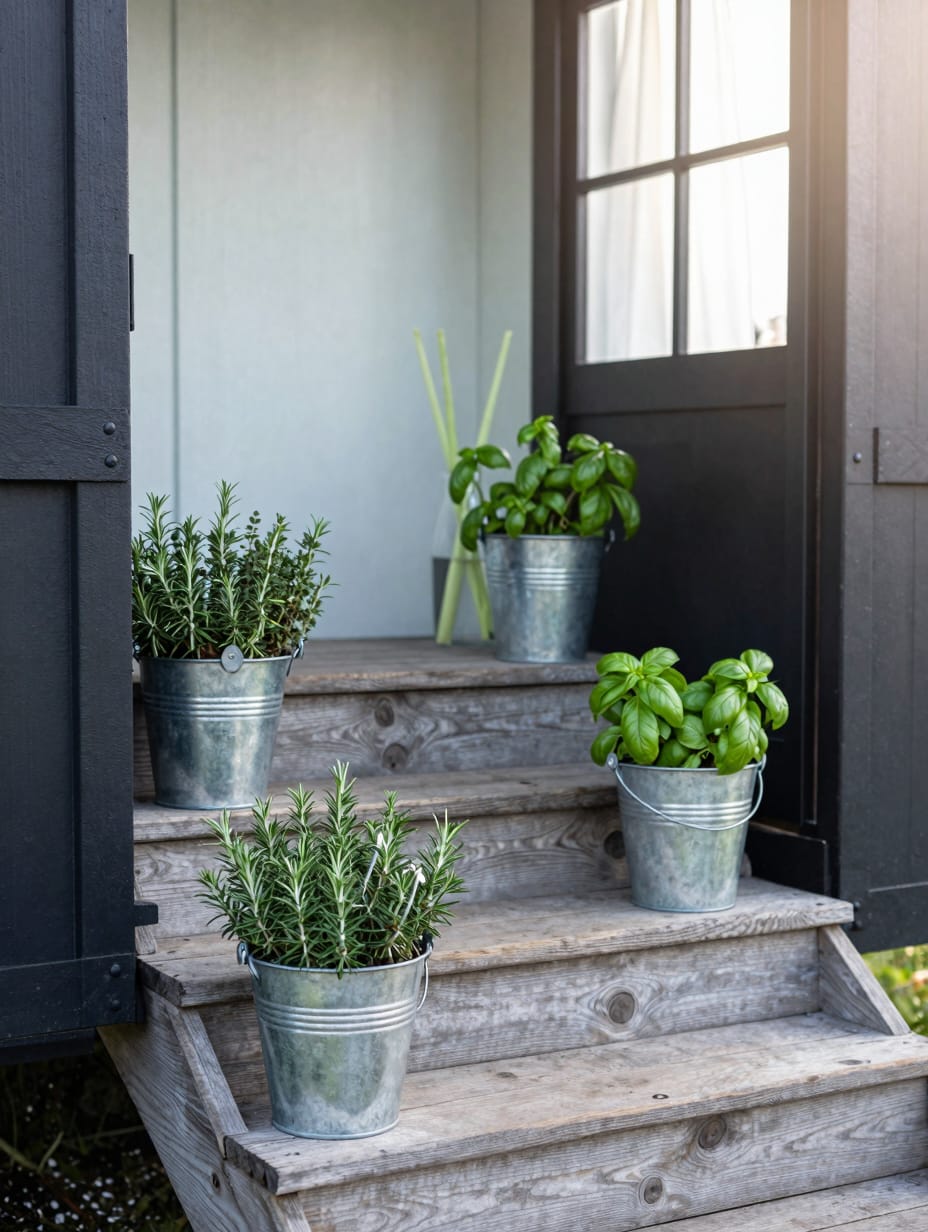
I lined the wooden steps of my shed with galvanized buckets of rosemary, thyme, and basil. The bright green herbs pop against the weathered grey wood, and it makes harvesting for dinner much faster. It utilizes vertical space that usually goes to waste on a staircase or ramp.
Metal buckets get extremely hot in the sun, which can cook the roots of delicate herbs like cilantro. I had to drill extra drainage holes in the bottom to keep the basil from drowning.
How to Get This Look
- Place one 8-inch bucket on each end of the step to keep the center clear.
- Galvanized metal buckets, $5-$15 each, look for ones with sturdy handles.
- Label each herb with a small chalkboard stake for a farmhouse finish.
- Reuse old food tins (like large coffee cans) for a vintage $0 herb garden.
15. Arbor Entrance Archway
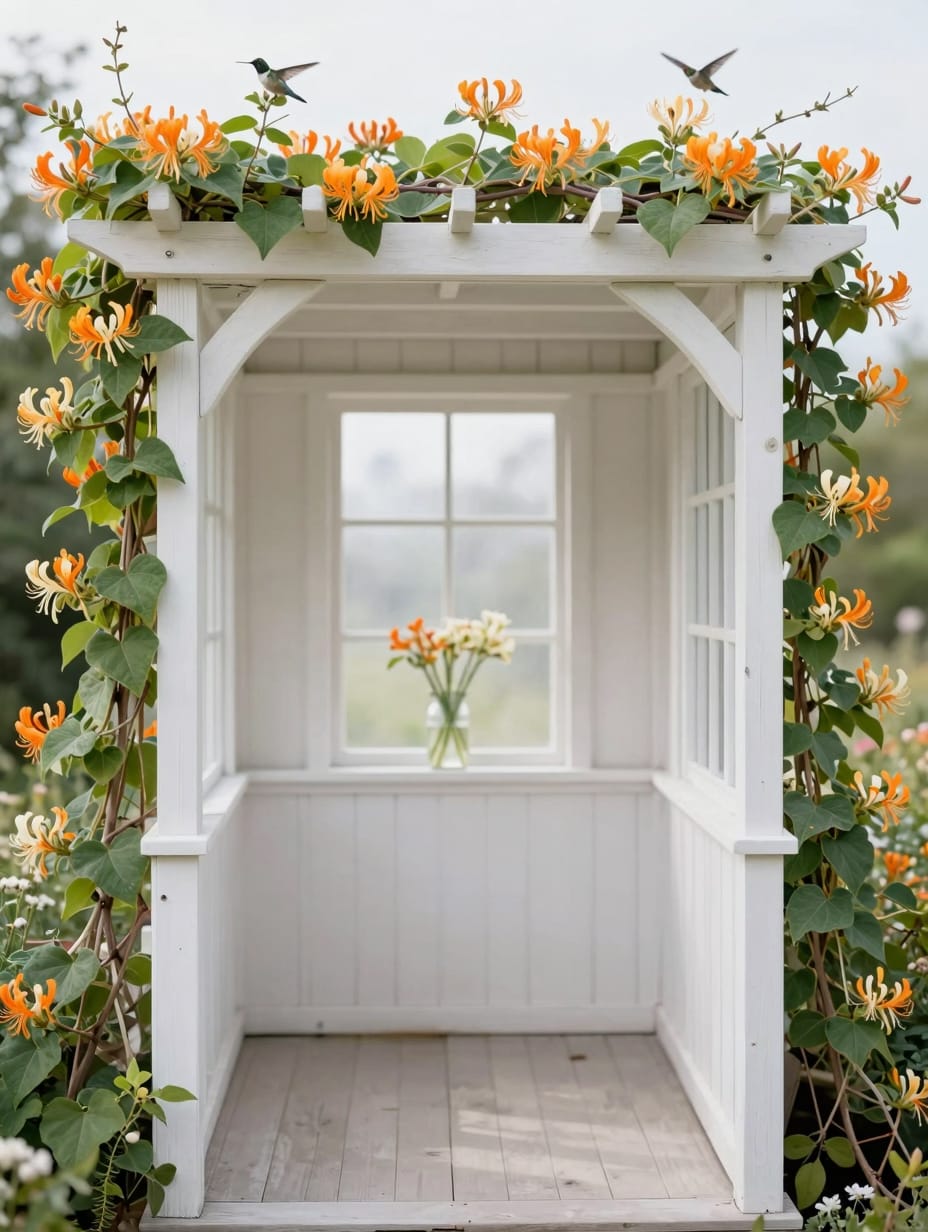
A grand white arbor over the path to the shed creates a sense of arrival, especially when draped in fragrant honeysuckle. The bright orange blossoms attract hummingbirds right to the doorway, making the walk feel like a secret garden entrance. It adds architectural height that balances the boxy shape of a standard shed.
Honeysuckle grows fast—too fast. If you don’t prune it back every winter, it will eventually become heavy enough to sag or break a wooden arbor.
How to Get This Look
- Anchor the arbor posts 18 inches deep in concrete to prevent tipping.
- White garden arbor, $150-$300, vinyl is easier to clean than wood.
- Plant one vine on each side to ensure even coverage over the top.
- Build a simple arch from flexible PVC pipe and paint it for under $30.
16. Evening Bistro Lighting
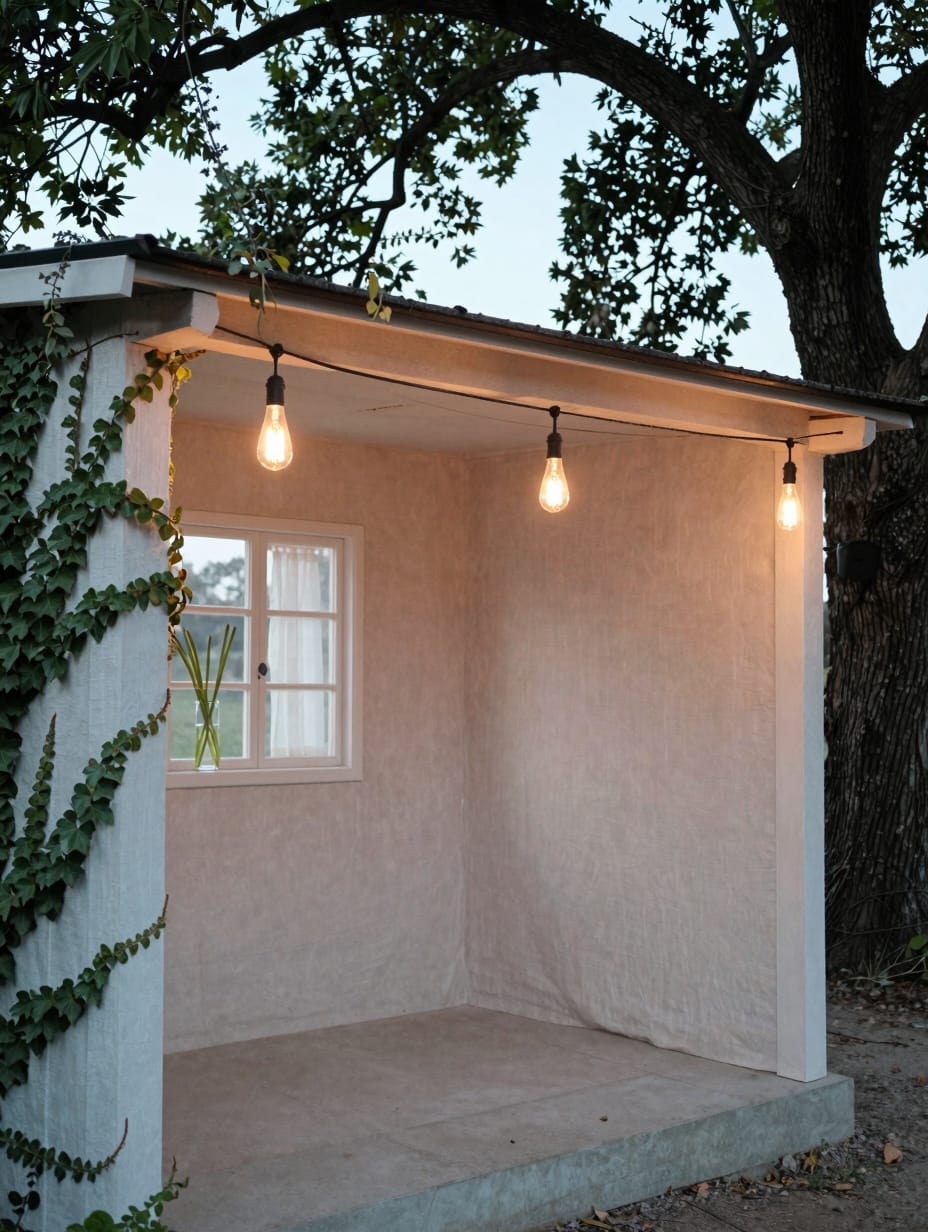
Large Edison-style bistro lights draped from the shed roof to a nearby tree create a warm amber glow at night. The light highlights the textures of the climbing ivy on the walls and makes the small bistro set feel inviting. It’s the easiest way to make a backyard shed feel like a high-end lounge.
Full disclosure: hanging these alone is a nightmare. You need a second person to hold the tension while you secure the hooks, or the strand will sag and look sloppy.
How to Get This Look
- Space gutter hooks every 2 feet along the shed’s roofline for support.
- Outdoor string lights, $35-$60 per 50ft strand, choose LED for longevity.
- Pair with a matte black bistro set for a classic European café feel.
- Use battery-powered “puck” lights inside the shed for a $10 lighting boost.
17. Shady Hostas and Ferns
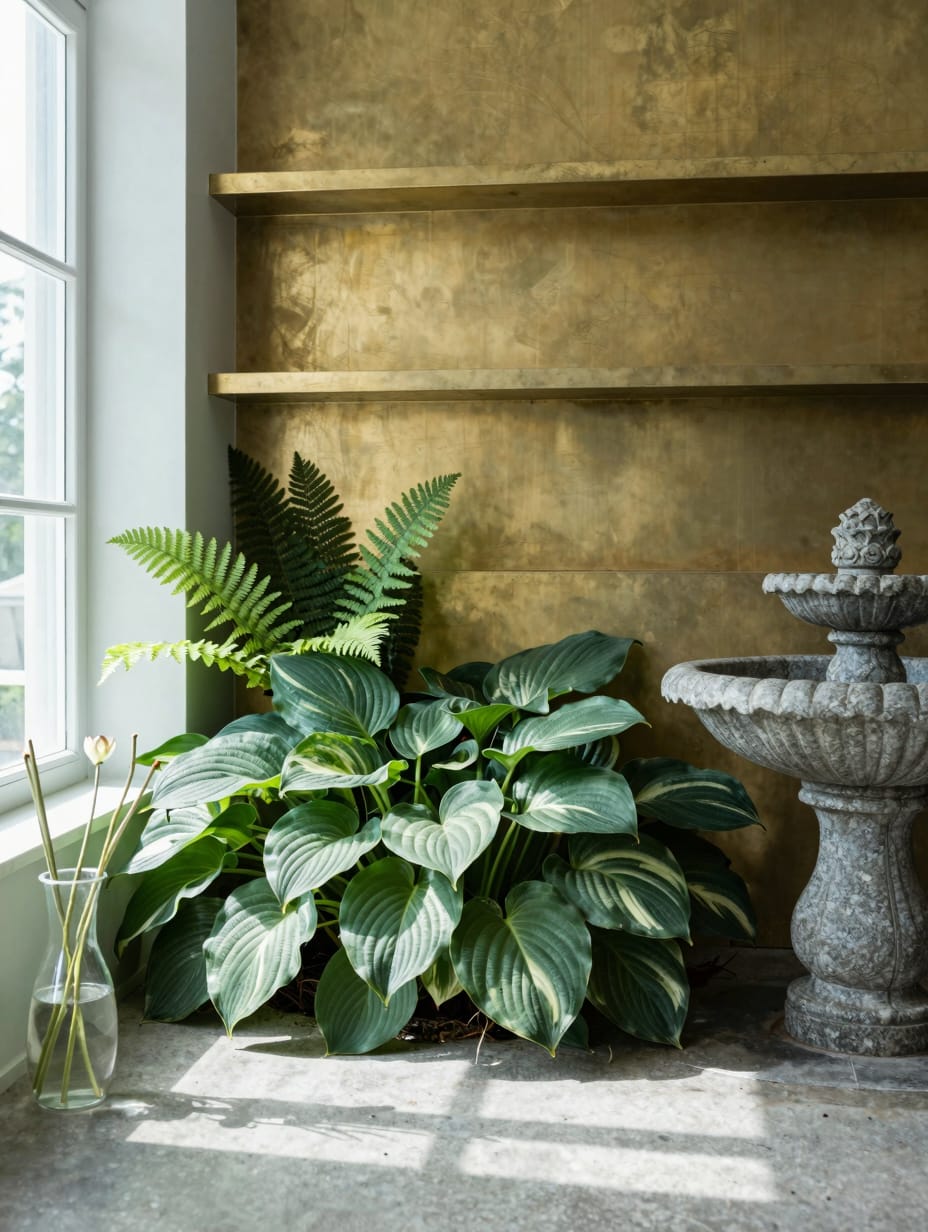
The north side of a shed is often a muddy dead zone, but oversized hostas and ostrich ferns can turn it into a cool retreat. Variegated white foliage pops in the shadows, especially next to a smooth basalt stone fountain. It’s a low-maintenance solution for those tricky areas where grass refuses to grow.
Slugs absolutely love hostas; I’ve woken up to find my leaves looking like Swiss cheese. You have to be diligent with organic slug bait if you want those big leaves to stay pristine.
How to Get This Look
- Mix at least three different hosta varieties for a tapestry of leaf patterns.
- Ostrich ferns, $15-$25 per pot, choose 1-gallon sizes for immediate impact.
- Add a solar stone fountain to introduce the sound of running water.
- Divide existing hostas from other parts of your yard for a $0 shade garden.
18. Vibrant Painted Door Accent
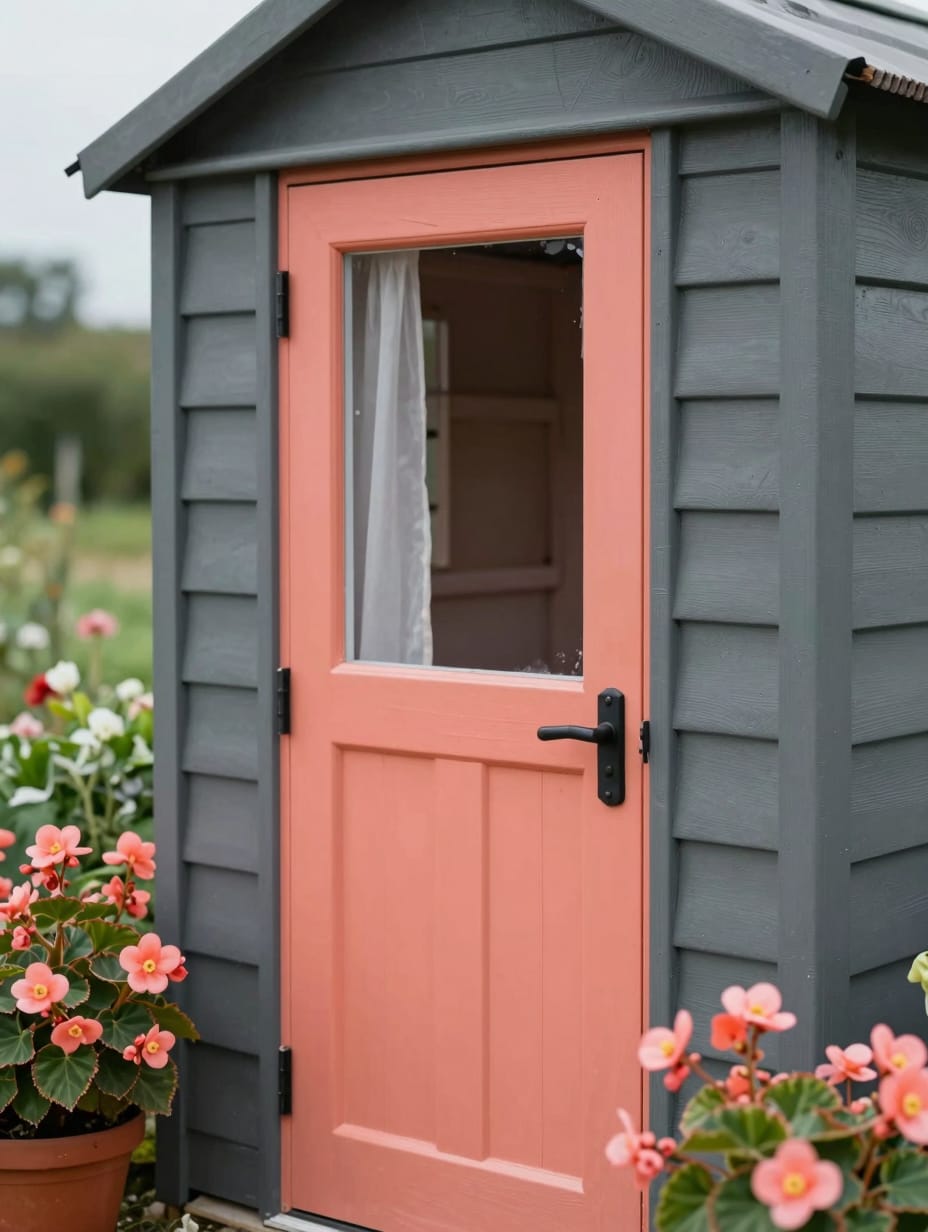
I painted my shed door a bright coral to contrast against the dark charcoal siding, and it changed the whole mood. Surrounded by pots of matching coral begonias, the door acts as a cheerful focal point that draws the eye across the lawn. It’s a high-impact, low-cost project that only takes an afternoon.
The thing is, bright colors fade fast in direct sun. I’ve found I have to do a quick touch-up coat every two years to keep the coral from looking like dusty pink.
How to Get This Look
- Lightly sand the door and use an exterior primer before the main color.
- Exterior door paint, $20-$35 per quart, choose a “satin” or “semi-gloss” finish.
- Swap out the old handle for a heavy brass door knocker for a polished look.
- Use leftover house paint from a previous project for a $0 color pop.
19. Bird Sanctuary Corner
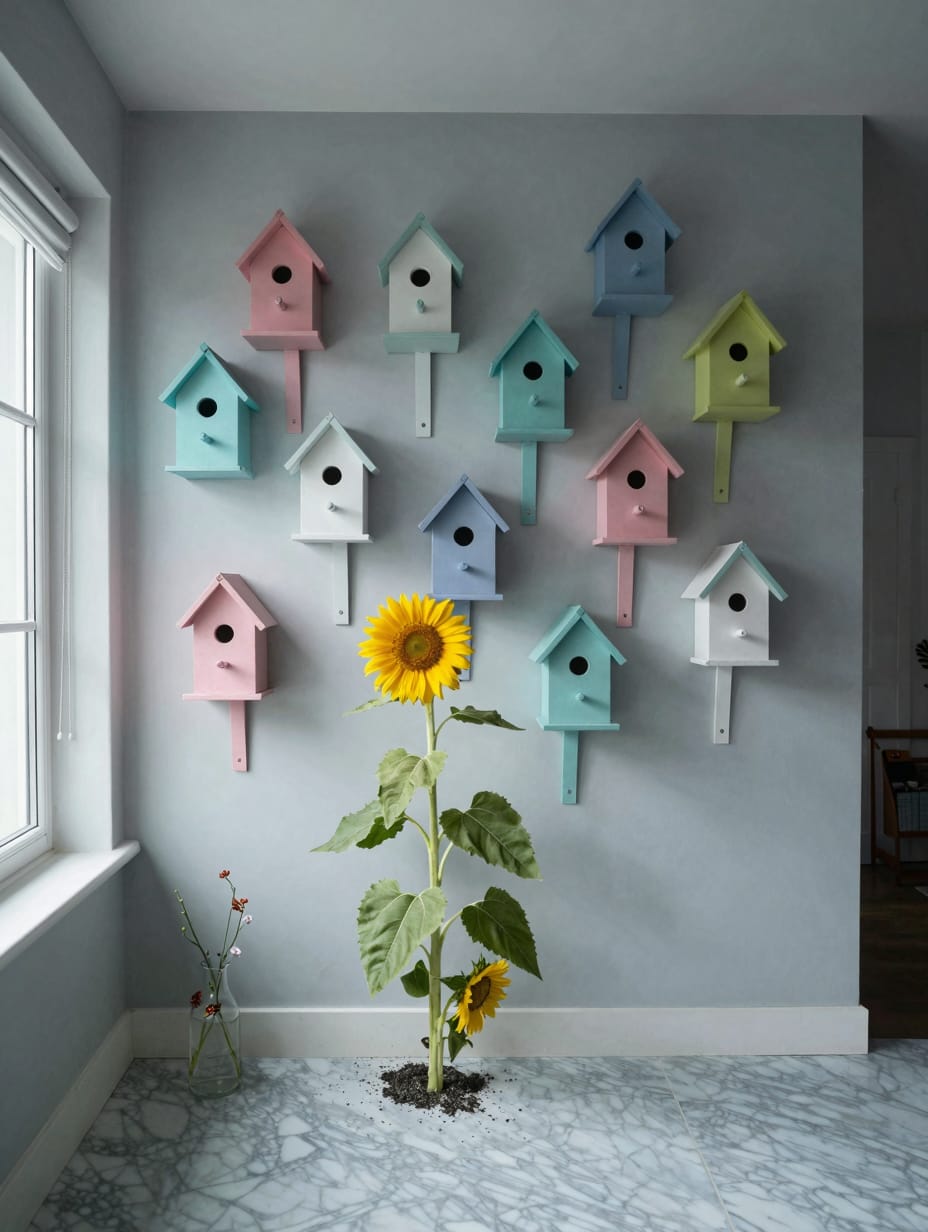
A cluster of pastel birdhouses mounted at different heights on the shed wall creates a charming, active corner. Giant sunflowers at the base provide natural seeds and shelter, making the shed a hub for local songbirds. It’s a lovely way to add life and movement to a quiet part of the backyard.
Be prepared for bird droppings on the shed siding; it’s an inevitable part of the deal. You’ll need to hose down the area once a week to keep it clean.
How to Get This Look
- Mount birdhouses facing East to protect residents from the hot afternoon sun.
- Pastel birdhouses, $15-$30 each, ensure they have clean-out doors in the back.
- Plant ‘Mammoth’ sunflowers for 10-foot tall stalks that provide shade and food.
- Build a birdhouse from scrap plywood and paint it for under $5.
Loved these ideas? Save this post to Pinterest so you can come back to it later.
Simple Ways to Bring These Ideas to Life in Your Home
- Start with the “floor” by defining a clear mulch or gravel border at least 2 feet wide.
- Add one vertical element like a trellis or window box to break up flat siding.
- Choose a cohesive color palette of 2-3 shades for all pots and flowers.
- Install solar lighting along the path so the shed doesn’t become a dark void at night.
- Use “thriller, filler, spiller” plants in every container for a professional, layered look.
Frequently Asked Questions
What are the best plants to hide a shed foundation?
Evergreens like boxwood or hostas are excellent for year-round coverage. I prefer using creeping phlox or low-growing junipers because they spread quickly and stay green even in winter. These plants create a thick barrier that hides concrete blocks or wooden skids effectively without much maintenance.
How do I stop weeds from growing around my shed?
I always lay down a heavy-duty landscape fabric before adding at least 3 inches of mulch or gravel. For permanent paths, using a polymeric sand between pavers blocks weed seeds from taking root. If you prefer a natural look, planting a dense groundcover like creeping thyme crowds out weeds.
Can I landscape around a plastic resin shed?
Yes, but you shouldn’t attach heavy trellises directly to the plastic walls as they can warp. Use free-standing arbors or large containers to add height and color instead. Darker mulch and light-colored stones help ground the lightweight look of resin, making it feel more substantial in your garden.
How much space should I leave between plants and the shed?
Leave at least 12 to 18 inches of breathing room between the structure and your plants. This gap prevents moisture from rotting wood siding and allows for air circulation. It also gives you enough space to walk around the shed for repairs or cleaning without trampling your beautiful flowerbeds.
Common Myths About Shed Landscaping
Myth: Landscaping around a shed causes wood rot.
This only happens if you pile soil or mulch directly against the wood siding. Keeping a 2-inch gap and using gravel as a base layer actually helps drainage. Research shows that proper airflow is the real key to preventing rot, not the absence of plants nearby.
Myth: You need a huge budget to landscape a shed.
Most of my favorite transformations cost under $50 using seeds and recycled materials. Dividing existing perennials or using free wood chips from a local arborist can cover a large area for almost nothing. A $20 can of paint and a few stones often make the biggest impact.
Myth: Only large sheds benefit from landscaping.
Small sheds actually need landscaping more because they can look like “orphaned” boxes in a yard. Adding a simple window box or a small stone path integrates a tiny structure into the landscape. It makes the shed look like a deliberate design choice rather than just a storage necessity.
Shed Landscaping: Thoughts
Refreshing your backyard doesn’t have to mean a full renovation when these shed landscaping ideas offer so much impact. By adding a simple path, some fragrant lavender, or a pop of color on the door, you can turn a utilitarian corner into a beautiful destination. Save this post to Pinterest 📌 and start building the apartment you actually want to come home to.